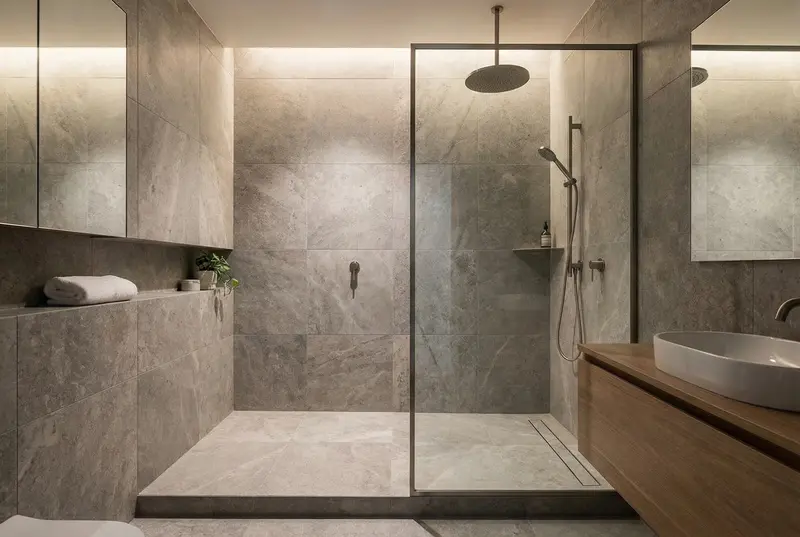
Wet Room Installation in Cambridge
Most requests for wet room installation in Cambridge come from homeowners who've finally decided to do something about a tired, cramped bathroom that just doesn't work for their household anymore. Whether it's an elderly parent moving in, a mobility issue making a standard shower tray impractical, or simply the desire for a sleek, modern finish in a beautiful old home, wet rooms solve real problems. They eliminate the step-over hazard of a shower tray, open up floor space, and — done properly — add genuine value to a Cambridge property.
Plumbing Conditions in Cambridge
Very Hard water — some of the hardest in England
Mixed housing stock across different eras. With 22% of properties built before 1919, older pipework and drainage systems are common — specialist knowledge of period properties matters.
Wet Room Installation in Cambridge — Local Expertise
Cambridge presents a specific set of challenges that any experienced wet room installer will already be thinking about before they've even seen your bathroom. The city's housing stock is dominated by Georgian townhouses and period properties — tall, narrow buildings with original timber floors, older drainage layouts, and walls that haven't been touched structurally in a hundred years or more. Waterproofing in these buildings has to be treated with particular care. A standard tanking job that would be fine in a 1990s new-build simply isn't adequate when the subfloor is Victorian timber and the joists have some flex in them. The wet room membrane needs to be tanked properly across every joint and penetration point, or you'll be looking at ceiling damage in the room below within a couple of years. Cambridge is also firmly in a hard water area, supplied through the Thames Water and Affinity Water zones. Hard water causes limescale to build up on screens, fixtures, and drainage channels faster than in softer-water regions — so choosing fixtures with good limescale resistance and considering an inline water softener is worth factoring into your plans from the start.
How We Work
A professional wet room installation in Cambridge follows a clear sequence of stages, and understanding what's involved helps you hold any installer to account. The work begins with a full strip-out: removing existing tiles, shower enclosures, and fittings down to the bare walls and floor. At this point a good installer will assess the condition of the subfloor — particularly important in Cambridge's period properties where timber floors may need reinforcing or sheet boarding before any waterproofing is applied. Next comes the waterproofing stage. A tanking system — typically a liquid-applied membrane or a sheet membrane bonded to the substrate — is applied to all walls and the floor, lapping up at every corner and around every pipe penetration. This is the most critical part of the entire job and should never be rushed. The floor is then built up with a former or screed to create a proper fall toward the drain, usually around 1:80 gradient, so water drains cleanly without pooling. Underfloor heating is commonly fitted at this stage if required. Tiling follows once the waterproofing has fully cured — typically 24 to 48 hours — and then the wet room drain, shower fixtures, screen (if used), and any sanitaryware are installed and connected. Final commissioning involves testing all connections, checking the fall is working correctly, and sealing any remaining junctions with high-quality silicone. From start to finish, most Cambridge installations take between five and eight working days.
Why Choose a Local Cambridge Specialist
Choosing a tradesperson who regularly works in Cambridge makes a practical difference. Someone familiar with the city's period housing stock will already understand the challenges of working with original timber floors, older drainage runs, and the quirks of Victorian-era construction. They'll know which types of membrane perform best in this context and won't be caught out by what they find when the strip-out begins. A local installer also has a reputation to maintain in a relatively close-knit city, which tends to concentrate minds on doing the job properly. Ask to see examples of their previous wet room work in Cambridge specifically, and check references from clients in similar property types.
Frequently Asked Questions
Can a wet room be installed in an upstairs bathroom of a Georgian terraced house in Cambridge?
Yes, but it requires careful preparation. Upstairs timber floors in Cambridge's period properties typically need to be reinforced or overlaid with a rigid board before waterproofing. An experienced installer will assess the floor's condition during the survey and build the right substrate before tanking. Skipping this step is the most common cause of wet room failures in older Cambridge homes.
How does Cambridge's hard water affect a wet room once it's installed?
Hard water accelerates limescale build-up on drainage channels, shower heads, and any glass screens. In Cambridge's water supply zone, this is a genuine consideration. Opting for fixtures with limescale-resistant coatings, a linear drain with a removable insert for easy cleaning, and a quality squeegee habit will keep things looking sharp. Some homeowners also fit an inline scale inhibitor, which is worth discussing with your installer.
How long does a wet room installation take in Cambridge?
Most installations in Cambridge take between five and eight working days. Simpler conversions in newer properties can be closer to five days. Period properties requiring floor reinforcement, more complex drainage work, or larger tiling areas tend to run to seven or eight days. Your installer should give you a clear programme before work starts so you can plan around it.
Do I need planning permission or building regulations approval for a wet room in Cambridge?
Planning permission is not usually required for a wet room installation. However, if your Cambridge property is listed — which applies to a significant number of homes in the city centre and conservation areas — you may need listed building consent before making structural alterations. Building regulations approval may apply if structural floor work is involved. A reputable local installer will flag this during the survey rather than leaving you to find out later.
Other Plumbing Services in Cambridge
What do you need?
Select your service and urgency level