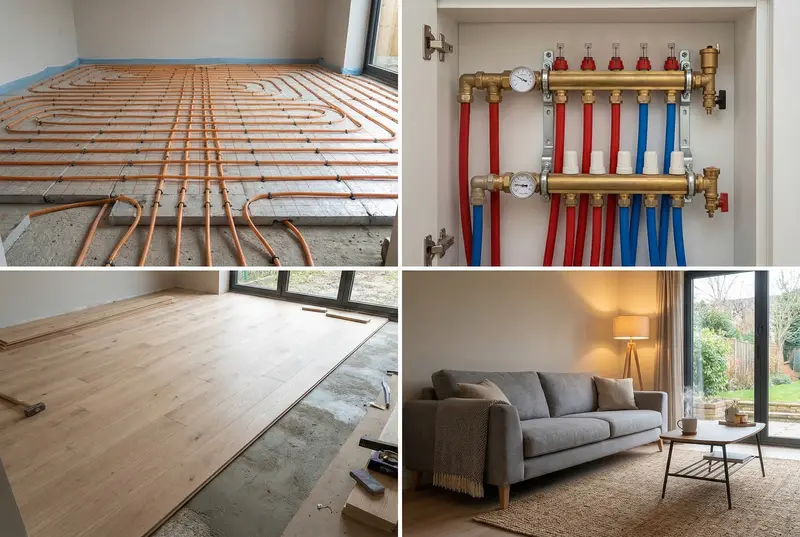
Underfloor Heating in Winchester
It's one of the more involved home improvements you can make, but for Winchester homeowners it often pays off handsomely — both in comfort and in property value. Whether you're renovating a period cottage near the Cathedral Quarter or fitting out a new-build on one of the modern estates to the south of the city, getting the right system specified from the start makes a significant difference to long-term running costs and performance.
Plumbing Conditions in Winchester
Hard water — Hampshire chalk
Mixed housing stock across different eras. With 22% of properties built before 1919, older pipework and drainage systems are common — specialist knowledge of period properties matters.
Underfloor Heating in Winchester — Local Expertise
Winchester's housing stock is genuinely varied, and that variety shapes how underfloor heating gets installed here. Older stone-built properties and period cottages — which make up a large proportion of the housing in the city centre and surrounding villages — tend to have solid ground floors, limited floor void depth, and sometimes unpredictable subfloor conditions. This can make wet underfloor heating more complex to retrofit, and in some cases an electric mat system may be the more practical choice for individual rooms. Modern estates on the outskirts of Winchester are usually better suited to wet systems, with screed floors already designed to accommodate pipework. Winchester sits in a moderately hard water area, which is worth bearing in mind for wet underfloor heating systems — limescale buildup inside the pipework and manifold can reduce efficiency over time if the system isn't correctly commissioned and maintained. A decent installer will fit an inhibitor and may recommend a scale reducer as part of the package, especially in older properties where the existing pipework may already carry some scale.
How We Work
A wet underfloor heating installation begins with a survey of the space — the installer needs to understand the floor construction, the existing boiler or heat source, the room layout, and any existing pipework. For Winchester homes being retrofitted, this stage often throws up surprises: uneven subfloors, low door clearances that limit screed depth, or boilers that need upgrading to work efficiently at the lower flow temperatures UFH requires. Once the survey is done and the design is agreed, the floor is prepared — this might mean laying insulation boards to prevent heat loss downward, then fixing the pipework in loops across the floor area. In a wet system, all the pipe circuits connect back to a manifold, which is then linked to the boiler or heat pump. The floor is either screeded over the pipework or, in a retrofit with limited depth, overlaid with a low-profile panel system. The system is then pressure-tested before any floor covering goes on — a critical step that should never be skipped. After the screed cures (which takes several weeks), the system is commissioned: flow rates are balanced across each zone, the thermostat controls are programmed, and the homeowner gets a walkthrough of how to operate everything. Expect the physical installation to take two to five days depending on the size of the project.
Why Choose a Local Winchester Specialist
Choosing a Winchester-based installer rather than a national firm matters more than many homeowners realise. Local tradespeople understand the building stock here — they've worked in the Victorian terraces off Chesil Street, the flint-walled cottages in the surrounding villages, and the newer developments off Andover Road. That familiarity means they're less likely to be caught out by unusual subfloor conditions or the quirks of older heating systems. They're also accountable locally: your installer is reachable if something needs adjusting after commissioning, and their reputation in a relatively small city depends on getting the job right.
Frequently Asked Questions
Can underfloor heating be installed in a Winchester period property with original flooring?
Yes, but it requires careful planning. In many of Winchester's period cottages and stone-built homes, the challenge is depth — original floors leave little room for pipework and screed. Low-profile retrofit systems can work with as little as 15mm of additional floor height, and electric mat systems are sometimes the most practical option for rooms where disruption needs to be minimal.
Does hard water in Winchester affect an underfloor heating system?
Winchester's moderately hard water can cause limescale to build up inside the pipework and manifold of a wet UFH system over time. A good installer will add a corrosion inhibitor to the system fluid and may recommend a magnetic filter or scale reducer. Annual system checks help catch any issues early and keep the system running efficiently for years.
How long does underfloor heating installation take in a typical Winchester home?
Most ground floor installations in a mid-sized Winchester home take between two and five days for the physical work. After that, you'll need to wait for the screed to cure before laying floor coverings — this typically takes four to six weeks. The full commissioning process happens once the screed is dry, so factor this into your project timeline, especially if you're renovating before moving in.
Is underfloor heating compatible with the heat pumps being installed in newer Winchester homes?
Yes — underfloor heating and heat pumps are actually an excellent pairing. Heat pumps work most efficiently at lower flow temperatures, which is exactly what UFH requires. If you're on one of Winchester's newer estates and considering a heat pump installation, specifying UFH at the same time is worth the investment and can significantly reduce long-term heating bills.
Other Plumbing Services in Winchester
What do you need?
Select your service and urgency level