Leak Detection & Repair in Winchester
A hidden leak can quietly cost Winchester homeowners hundreds of pounds before it's even noticed — whether it's pushing up your water bill, softening a plaster wall, or slowly rotting a floor joist beneath your feet. That range sounds wide, but in practice a straightforward exposed pipe repair sits at the lower end, while tracing a concealed leak beneath a tiled floor or behind a solid stone wall will naturally cost more. Getting it sorted promptly almost always costs less than leaving it to worsen.
Plumbing Conditions in Winchester
Hard water — Hampshire chalk
Mixed housing stock across different eras. With 22% of properties built before 1919, older pipework and drainage systems are common — specialist knowledge of period properties matters.
Leak Detection & Repair in Winchester — Local Expertise
Winchester's housing stock throws up some genuinely interesting challenges for leak detection work. The city's older stone-built properties and period cottages — particularly those around the historic centre and villages like Headbourne Worthy — tend to have pipes buried in thick walls or routed through solid floors with no cavity access. That makes locating a leak trickier and more time-consuming than in a modern build. On the newer estates on the outskirts of Winchester, pipework is generally more accessible, but slab-laid ground floor pipes can still be a headache. Winchester also sits in a moderately hard water area, which matters more than people realise — limescale build-up inside older copper and galvanised steel pipes gradually narrows the bore and increases internal pressure, making pinhole leaks more likely over time. If you're in a period property with original pipework, this is worth bearing in mind as a long-term maintenance consideration, not just a one-off repair.
How We Work
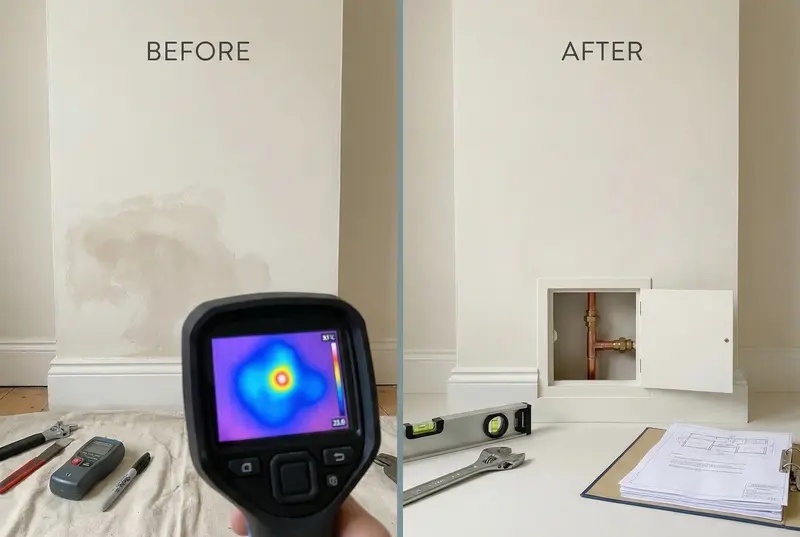
When a leak detection specialist arrives at your Winchester property, the first step is a thorough visual inspection — checking under sinks, around radiator valves, at the stopcock, and along any visible pipework for signs of moisture, corrosion, or staining. If the leak isn't immediately obvious, the engineer will move on to more systematic testing. One common technique is isolating sections of the system to narrow down where pressure is being lost. For concealed leaks, acoustic listening equipment is used to detect the sound of water escaping through a pipe even when it's hidden behind plaster or beneath a floor — this non-invasive approach is especially valuable in Winchester's older stone properties where you really don't want to start unnecessary excavation. Thermal imaging cameras are another useful tool, identifying cold or damp patches through walls and floors without any damage. Once the leak is located, you'll get a clear explanation of where it is and what the repair involves before any work begins. The repair itself might be as simple as replacing a valve, re-soldering a joint, or fitting a push-fit connector. More involved repairs — rerouting a corroded section of pipe, for example — will take longer but the surveying phase is usually completed in the same visit. You'll have a working, tested system before the engineer leaves.
Why Choose a Local Winchester Specialist
A local Winchester plumber brings knowledge that genuinely makes a difference here. They'll be familiar with the layout of older stone terraces near the cathedral quarter, know which modern estates have had recurring issues with ground-floor slab pipes, and understand the water quality and pressure characteristics of the local supply network. That familiarity speeds up diagnosis and means fewer surprises mid-job. They're also easier to get back quickly if any follow-up is needed. When you're dealing with water damage that's already happened, having someone who can be on-site within hours rather than days matters significantly.
Frequently Asked Questions
How do I know if I have a hidden leak in my Winchester home?
Common signs include an unexplained rise in your water bill, damp patches on walls or ceilings, a musty smell in a room, or the sound of running water when everything is turned off. In Winchester's older properties, soft or discoloured plasterwork is another tell-tale sign. If your water meter reading changes even when no taps are running, that's a strong indicator of an active leak somewhere in the system.
Will the engineer need to break through my walls or floors to find the leak?
Not necessarily. Modern acoustic detection and thermal imaging equipment can locate many leaks without any destructive access. That said, if the leak is within a solid stone wall or a concrete floor — fairly common in Winchester's period properties — some carefully targeted access may be unavoidable. A good engineer will always aim to minimise disruption and explain what's needed before doing anything invasive.
Can hard water cause leaks in my pipes?
Yes, indirectly. Winchester's moderately hard water gradually deposits limescale inside pipes and fittings, which increases flow resistance and internal pressure over time. On older copper pipework, this can contribute to pinhole leaks or joint failures. It's one reason why period properties in Winchester with original pipework sometimes need more maintenance attention than newer builds with modern plastic piping.
Is leak detection and repair covered by my home insurance?
It depends on your policy. Most standard home insurance policies cover damage caused by an escape of water, but not always the cost of finding the leak or repairing the pipe itself. Some insurers offer trace and access cover, which specifically covers the cost of locating a concealed leak. It's worth checking your documents before booking, and a reputable Winchester plumber can usually provide a report for insurance purposes if needed.
Other Plumbing Services in Winchester
What do you need?
Select your service and urgency level