Underfloor Heating in Southwark
Underfloor heating is one of those upgrades that genuinely transforms how a home feels — and in Southwark, where the property mix ranges from draughty Victorian terraces to compact post-war flats and sleek modern apartments, it's becoming an increasingly popular choice. Rather than relying on radiators that take up wall space and heat rooms unevenly, underfloor heating delivers warmth from the ground up, making it particularly well suited to open-plan living spaces that have become the norm across much of south London. If you're renovating, extending, or simply tired of cold floors in the morning, this guide will walk you through what's involved, what it costs in Southwark, and what questions to ask before booking.
Plumbing Conditions in Southwark
Very Hard water — significant limescale buildup, annual boiler servicing essential
Mixed housing stock across different eras. With 22% of properties built before 1919, older pipework and drainage systems are common — specialist knowledge of period properties matters.
Underfloor Heating in Southwark — Local Expertise
Southwark's housing stock is genuinely diverse, and that diversity matters when it comes to underfloor heating. Victorian terraces — common in areas like Bermondsey, Peckham, and Camberwell — typically have solid masonry floors or original suspended timber floors, both of which require different installation approaches. Solid floors can have a screed system laid on top, while timber suspended floors are better suited to a low-profile electric mat system or a specially designed wet system with slim pipework between the joists. Post-war properties, which make up a significant portion of Southwark's housing estate stock, often have concrete slab floors that are ideal for wet underfloor heating. Modern new-builds and conversions — increasingly common near Elephant and Castle and along the riverside — frequently come with underfloor heating already spec'd in. Southwark sits in a moderately hard water area, which is worth bearing in mind for wet hydronic systems. Limescale can build up in pipework over time, so fitting a magnetic filter and dosing the system with inhibitor during installation is sensible and should be standard practice for any reputable installer.
How We Work
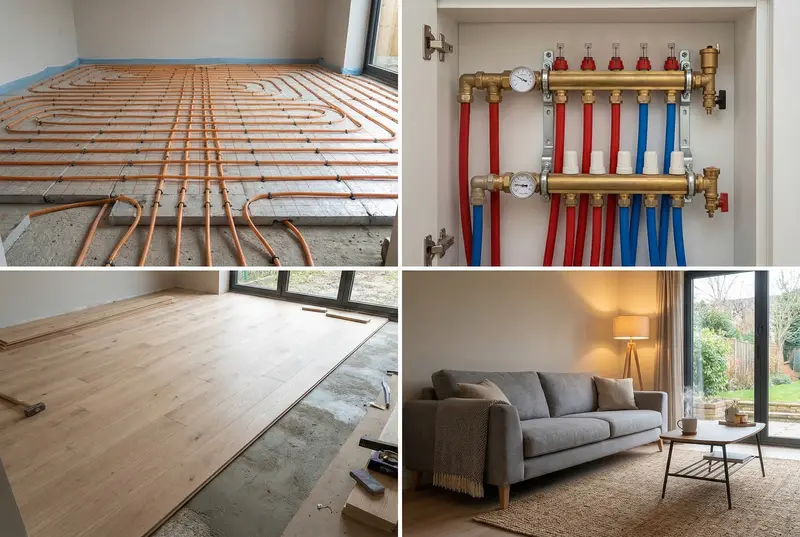
The installation process varies depending on whether you're going electric or wet (hydronic), and which floor construction you're dealing with — both of which your installer should assess during an initial survey. For a wet underfloor heating system in a Southwark property, the process typically begins with a detailed heat loss calculation for each room, which determines the pipe spacing and flow temperatures needed. The floor is then prepared — existing screed broken up if necessary, insulation boards laid down to stop heat escaping downwards, and then the pipework manifold positioned, usually in a utility cupboard or purpose-built housing. Pipework is clipped or stapled across the floor in a spiral or serpentine pattern, pressure-tested for leaks, and then covered with a new screed layer that typically takes several weeks to fully cure before the system is commissioned. For timber floors, pipework sits between the joists below the floorboards or in routed channels, which is less disruptive but slightly less efficient. Electric systems are simpler and faster — the mat or cable is laid directly on the subfloor, connected to a thermostat, and covered with tile adhesive or a thin screed. The whole job, depending on the number of zones and the property type, usually takes between two and five days for a competent installation team working across a typical Southwark home.
Why Choose a Local Southwark Specialist
Choosing a tradesperson with real experience in Southwark makes a practical difference. Someone who regularly works across Bermondsey, Elephant and Castle, and Peckham understands the quirks of local property types — the depth of original Victorian floor joists, the construction methods used in post-war housing estates, and the building regulations that apply in conservation areas. They'll also know local suppliers, be familiar with Southwark Council requirements for any structural or building regulations sign-off, and be easier to reach if anything needs addressing after the job is done. Local knowledge isn't just a nice-to-have — it saves time and avoids expensive mistakes.
Frequently Asked Questions
Is underfloor heating suitable for a Victorian terrace in Southwark?
Yes, but it depends on your floor type. Solid ground floors can take a wet screed system with proper insulation beneath. Suspended timber floors are better suited to electric mats or low-profile wet systems fitted between joists. A proper survey is essential before committing, as getting this wrong can mean disruption and extra cost later.
How does hard water in Southwark affect underfloor heating systems?
Southwark's moderately hard water means limescale can gradually accumulate inside the pipework of a wet hydronic system, reducing efficiency over time. A good installer should include a magnetic filter and add corrosion inhibitor during commissioning. Annual system checks and occasional inhibitor top-ups will keep it running efficiently for years.
Can underfloor heating work with my existing boiler?
Often yes, but it depends on your boiler's age, output, and efficiency. Underfloor heating runs at lower flow temperatures than radiators, so a modern condensing boiler usually handles it well. Older or undersized boilers may need replacing. Your installer should carry out a heat loss assessment and check the boiler's compatibility before installation begins.
How long does underfloor heating installation take in a typical Southwark home?
For a wet system covering the ground floor of a standard Southwark terrace or flat, allow two to four days for the physical installation. After that, the screed needs four to six weeks to cure fully before the system is turned on and gradually commissioned. Electric systems are much faster — often completable in a single day per room.
Other Plumbing Services in Southwark
What do you need?
Select your service and urgency level