Underfloor Heating in Ipswich
Underfloor heating has become one of the most sought-after home upgrades in Ipswich over the past decade, and it's easy to understand why. Suffolk winters can be damp and persistent, and the idea of stepping onto a warm floor on a February morning is genuinely appealing. Whether you're renovating an older property in the town centre or fitting out a new-build on the edge of Ipswich, underfloor heating offers a level of comfort that radiators simply can't match. It also frees up wall space, runs at lower temperatures than conventional systems, and can meaningfully reduce heating bills when installed properly. This guide covers everything you need to know before committing to the job.
Plumbing Conditions in Ipswich
Hard to Very Hard water — chalk aquifers
Mixed housing stock across different eras. With 22% of properties built before 1919, older pipework and drainage systems are common — specialist knowledge of period properties matters.
Underfloor Heating in Ipswich — Local Expertise
Ipswich has a genuinely mixed housing stock, and the property type you're working with will shape the entire project. Edwardian semis — common in areas like Westgate and around Christchurch Park — often have solid floors or suspended timber ground floors with limited depth beneath them, which makes wet underfloor heating more complex and sometimes rules it out in favour of electric mat systems. Post-war estates, which make up a large portion of housing in areas like Whitton and Gainsborough, typically have concrete slab floors that are far better suited to wet underfloor heating installation, as pipework can be embedded directly in a screed layer. Modern developments on the outskirts of Ipswich are often already plumbed for underfloor heating or at least built with the right floor construction to accommodate it easily. One additional factor worth noting: Ipswich sits in a moderately hard water area, which means installing a suitable inhibitor and ensuring the system is correctly flushed and balanced is important for the long-term health of your pipework and manifold.
How We Work
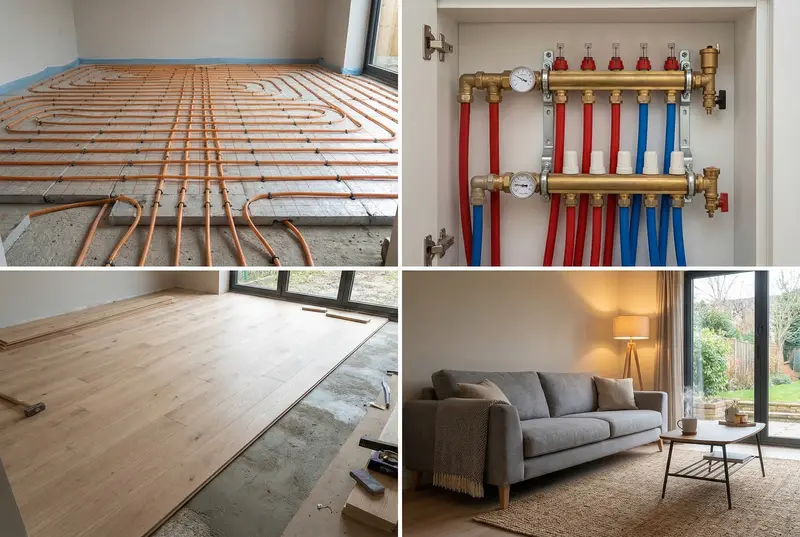
A professional underfloor heating installation in Ipswich typically follows a clear sequence of steps. It begins with a site survey, where an installer assesses your floor construction, existing boiler capacity, and room layout. This is the stage where the decision between wet (hydronic) and electric systems is made — wet systems are more efficient over time and suit larger areas, while electric mats are quicker to install and better for smaller spaces like bathrooms or kitchens being retrofitted into older homes. Once the system type is confirmed, the installer will design a pipe or mat layout, calculating the loop lengths needed to achieve even heat distribution across each room. For wet systems, the pipework is laid in loops across an insulation board (critical for directing heat upward rather than losing it to the subfloor), connected back to a manifold, and then covered with a liquid screed or sand-and-cement screed. The screed must cure properly before flooring goes down — typically two to four weeks depending on conditions, though liquid screeds can allow foot traffic sooner. The system is then connected to your boiler or heat pump, pressure-tested, filled, and commissioned. A good installer will walk you through the controls and explain the warm-up times you should expect, which are longer than radiators but consistent once the floor reaches temperature.
Why Choose a Local Ipswich Specialist
Choosing a local Ipswich installer rather than a national firm makes a real practical difference. Someone who regularly works across the town's housing stock will already know the quirks of Edwardian floor construction in the older neighbourhoods and the specific challenges of working in post-war properties where floor levels are tight. They'll have established relationships with local screed contractors and suppliers, which keeps the project moving without delays. They're also on hand if something needs adjusting after commissioning — you're not waiting on a call centre. Local tradespeople in Ipswich also tend to rely heavily on word-of-mouth reputation, which is a good motivator for getting the job done properly first time.
Frequently Asked Questions
Can underfloor heating be installed in an Ipswich Edwardian semi with suspended timber floors?
It can, but it requires more careful planning. Wet systems can sometimes be retrofitted between joists using special plates that conduct heat upward, but this is more labour-intensive. Electric systems are often the more practical choice in these properties. A survey will tell you which approach is viable for your specific floor construction.
How long does a full underfloor heating installation take in a typical Ipswich home?
The physical installation of pipework and screed usually takes two to four days depending on floor area. After that, you're looking at a curing period of two to four weeks before floor coverings can go down. Electric mat systems are quicker — a single room can often be completed in a day, with tiling or flooring possible within 24–48 hours.
Does the hard water in Ipswich cause problems for underfloor heating systems?
Moderately hard water can cause scale build-up inside pipework and at the manifold over time if the system isn't properly treated. A good installer will flush the system, add a corrosion inhibitor, and recommend an annual check of inhibitor levels. This is straightforward maintenance but it matters for the long-term efficiency and lifespan of the installation.
Will underfloor heating work with my existing boiler, or will I need a new one?
Many modern condensing boilers handle underfloor heating well, especially since UFH runs at lower flow temperatures — typically 35–45°C rather than 70°C for radiators. Older or undersized boilers may need upgrading. Your installer should carry out a heat loss calculation and check your current boiler output before confirming it can manage the new system alongside any existing radiators upstairs.
Other Plumbing Services in Ipswich
What do you need?
Select your service and urgency level