Underfloor Heating in Holmfirth
Holmfirth is a town that knows cold winters. Nestled in the Holme Valley, with its exposed hilltop streets and draughty older properties, keeping homes genuinely warm here is a real challenge. Underfloor heating has become an increasingly popular choice for homeowners across Holmfirth who are tired of cold spots, radiators taking up wall space, and heating bills that don't match the comfort levels they're getting. Done properly, a wet or electric underfloor heating system transforms how a home feels — especially in a town where so many properties were built long before modern insulation standards existed. This page explains what's involved, what it costs locally, and what to think about before you commit.
Plumbing Conditions in Holmfirth
Soft water — Pennine reservoir water
Mixed housing stock across different eras. With 22% of properties built before 1919, older pipework and drainage systems are common — specialist knowledge of period properties matters.
Underfloor Heating in Holmfirth — Local Expertise
The mix of property types in Holmfirth creates genuinely different challenges depending on where you live. Older stone-built properties and period cottages — which make up a significant part of the town's housing stock — tend to have solid stone floors, limited floor void depth, and walls that lose heat quickly. Installing underfloor heating in these homes requires careful planning: the system needs to work efficiently despite higher heat loss, which often means pairing it with improved insulation or adjusting the screed depth. Modern estates on the edges of Holmfirth are a different story — newer builds often have suspended timber floors or concrete slabs that are more straightforward to work with. Holmfirth sits in a moderately hard water area, which is worth flagging for wet underfloor heating systems. Hard water can cause scale build-up inside pipework over time, so a good installer will always recommend a suitable inhibitor and, in some cases, a system filter to protect your investment from day one.
How We Work
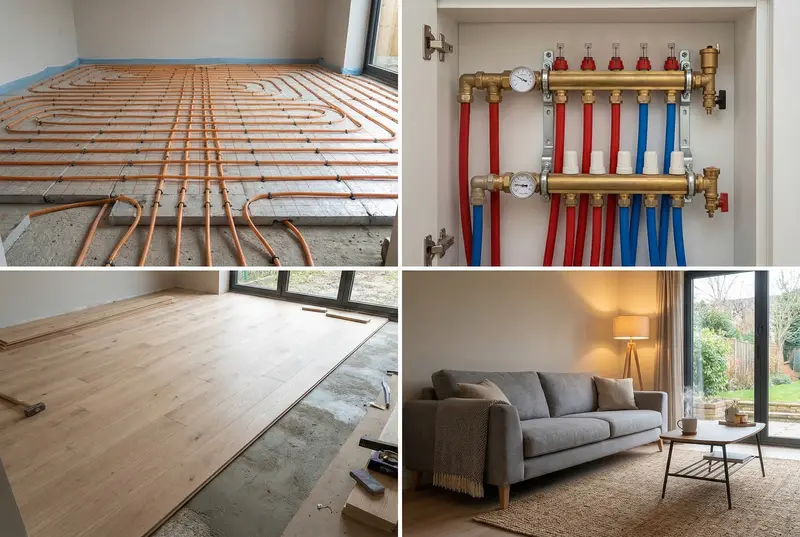
Underfloor heating installation broadly splits into two types: wet systems, which circulate warm water through pipes laid in the floor, and electric systems, which use heating mats or cables. Wet systems are more efficient to run long-term and are generally the preferred choice in Holmfirth for whole-room or whole-house installations. Electric systems suit smaller areas like bathrooms or where disruption needs to be kept to a minimum. The installation process for a wet system typically starts with a site survey, where an engineer assesses your floor construction, existing boiler capacity, and insulation levels — all of which vary considerably across Holmfirth's older stone-built properties versus newer builds. If your boiler is older or undersized, it may need upgrading before the underfloor system is connected. The floor is then prepared, insulation boards are laid to prevent downward heat loss, and the pipework is clipped into place in a carefully planned loop pattern before being covered with a screed or integrated into the existing floor build-up. The system is then connected to a manifold, pressure-tested, and commissioned. Screed typically needs 28 days to fully cure before the system is run at full temperature, so the whole process from start to usable heat takes around five to six weeks. Zoned thermostatic controls are fitted room by room, giving you precise control over where and when heat is delivered.
Why Choose a Local Holmfirth Specialist
Underfloor heating is not a job where you want someone unfamiliar with local conditions turning up and winging it. A tradesperson who regularly works across Holmfirth will understand the quirks of the town's older stone properties, know how floor depths vary between period cottages and modern estates, and be familiar with the local water supply conditions that affect long-term system maintenance. They're also more likely to be reachable if something needs adjusting after commissioning — and with underfloor heating, having that local relationship matters when it comes to balancing the system correctly over the first heating season.
Frequently Asked Questions
Can underfloor heating be installed in an older stone-built Holmfirth property?
Yes, but it takes more planning than a modern build. The main challenges are limited floor void depth and higher heat loss through solid stone walls. An experienced installer will assess insulation options, screed depth, and whether your boiler can handle the load. It's done regularly in Holmfirth's period properties — it just needs a thorough survey first rather than a one-size-fits-all approach.
Will the hard water in Holmfirth damage my underfloor heating pipes?
Moderately hard water can cause limescale build-up inside a wet underfloor heating system over time if it's not treated. A reputable installer will add a corrosion inhibitor to the system fluid and may recommend a magnetic filter on the manifold. These are straightforward, low-cost measures that significantly extend the life of your pipework and keep the system running efficiently for years.
How long does underfloor heating installation take in a typical Holmfirth home?
The physical installation of a wet system — laying insulation, pipework, manifold, and screed — usually takes two to four days depending on the floor area. After that, screed needs approximately 28 days to cure fully before the system is commissioned at full temperature. So from start to being fully up and running, allow around five to six weeks in total.
Is underfloor heating compatible with the existing boiler in my Holmfirth home?
It depends on the age and output of your boiler. Underfloor heating runs at lower flow temperatures than traditional radiators, which actually suits modern condensing boilers well. Older or undersized boilers may struggle, particularly in larger Holmfirth stone-built homes with higher heat demand. Your installer should carry out a heat loss calculation and boiler assessment during the survey before any work begins.
Other Plumbing Services in Holmfirth
What do you need?
Select your service and urgency level