Leak Detection & Repair in Holmfirth
Leaks have a nasty habit of hiding in plain sight — or worse, inside walls and under floors where they can do serious damage before you even notice. In Holmfirth, where a mix of old stone terraces, converted cottages, and newer builds all sit within a few streets of each other, the causes and consequences of a leak can vary enormously depending on your property. Whether you've spotted damp patches, a suspiciously high water bill, or you can actually hear water running when everything's turned off, getting a proper leak detection survey done quickly is one of the smartest things you can do as a homeowner here.
Plumbing Conditions in Holmfirth
Soft water — Pennine reservoir water
Mixed housing stock across different eras. With 22% of properties built before 1919, older pipework and drainage systems are common — specialist knowledge of period properties matters.
Leak Detection & Repair in Holmfirth — Local Expertise
Holmfirth's older stone-built properties and period cottages present a particular challenge when it comes to leaks. The original plumbing in many of these homes dates back decades, with iron or early copper pipework that's now well past its best. Stone construction can mask leaks for a long time — water wicks through the masonry slowly, and by the time you see a damp wall or a wet floor, the damage behind it may already be significant. The modern estates on the outskirts of Holmfirth face different issues: newer plastic pipework is generally more reliable, but poor installation or ground movement can still cause hidden leaks under slabs and driveways. Holmfirth also sits in a moderately hard water area, which means limescale build-up inside pipes and fittings is a genuine concern over time. Scale can narrow pipe bores, increase pressure at joints, and accelerate the deterioration of older pipework — all of which raises the risk of slow leaks developing, particularly around boiler connections and older compression fittings.
How We Work
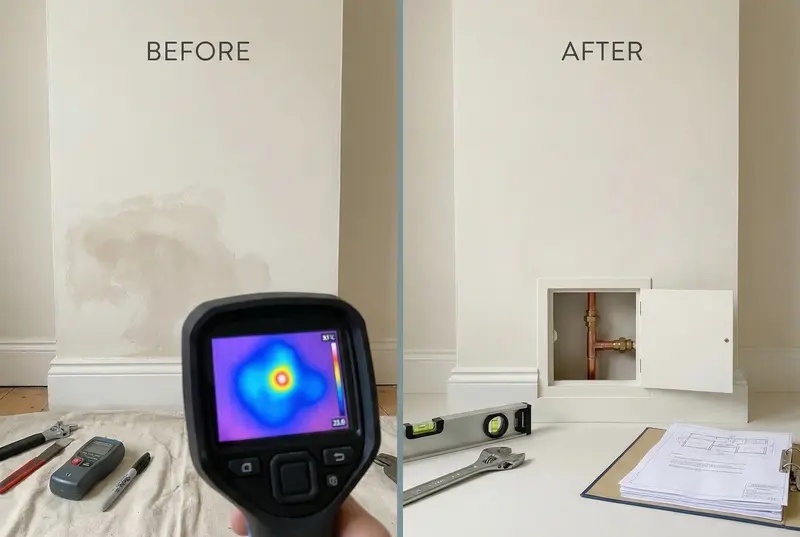
When a plumber arrives to investigate a suspected leak in your Holmfirth home, the first step is a thorough visual inspection — checking under sinks, around radiator valves, behind appliances, and looking at the condition of any accessible pipework. If the leak isn't immediately obvious, a pressure test on the system can confirm whether there's a loss somewhere in the supply or heating circuit. For hidden leaks, acoustic listening equipment and thermal imaging cameras are commonly used. These non-invasive tools allow a plumber to identify exactly where the water is escaping without tearing up floors or opening walls unnecessarily — something that matters a great deal in Holmfirth's older stone cottages and terraced houses where making good after any work is both time-consuming and expensive. Once the source is located, the repair itself depends on what's been found. A straightforward joint or fitting replacement might take under an hour. A section of corroded copper pipe in an older property may require a longer run to be replaced, particularly if access is awkward. In some cases — particularly with underground supply pipes on the modern estates — a short section of trenching may be needed, though plumbers will always aim to minimise disruption. After any repair, the system is re-pressurised and checked before the job is signed off.
Why Choose a Local Holmfirth Specialist
Choosing a plumber who knows Holmfirth makes a real practical difference. A local tradesperson will be familiar with the typical pipework layouts in the town's older stone terraces and cottages, and they'll understand the quirks that come with moderately hard water conditions in this part of West Yorkshire. They're also more likely to have relationships with local merchants, meaning parts can be sourced quickly without delays. And when it comes to making good after a repair — matching stone, plaster, or period-style fittings — someone who works regularly in Holmfirth will know what's expected to a much higher standard than a contractor passing through.
Frequently Asked Questions
How do I know if I have a hidden leak in my Holmfirth property?
Common signs include an unexplained rise in your water bill, damp patches on walls or ceilings with no obvious cause, the sound of running water when all taps are off, or a water meter that keeps ticking when everything is shut down. In Holmfirth's older stone properties, musty smells in a room can also be an early warning sign worth taking seriously.
Will a plumber need to break up my floors or walls to find a leak?
Not necessarily. Most leak detection in Holmfirth today uses non-invasive tools like acoustic sensors and thermal imaging cameras that can pinpoint a leak without destructive investigation. That said, once the leak is found, some access may be needed to carry out the repair — though a good plumber will always keep this to the absolute minimum.
Does limescale from hard water really cause leaks in Holmfirth homes?
It can be a contributing factor, yes. Holmfirth's moderately hard water means limescale gradually builds up inside pipes and around fittings. Over time this increases internal pressure at joints and can cause compression fittings to fail, particularly in older copper pipework. It's worth having ageing fittings checked if your home hasn't had any plumbing attention in a while.
How quickly does a leak need to be fixed once it's been found?
As soon as reasonably possible. Even a small, slow leak can cause significant damage over weeks — especially in Holmfirth's stone-built properties where water can spread through thick walls without obvious signs. Water damage, damp, mould, and structural issues all become more expensive the longer a leak is left. If your water supply is affected, it becomes urgent from day one.
Other Plumbing Services in Holmfirth
What do you need?
Select your service and urgency level