Leak Detection & Repair in Norwich
Leaks have a habit of hiding in plain sight — or worse, hiding somewhere you can't see at all. A damp patch on a ceiling, an unexplained spike in your water bill, or the faint sound of running water when everything's turned off are all signs something's wrong. In Norwich, where a mix of older and newer housing stock means pipework ranges from decades-old lead and copper to modern plastic, tracking down the source of a leak isn't always straightforward.
Plumbing Conditions in Norwich
Hard water — Norfolk chalk and limestone
Mixed housing stock across different eras. With 22% of properties built before 1919, older pipework and drainage systems are common — specialist knowledge of period properties matters.
Leak Detection & Repair in Norwich — Local Expertise
Norwich's housing stock tells a story of several different eras of building, and each comes with its own plumbing quirks. The Edwardian semis found across areas like Earlham and Unthank Road often still have original or partially updated pipework — lead supply pipes were common in this era and, while many have been replaced, some remain, particularly on older stretches near the city centre. Post-war estates built across the 1950s and 60s in areas like Heartsease and Mile Cross tend to have copper pipework that, after 60-plus years, can develop pinhole leaks — especially given that Norwich sits in a moderately hard water area. Hard water accelerates limescale build-up inside pipes, which can eventually cause corrosion and micro-fractures. Modern developments, particularly those in the growth areas to the north and east of Norwich, typically use plastic push-fit systems that are more resistant to corrosion but have their own failure points around joints and fittings.
How We Work
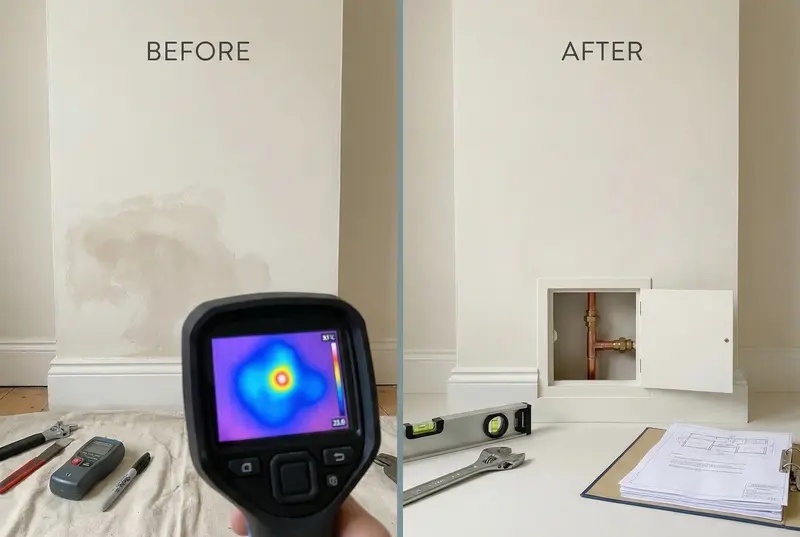
When a leak detection specialist arrives at your Norwich property, the first step is a thorough visual inspection — checking under sinks, around the boiler, behind radiators, and at any obvious suspect points. If the source isn't immediately visible, the engineer will move on to more advanced diagnostic methods. Thermal imaging cameras are commonly used to spot temperature variations in walls and floors that indicate hidden moisture. Acoustic listening equipment can detect the sound of water escaping through pipes buried in walls or under concrete floors — particularly useful in the older properties across central and north Norwich where pipework may be encased in original plaster or solid floors. Tracer gas testing may be used for underground pipes, where a harmless gas is introduced into the system and detected above ground using a sensor. Once the leak is located, you'll be given a clear explanation of where it is, what's caused it, and what repair options are available. Most straightforward repairs — a joint replacement, a section of pipe, or a new fitting — can be completed in the same visit. More complex leaks under floors or inside walls may require a return visit once the access work is scoped out properly, but your engineer should be transparent about that from the outset.
Why Choose a Local Norwich Specialist
A plumber who knows Norwich well brings real practical value to a leak detection job. They'll know, for instance, that a 1930s semi in Thorpe Hamlet is likely to have a very different pipe layout to a new-build flat near Canary Quay, and they'll approach each accordingly. Local tradespeople also tend to have established relationships with specialist equipment hire companies and can often get access to thermal imaging or acoustic kit without the long lead times a national firm might have. And if follow-up work is needed, they're on hand quickly — which matters when water damage is continuing to accumulate.
Frequently Asked Questions
How do I know if I have a hidden leak in my Norwich home?
Common signs include an unexplained increase in your water bill, damp patches on walls or ceilings that don't dry out, a musty smell, or the sound of running water when all taps are off. You can also check your water meter — if it's moving when no water is being used, that's a strong indicator of a leak somewhere in the system.
Will the plumber need to dig up my floor or open up my walls?
Not necessarily. Modern leak detection equipment — including acoustic sensors and thermal cameras — can pinpoint the location of a leak with a high degree of accuracy before any physical work begins. In many cases this means minimal disruption. When access is required, a good engineer will keep it as targeted as possible and discuss the options with you first.
Are older properties in Norwich more at risk of hidden leaks?
Yes, generally speaking. Edwardian and post-war properties in Norwich often have ageing copper or even lead pipework, and Norwich's moderately hard water can accelerate internal corrosion over time. That doesn't mean older homes are always trouble — well-maintained pipework can last decades — but if you're buying or renovating an older property in the city, it's worth getting the plumbing assessed.
How long does a typical leak detection job take in Norwich?
A straightforward visible leak can often be diagnosed and repaired within an hour or two. If specialist detection equipment is needed for a hidden leak, the diagnostic phase alone typically takes two to three hours. If the leak is deep within a floor or wall, the detection visit and the repair may need to be scheduled separately, though many local engineers aim to complete both in one day where possible.
Other Plumbing Services in Norwich
What do you need?
Select your service and urgency level