Leak Detection & Repair in Milton Keynes
Leaks have a way of hiding in plain sight — a slightly damp patch on the ceiling, a water bill that's crept up for no obvious reason, or the faint sound of running water when everything's supposedly turned off. In Milton Keynes, where tens of thousands of homes were built quickly across several decades of rapid urban expansion, hidden leaks are more common than most homeowners realise. Getting the right diagnosis early can save you from serious structural damage and an expensive repair bill down the line. This guide covers what leak detection and repair actually involves locally, what you can expect to pay, and the questions we hear most often from Milton Keynes residents.
Plumbing Conditions in Milton Keynes
Very Hard water — Chiltern chalk
Mixed housing stock across different eras. With 22% of properties built before 1919, older pipework and drainage systems are common — specialist knowledge of period properties matters.
Leak Detection & Repair in Milton Keynes — Local Expertise
Milton Keynes is unusual among UK cities in that so much of its housing stock was developed within a relatively short window — from the 1970s through to the present day. That mix of post-war estates, 1980s and 90s grid-square developments, and the continuing wave of modern new-build housing across areas like Broughton, Tattenhoe, and Oakgrove creates a wide range of plumbing challenges. Older systems often have copper or lead pipework that has aged badly, while newer builds sometimes have plastic push-fit connections that can fail silently inside walls and floor voids. To add to this, Milton Keynes sits firmly within a hard water zone, supplied by Thames Water and Affinity Water. That hardness accelerates limescale buildup inside pipes and around joints, increasing the chance of pinhole leaks and joint failures over time. It also makes water pressure issues more likely as internal pipe diameters narrow — something that can mask a leak or make it harder to locate accurately.
How We Work
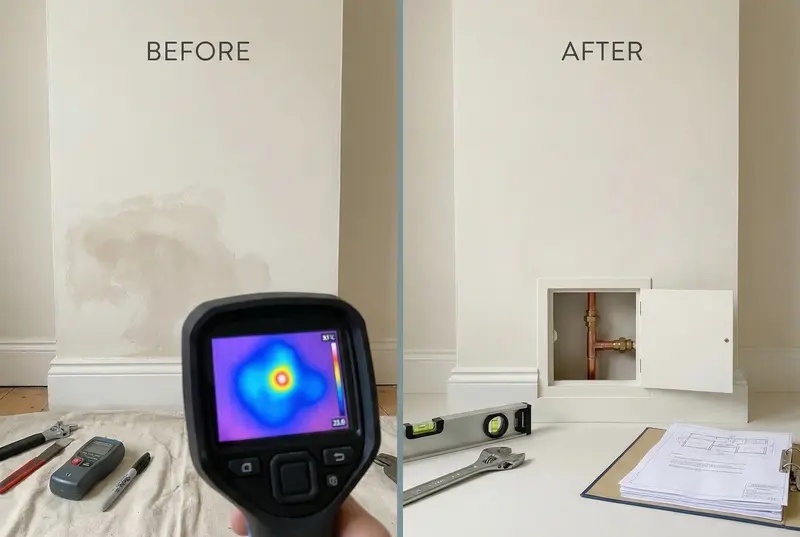
When a plumber arrives to investigate a suspected leak in your Milton Keynes home, the first step is a thorough visual inspection — checking visible pipework, around radiator valves, under sinks, around the toilet cistern, and at the boiler. If nothing obvious shows up, more targeted techniques come into play. Acoustic leak detection uses sensitive listening equipment to pick up the sound of water escaping through a pipe, even beneath concrete floors or behind plasterboard. Thermal imaging can identify cold or warm anomalies in walls and ceilings where a leak is hiding. For underground or supply pipe leaks, tracer gas detection is often used — a safe, harmless gas is introduced into the pipe and specialist sensors pinpoint exactly where it's escaping. Once the source is identified, you'll get a clear explanation of what's been found and what repair options are available. Repairs range from straightforward joint tightening or a simple section replacement, through to more involved work on buried supply pipes or within floor screeds. In Milton Keynes new-builds, where pipes are often run through concrete slab floors, pinpointing the leak precisely before opening anything up is particularly important — it keeps disruption to a minimum and avoids unnecessary damage to flooring and finishes.
Why Choose a Local Milton Keynes Specialist
Choosing a plumber who works regularly in Milton Keynes makes a real practical difference. They'll be familiar with the grid road layout and can reach you quickly, but more importantly, they'll understand the specific plumbing configurations common to different parts of the city — from the older pipe materials found in Bletchley and Wolverton to the modern underfloor heating systems and slab-mounted pipework in newer developments. A local tradesperson will also know how local water hardness affects systems here and won't be surprised by what they find. That experience tends to mean faster diagnosis, less unnecessary disruption, and more accurate quotes from the start.
Frequently Asked Questions
How do I know if I have a hidden leak in my Milton Keynes home?
Common signs include unexplained rises in your water bill, damp patches on walls or ceilings with no obvious cause, the sound of running water when everything is off, or a drop in water pressure. In Milton Keynes new-builds with concrete slab floors, you might notice warm patches on the floor — a sign of a leak in an underfloor heating or hot water pipe.
Can hard water cause leaks in my pipes?
Yes, and it's a genuine concern in Milton Keynes. The hard water supplied by Thames Water and Affinity Water causes limescale to build up inside copper pipes and around fittings over time. This narrowing can increase pressure, and combined with the corrosive effect on joints, it makes pinhole leaks and joint failures more likely — particularly in homes that are 20 or more years old.
Will the plumber need to dig up my floor to find and fix a leak?
Not necessarily, and a good tradesperson will avoid this wherever possible. Modern detection equipment — acoustic sensors, thermal cameras, tracer gas — can pinpoint a leak's exact location before anything is opened up. In Milton Keynes new-builds with screed floors, this precision is especially important. Some excavation may still be needed for the repair itself, but targeted detection keeps the damage to an absolute minimum.
How long does leak detection and repair take in a typical Milton Keynes property?
A straightforward detection visit usually takes one to three hours depending on property size and the complexity of the pipework. If specialist equipment like tracer gas is needed, allow up to half a day. Simple repairs can often be completed the same visit, while more involved work — buried pipe repairs, floor void access — may need a follow-up appointment, typically within a day or two.
Other Plumbing Services in Milton Keynes
What do you need?
Select your service and urgency level