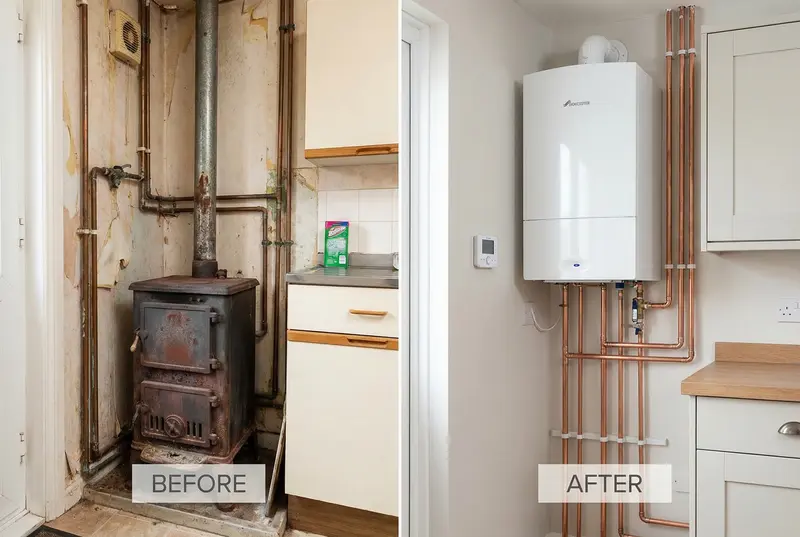
Boiler Installation in Milton Keynes
Replacing a boiler is one of the biggest home investments you'll make, and in Milton Keynes it's a decision that comes with some specific considerations. Whether your current boiler has given up the ghost mid-winter or you're planning ahead and upgrading before efficiency costs mount up, getting the installation right first time matters. Milton Keynes has grown rapidly over the decades, which means the city has an unusually wide mix of property ages and heating setups — from 1960s grid-square estates to brand-new builds on the city's expanding fringes. That variety means a one-size-fits-all approach simply doesn't work here, and knowing what to expect from the process will help you make a confident, well-informed decision.
Plumbing Conditions in Milton Keynes
Very Hard water — Chiltern chalk Regular descaling and annual servicing is particularly important in Milton Keynes.
Mixed housing stock across different eras. With 22% of properties built before 1919, older pipework and drainage systems are common — specialist knowledge of period properties matters.
Boiler Installation in Milton Keynes — Local Expertise
Milton Keynes is a genuinely varied city when it comes to housing stock, and that variety has a direct impact on boiler installations. Older post-war properties in areas like Wolverton, Bletchley, and Stony Stratford often have outdated pipework, larger radiator systems designed for older open-vented boilers, and loft tanks that need decommissioning when switching to a modern combi. On the other end of the spectrum, the newer new-build housing that dominates developments across Broughton, Tattenhoe, and Brooklands may already have modern sealed systems — but they're not without their own quirks, including underfloor heating zones that need careful consideration when sizing a replacement boiler. One thing that affects virtually every property in Milton Keynes regardless of age is the hard water supply. Supplied through Thames Water and Affinity Water, the local water is notably hard, which accelerates limescale buildup inside heat exchangers and pipework. This makes fitting a scale reducer or magnetic system filter — such as a Fernox or Adey MagnaClean — genuinely important here, not just a nice optional extra. Ignoring it will shorten the lifespan of even a brand-new boiler.
How We Work
A boiler installation in Milton Keynes typically follows a clear sequence, and understanding it helps you know what a good engineer should be doing. The process begins with a proper site survey — a competent installer will assess your current system, check the flue route options, look at the gas supply pressure, and discuss your hot water demand before recommending a boiler size and type. Don't accept a quote from someone who hasn't seen the property. Once you've agreed on the specification, the installation day itself usually runs between six and ten hours for a straightforward like-for-like combi replacement, or one to two days if the job involves a system conversion — for instance, moving from a heat-only boiler with a tank in the airing cupboard to a combi, which is a very common upgrade in Milton Keynes's older terraced and semi-detached properties. During the install, the engineer should drain down the existing system, flush it thoroughly — a power flush is often recommended in older systems with sludge buildup — fit the new boiler, connect flue and gas pipework, install the filter and scale reducer, and commission the unit. Commissioning includes setting the boiler pressure, balancing the radiators, and registering the warranty with the manufacturer. You should receive a Building Regulations compliance certificate (a Gas Safe notification) at the end of the job — this is a legal requirement, not optional, and any installer who can't provide it should be avoided.
Why Choose a Local Milton Keynes Specialist
Choosing a Gas Safe registered engineer who works regularly in Milton Keynes makes a practical difference. They'll be familiar with the specific housing types across the city, understand where flue restrictions apply in newer developments, and know the quirks of the local water supply and what corrosion or scaling to expect inside older systems. A local engineer is also easier to call back if anything needs adjusting after installation, and many offer ongoing servicing relationships that keep your warranty valid year after year. Supporting a local Milton Keynes tradesperson also means faster response times and someone with a genuine reputation to protect in your community.
Frequently Asked Questions
How long does a boiler installation take in Milton Keynes?
A like-for-like combi boiler swap in a typical Milton Keynes semi-detached or terraced property usually takes one full day — roughly six to eight hours. If you're converting from a conventional system with a hot water cylinder and cold water tank, or if the pipework needs significant work, budget for two days. Your engineer should give you a clear time estimate during the survey.
Do I need a power flush when getting a new boiler in Milton Keynes?
In many cases, yes — particularly in older properties in areas like Bletchley, Wolverton, or Newport Pagnell where systems have been running for 15 or more years. Milton Keynes's hard water accelerates sludge and limescale buildup inside radiators and pipework. Fitting a new boiler onto a contaminated system can void the warranty and cause early failure. A reputable installer will check and advise you honestly.
What boiler type is best for a new-build home in Milton Keynes?
Most new-build properties in Milton Keynes already have a combi boiler installed, so a replacement combi is usually the natural choice. However, larger new-builds with multiple bathrooms may benefit from a system boiler with an unvented cylinder for better hot water flow. Some developments also have underfloor heating, which requires a boiler with a lower flow temperature capability — worth flagging to your installer.
Is a scale reducer really necessary in Milton Keynes?
Yes, it's strongly advisable. Milton Keynes sits in one of England's harder water zones, served by Thames Water and Affinity Water. Hard water causes limescale to form inside the boiler's heat exchanger, reducing efficiency and eventually causing damage. Most boiler manufacturers now recommend or require a scale reducer to keep the warranty valid in hard water areas. It's a relatively small added cost that protects a significant investment.
Other Plumbing Services in Milton Keynes
What do you need?
Select your service and urgency level