Leak Detection & Repair in Hull
Water leaks are one of those problems that rarely announce themselves clearly — instead, they quietly drive up your bills, damage your walls, and undermine your home's structure over weeks or months before you spot them. In Hull, where the combination of ageing pipe networks, flat local geography, and clay-heavy soils can all put pressure on plumbing systems, getting a leak found and fixed promptly is genuinely important. Whether you've noticed a damp patch on a ceiling, a mysteriously high water bill, or the faint sound of running water when everything's turned off, professional leak detection can pinpoint the source quickly and accurately — saving you from unnecessary digging, damage, or guesswork.
Plumbing Conditions in Hull
Hard water — Yorkshire Wolds chalk
Mixed housing stock across different eras. With 22% of properties built before 1919, older pipework and drainage systems are common — specialist knowledge of period properties matters.
Leak Detection & Repair in Hull — Local Expertise
Hull's housing stock is one of the most varied in the region. You've got Victorian terraces in areas like Newland Avenue and Princes Avenue with original lead or early copper pipework that's well over a century old, post-war council properties across east Hull and Bilton Grange that often have ageing galvanised steel pipes prone to internal corrosion, and modern developments around the waterfront and Kingswood with plastic push-fit systems that are generally more reliable but not immune to joint failures. Each property type throws up different leak risks. Older homes are more likely to suffer from pinhole corrosion or degraded pipe joints; newer builds more commonly have leaks at fittings rather than along pipe runs. Hull also sits in a moderately hard water area, which over time causes limescale to build up inside pipes and around joints — this can mask slow leaks and, when scale eventually breaks off, leave gaps that allow water ingress. The city's relatively flat terrain means drainage doesn't always have gravity working in its favour, which can contribute to slow leak development going unnoticed for longer.
How We Work
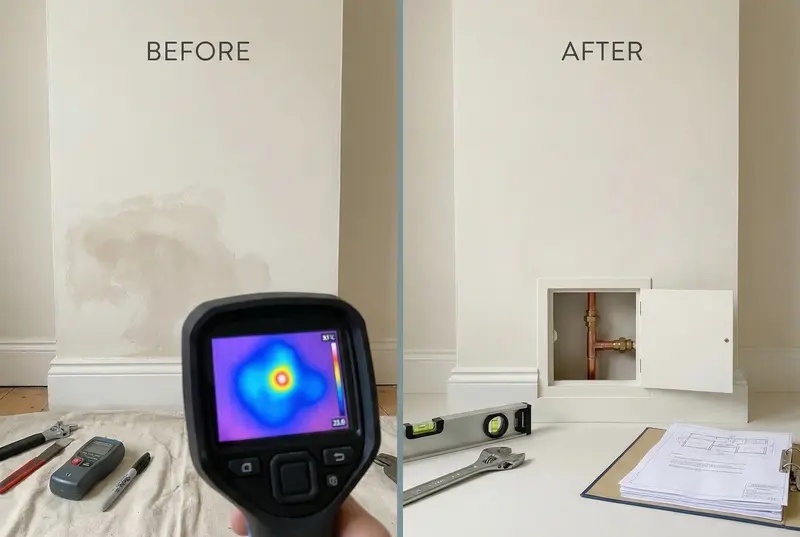
Professional leak detection in Hull typically starts with a thorough visual inspection — checking obvious signs like water staining, mould growth, peeling paint, or soft flooring. From there, a plumber will use non-invasive techniques before reaching for any tools. Acoustic listening devices can detect the sound of water escaping through pipes beneath floors or behind walls. Thermal imaging cameras identify temperature differences caused by water movement, even behind plasterwork. Tracer gas or pressure testing can be used for hidden pipework runs, particularly useful in the older terraced properties common across much of Hull where pipes are often buried in solid floors or buried walls. Once the leak source is confirmed, the repair itself depends on what's been found. A pinhole in a copper pipe might need a short section replaced or a repair clamp fitted. A failed compression joint may simply need retightening or new olives fitting. Burst or corroded sections in Victorian-era lead or steel pipework typically require a full pipe replacement — often a good opportunity to upgrade to modern copper or plastic. Most standard leak repairs in a typical Hull home take between one and four hours. Where the leak is beneath concrete flooring or behind tiled walls, some controlled access cutting will be necessary, though good tradespeople will always try to minimise this.
Flood Risk Area
Hull has elevated flood risk according to Environment Agency data. Our emergency plumbers are experienced with flood damage, drain clearance, and emergency pump-out services.
Why Choose a Local Hull Specialist
Choosing a Hull-based plumber for leak detection matters more than it might seem. Someone who works regularly across the city will know the quirks of local property types — the clay floor construction common in many east Hull terraces, the type of pipework typically installed in Bransholme-era housing, or the drainage patterns around low-lying areas near the Humber. They'll also have working relationships with local suppliers, which means parts arrive faster and jobs aren't held up waiting on deliveries. A local tradesperson has their reputation on the line in the community they work in every day, which tends to focus the mind when it comes to doing a thorough, honest job.
Frequently Asked Questions
How do I know if I have a hidden leak in my Hull home?
The most common signs are an unexplained rise in your water bill, damp patches on walls or ceilings, the sound of running water when no taps are on, or soft spots in flooring. In older Hull properties, musty smells in rooms with solid floors can also indicate a slow underground leak that's been present for some time.
Will the plumber need to dig up my floor or break through walls?
Not necessarily. Modern acoustic and thermal imaging tools can locate most leaks without any destructive access. If the leak is confirmed to be beneath a concrete floor or inside a solid wall, some controlled cutting will be needed — but a good Hull plumber will always aim to keep this to the minimum required and will discuss access with you beforehand.
Is limescale a factor in leaks in Hull properties?
Yes, Hull's moderately hard water does contribute to limescale build-up inside pipes, particularly in older copper systems. Over time, scale deposits can cause internal corrosion and stress on joints. It's worth asking your plumber to assess the general condition of your pipework while they're investigating a leak, especially in homes over 30 years old.
How quickly should I get a leak seen to in Hull?
As soon as possible. Even a slow drip can cause significant structural dampness over weeks, particularly in Hull's older Victorian terraces where walls are often solid brick with no cavity. Water damage to timber joists, plaster, and insulation is expensive to put right — acting early almost always saves money compared with leaving it.
Other Plumbing Services in Hull
What do you need?
Select your service and urgency level