Leak Detection & Repair in Brighton and Hove
The most common reason people in Brighton and Hove call a plumber for leak detection is a water bill that's suddenly shot up with no obvious explanation. You haven't changed your habits, but your meter tells a different story. Hidden leaks — inside walls, under floors, or buried in the ground between the meter and your stop valve — are frustratingly common in this city, and they can quietly waste hundreds of litres a day before you spot any visible damage. Getting a professional leak detection survey done quickly is the difference between a straightforward repair and a much larger, more expensive job involving structural drying, replastering, or worse.
Plumbing Conditions in Brighton and Hove
Hard water — South Downs chalk
Mixed housing stock across different eras. With 22% of properties built before 1919, older pipework and drainage systems are common — specialist knowledge of period properties matters.
Leak Detection & Repair in Brighton and Hove — Local Expertise
Brighton and Hove has one of the most varied property stocks on the south coast, and that variety directly shapes the kinds of leaks plumbers find here. Victorian terraces in areas like Hanover, Preston Park, and Kemp Town were built with lead or early copper pipework that's now well over a hundred years old — joints corrode, pipes fatigue, and small pinhole leaks are almost expected at this age. Post-war estates across Whitehawk, Moulsecoomb, and Hollingbury often have original plastic or copper systems that have been patched and extended over decades, creating weak points at joints and under concrete screed floors. Newer builds and converted flats in the city centre tend to have pressurised systems where even a small fault can cause significant water loss. Brighton and Hove is also in a hard water area served by Affinity Water, meaning limescale buildup inside pipework is a real factor — it can cause pressure changes that stress older joints and accelerate corrosion, particularly in properties that haven't had any pipework work done in years.
How We Work
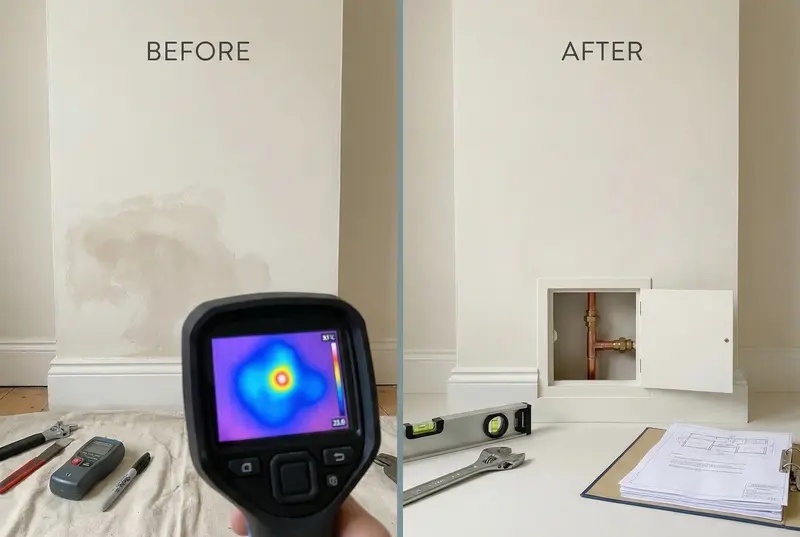
When a leak detection specialist visits your Brighton and Hove property, the first step is a thorough visual inspection — checking around radiators, under sinks, around the boiler, and looking for damp patches, staining, or soft flooring. If nothing obvious turns up, the plumber will move to more technical methods. Acoustic listening equipment can detect the sound of water escaping through pressurised pipes, even through concrete or timber floors. Thermal imaging cameras are increasingly common and can show temperature differences in walls and floors that indicate moisture movement behind the surface. For suspected underground or slab leaks, tracer gas is sometimes introduced into the pipework — a safe, inert gas that seeps out at the leak point and is detected with a sensitive probe above ground, pinpointing the exact location without digging up the whole area. Once the leak is found, the plumber will discuss your repair options. Many leaks in Brighton and Hove properties can be accessed with minimal damage — cutting a small section of plasterboard or lifting a few tiles — but some, particularly in Victorian properties with original pipework runs in unusual locations, may require more investigative work. A good tradesperson will explain exactly what they've found, show you evidence, and give you a clear quote before any repair work begins. Most straightforward repairs are completed in the same visit.
Why Choose a Local Brighton and Hove Specialist
Hiring a Brighton and Hove-based plumber for leak detection genuinely matters. Local tradespeople know the quirks of the city's housing stock — they've worked in enough Hanover terraces and Whitehawk semis to know where Victorian builders typically ran their pipes, and which post-war estates are prone to underfloor leaks. They're also familiar with the water pressure variations across different parts of Brighton and Hove, which can affect leak behaviour. A local plumber can get to you quickly, which matters when an active leak is causing ongoing damage, and they have a reputation in the community worth protecting.
Frequently Asked Questions
How do I know if I have a hidden leak in my Brighton and Hove home?
The most reliable first check is your water meter. Turn off all water in the house, note the meter reading, wait 30 minutes without using anything, then check again. If the reading has moved, you almost certainly have a leak somewhere. Other signs include unexplained damp patches, a musty smell, or a boiler that keeps losing pressure in a Brighton and Hove property.
Will the plumber need to dig up my floors or knock through walls?
Not necessarily. Modern leak detection equipment — including acoustic sensors and thermal imaging cameras — can often locate a leak precisely without any invasive work first. In many Brighton and Hove properties, particularly Victorian terraces, this means only a small targeted access point is needed rather than widespread disruption. The aim is always to find the leak with the least possible damage to your home.
Does hard water in Brighton and Hove make leaks more likely?
It can be a contributing factor. Affinity Water supplies much of Brighton and Hove with relatively hard water, which leaves limescale deposits inside pipework over time. This can narrow pipe bores, increase water pressure on joints, and accelerate corrosion — particularly in older copper systems. It won't cause leaks on its own, but it does add stress to pipework that's already ageing in Victorian or post-war properties.
Is leak detection covered by home insurance?
It depends on your policy. Many home insurance policies in the UK cover trace and access — meaning the cost of finding and accessing a leak — but not always the repair itself. It's worth checking your policy documents before calling a plumber. A Brighton and Hove plumber experienced in insurance work can usually provide the written evidence and report your insurer will need to process a claim.
Other Plumbing Services in Brighton and Hove
What do you need?
Select your service and urgency level