Leak Detection & Repair in Bath
Leaks have a way of hiding in plain sight — a slightly higher water bill, a damp patch on a ceiling, or the faint sound of running water when everything should be off. In Bath, where a large proportion of homes are Georgian townhouses and period properties built centuries before modern plumbing existed, tracking down the source of a leak often takes more skill and patience than it would in a newer build. The good news is that modern leak detection methods mean there's no need to start ripping up floors or hacking through walls on a hunch. A qualified local plumber can locate the problem precisely and get it fixed with minimal disruption to your home.
Plumbing Conditions in Bath
Moderately Hard water
Mixed housing stock across different eras. With 22% of properties built before 1919, older pipework and drainage systems are common — specialist knowledge of period properties matters.
Leak Detection & Repair in Bath — Local Expertise
Bath's housing stock is genuinely unlike most of the UK. The city's iconic Georgian terraces and townhouses — many of which are Grade I or Grade II listed — come with original or heavily adapted pipework that can be seriously challenging to work with. Pipes may run through thick stone walls, beneath original flagstone floors, or through voids that simply weren't designed with maintenance access in mind. Bath also sits in a moderately hard water area, which means limescale build-up inside pipes and around joints is a real contributing factor to leaks over time. Scale deposits cause joints to weaken and small pinhole corrosion to develop in older copper pipework, something that's especially common in the older housing stock across areas like Lansdown, the city centre, and Bathwick. Spotting and addressing these issues early is far cheaper than dealing with the structural damage a slow, undetected leak can cause to original plasterwork, timber floors, or historic masonry.
How We Work
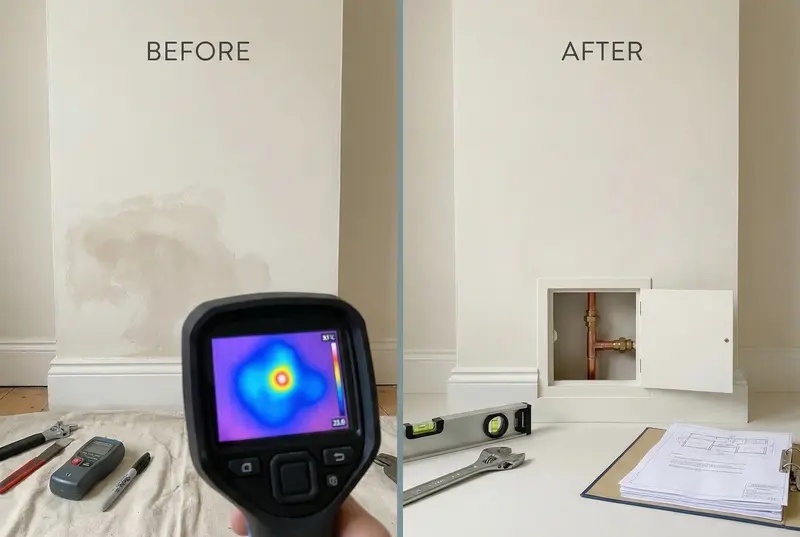
The process starts with a thorough investigation before any tools come out. Your plumber will ask about what you've noticed — unusual water bills, damp spots, reduced water pressure — and check your meter to confirm whether water is actively escaping somewhere in the system. From there, the most common approach in Bath homes is acoustic leak detection, where a specialist listening device is used to pick up the sound of water escaping under pressure. This is particularly useful in properties where pipes are buried beneath solid floors or run inside thick stone walls. Thermal imaging cameras can also be used to identify temperature differences that point to a hidden leak behind a surface. Once the source is pinpointed, your plumber will explain clearly what's been found and walk you through your repair options before any work begins. Repair methods vary depending on what's been found — it might be a simple joint replacement, a section of pipe being cut out and re-run, or, in more complex cases with older pipework in a Georgian property, a recommendation to reline or reroute a section entirely. You'll be kept informed at every stage, and in listed buildings, your plumber should be aware of any restrictions around making structural alterations that might affect how the repair is carried out.
Flood Risk Area
Bath has elevated flood risk according to Environment Agency data. Our emergency plumbers are experienced with flood damage, drain clearance, and emergency pump-out services.
Why Choose a Local Bath Specialist
Choosing a plumber who regularly works in Bath genuinely makes a difference for this kind of job. Local tradespeople understand the quirks of Georgian and period properties — the unexpected pipe routes, the fragile original materials, the need to work carefully around listed building considerations. They'll also know which Bath neighbourhoods tend to have older cast-iron or lead pipework that needs a different approach, and they're familiar with how limescale from the local moderately hard water supply affects joints and fittings over time. That local knowledge speeds up diagnosis, reduces guesswork, and helps avoid costly mistakes that someone unfamiliar with the area's housing stock might make.
Frequently Asked Questions
Can a leak be detected without digging up my floors?
In most cases, yes. Acoustic detection equipment and thermal imaging allow plumbers to pinpoint leaks with a high degree of accuracy before any floors or walls are disturbed. This is especially important in Bath's period properties where original flagstones or Victorian tiled floors are involved — the goal is always to minimise disruption and only open up the area once the location is confirmed.
My Bath terrace house has had the same pipework for decades — should I be worried about leaks?
Older pipework in Bath's Georgian and Victorian terraces can be very reliable, but moderate hard water causes gradual limescale build-up and joint degradation over time. If you're seeing unexplained damp, a rising water bill, or reduced pressure, it's worth having a plumber take a look. Catching a slow leak early is far less costly than dealing with structural damage to original plasterwork or timber later on.
How long does a leak detection visit typically take in Bath?
A standard diagnostic visit usually takes between one and two hours depending on the property and how accessible the pipework is. In larger Bath townhouses or buildings with complex layouts, it may take a little longer. If a straightforward repair can be completed on the same visit, many plumbers will carry common fittings and materials to do so, saving you the cost of a second call-out.
Does my home insurance cover leak detection and repair in Bath?
Many home insurance policies include trace and access cover, which pays for the cost of finding and accessing a leak, though the repair itself may not always be covered. It's worth checking your policy wording before the plumber arrives. Your plumber should be able to provide a written report of findings, which most insurers will ask for when you make a claim.
Other Plumbing Services in Bath
What do you need?
Select your service and urgency level