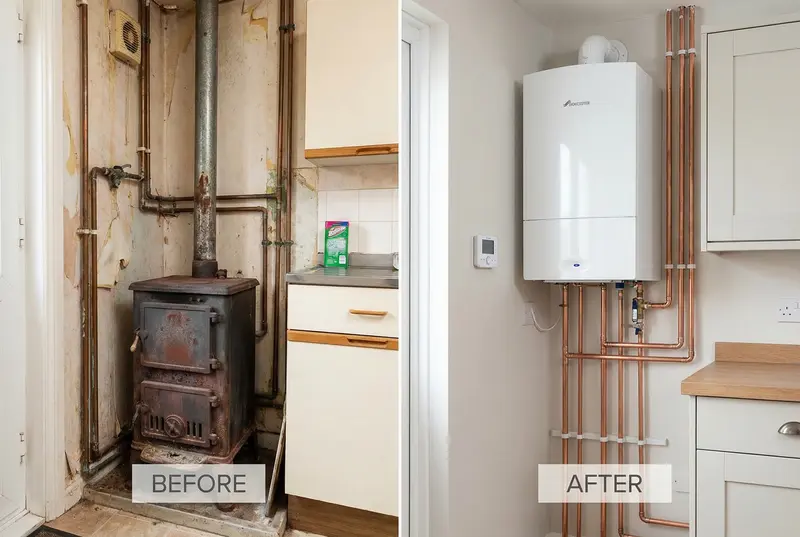
Boiler Installation in Bath
Bath is a city built on hot springs and heritage, but when it comes to keeping homes reliably warm, most residents are dealing with a very different kind of heat source — and an ageing one at that. Boiler installation in Bath comes with its own set of considerations that you simply don't encounter in a modern estate town. Whether you're in a tall Georgian townhouse on the Circus, a converted flat in a Regency terrace, or a period property tucked into one of the city's many hillside streets, replacing your boiler isn't always straightforward. Getting it right first time means understanding the building, the local water supply, and how modern heating systems need to be configured to work efficiently in older homes.
Plumbing Conditions in Bath
Moderately Hard water
Mixed housing stock across different eras. With 22% of properties built before 1919, older pipework and drainage systems are common — specialist knowledge of period properties matters.
Boiler Installation in Bath — Local Expertise
Bath's housing stock is dominated by Georgian townhouses and period properties, many of which are listed or sit within conservation areas. This has a real impact on boiler installations. Running new flue routes through thick stone walls, finding discreet positions for external pipework, and navigating planning sensitivities around listed building consent all add complexity that a standard suburban installation simply doesn't involve. Pipework in these properties is often old — sometimes original lead or iron — and may need partial or full replacement before a new boiler can be fitted safely and efficiently. Bath also sits in a moderately hard water area, which means limescale build-up in heat exchangers and pipework is a genuine concern over time. Fitting a magnetic system filter and a scale reducer or inhibitor dosing system is strongly advisable alongside any new boiler installation in Bath, and reputable engineers will factor this into their recommendations rather than treating it as an optional extra.
How We Work
A boiler installation in Bath typically begins with a proper home survey — not just a quick look at the existing boiler, but an assessment of your current system, radiator sizing, pipework condition, and the property's heat loss characteristics. In older Bath properties, this survey stage matters more than most homeowners realise, because assumptions that work in newer builds often don't apply here. Once the right boiler type and size has been agreed, your installer will arrange a date and typically complete the work in one full day, though complex installations in large Georgian townhouses can run to two days. On the day, the old boiler is drained down and removed, new pipework connections are made, the boiler is fitted and flued, and the system is flushed — ideally with a powerflush if the existing system has older sludge in it. Controls and thermostats are then fitted and configured, the system is filled, pressurised, and tested, and your Gas Safe engineer will commission the boiler and complete the relevant safety documentation. Before they leave, a good installer will walk you through operating the new controls and explain the warranty registration process. You should also receive a Building Regulations compliance certificate, which is legally required for any gas boiler installation in England.
Why Choose a Local Bath Specialist
Choosing a Gas Safe registered engineer who works regularly in Bath makes a genuine difference on installations in this city. They'll already understand the quirks of Georgian and period properties — the thick limestone walls, the unusual floor layouts, the care needed around listed building requirements. They're also more likely to have working relationships with local building control and to know which flue positions are likely to raise objections in conservation areas before work starts, saving you delays and headaches. A local engineer is also easier to get back if anything needs attention under warranty, which matters on a job of this size.
Frequently Asked Questions
Do I need listed building consent to install a new boiler in a Bath property?
If your property is listed, you may need consent for work that affects the character of the building — particularly if a new flue position is visible from the street. Your installer should flag this during the survey stage. Many Bath engineers are experienced with listed building requirements and can advise you before any work is agreed, helping you avoid problems with the local planning authority.
What type of boiler is best for a Georgian townhouse in Bath?
It depends on the property's hot water demand and whether there's space for a cylinder. Large Georgian townhouses with multiple bathrooms often suit a system boiler with a well-insulated cylinder rather than a combi, which can struggle to meet simultaneous hot water demand. A proper survey will establish which option makes most sense for your specific property, usage patterns, and existing pipework layout.
How does Bath's hard water affect my new boiler, and what can I do about it?
Bath sits in a moderately hard water area, meaning limescale can gradually build up inside your boiler's heat exchanger and reduce efficiency over time. Fitting a scale reducer or inhibitor dosing unit at installation significantly reduces this risk. A magnetic system filter also protects against sludge and debris. These additions are modest in cost but can meaningfully extend the life of your new boiler.
How long does a boiler installation take in Bath, and will I be without heating all day?
Most boiler replacements are completed in a single working day, so you'll be without heating and hot water during the installation but should have everything running by early evening. More complex jobs in larger Bath properties — where new pipework routes are needed or a powerflush is being carried out — may take two days. Your installer should give you a realistic timeframe after the survey.
Other Plumbing Services in Bath
What do you need?
Select your service and urgency level