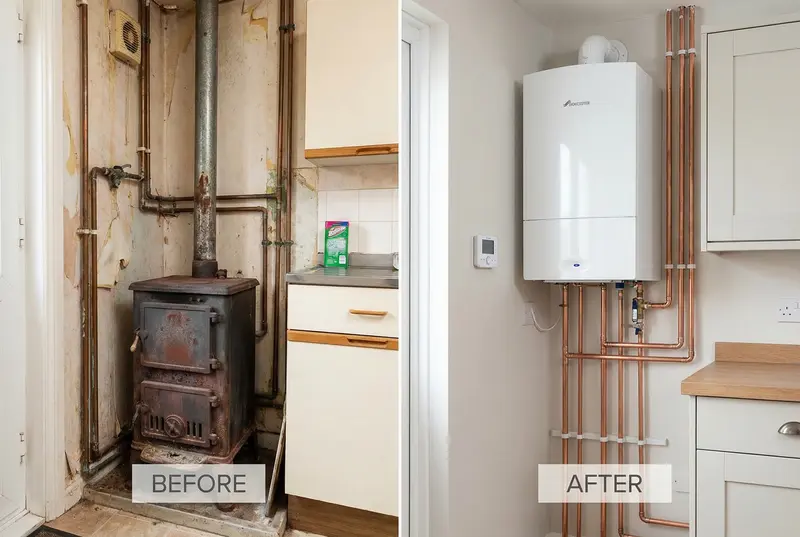
Boiler Installation in Luton
Most people in Luton start thinking about a new boiler when their old one breaks down in the middle of winter — but the smarter move is replacing it before that happens. If your boiler is over 12-15 years old, producing uneven heat, cycling on and off constantly, or pushing your gas bills higher every year, it's telling you something. A modern condensing boiler can run at over 90% efficiency compared to 60-70% for older units, meaning real savings on energy bills every month. Whether you're in a terraced Victorian house in Bury Park, a post-war semi in Stopsley, or a newer build near Luton town centre, getting the right boiler properly installed makes a significant difference to your comfort and costs.
Plumbing Conditions in Luton
Very Hard water — Greensand and chalk geology Regular descaling and annual servicing is particularly important in Luton.
Mixed housing stock across different eras. With 22% of properties built before 1919, older pipework and drainage systems are common — specialist knowledge of period properties matters.
Boiler Installation in Luton — Local Expertise
Luton's housing stock is genuinely varied, and that variety matters when it comes to boiler installation. Victorian terraces — common across areas like High Town and New Town — often have narrower flue routes, older pipework, and limited cupboard space, which can add complexity to an installation. Post-war semis and council-built properties, widespread across Leagrave, Farley Hill, and Stopsley, sometimes have outdated gravity-fed systems with a separate hot water cylinder that need converting to a modern combi setup. Newer builds around Butterfield Green or Napier Park are more straightforward, but may have specific system requirements depending on how they were originally plumbed. On top of all this, Luton sits in a hard water area supplied by Affinity Water, which means limescale build-up is a genuine concern. This affects heat exchangers, pipework, and system components over time — and it's one reason why fitting a magnetic filter and scale reducer during installation isn't optional here, it's essential to protect your investment.
How We Work
A full boiler installation in Luton typically takes one to two days, depending on the complexity of your setup. Here's what the process actually looks like. First, a Gas Safe registered engineer will survey your property, assess your current system, check flue options, and recommend the right boiler type and output size for your home. Getting the sizing right matters — an oversized boiler is as wasteful as an undersized one. On installation day, the engineer will drain down the existing system, remove the old boiler, and flush the pipework using a powerflush if necessary to clear out sludge and debris that's built up over the years. In Luton's hard water environment, this step is especially important. The new boiler is then fitted, connected to the gas supply (which requires a Gas Safe inspection), and the flue is routed — either through an external wall or vertically through the roof, depending on your property type. A system filter (such as a Magnaclean) and inhibitor are added to protect against future sludge. The engineer will then commission the boiler, check all connections for leaks, test the controls, and run through how to use the system with you. You should receive a Building Regulations Benchmark certificate, and the installation should be registered with Gas Safe on your behalf. Always confirm this happens — it's a legal requirement, not a courtesy.
Why Choose a Local Luton Specialist
Choosing a local Luton-based installer rather than a national call centre firm genuinely pays off with a job like this. A local engineer knows the quirks of Luton's housing stock — they'll have fitted boilers in dozens of Victorian terraces in Bury Park and understand the common pipework layouts in post-war estates across Leagrave. They're also accountable to their local reputation in a way that a remote operation simply isn't. After-care matters too: if there's an issue in the first few months, a local engineer can be back at your door quickly rather than leaving you waiting days for a national booking slot.
Frequently Asked Questions
How long does a boiler installation take in Luton?
Most straightforward combi-to-combi swaps take one full day. If you're converting from a system with a separate hot water cylinder, or if the property has complex pipework — common in older Victorian homes in Luton — it may extend to two days. Your engineer should give you a clear timeframe after the initial survey.
Do I need a powerflush when getting a new boiler in Luton?
In many cases, yes — especially in Luton where hard water accelerates sludge and scale build-up inside pipework. Installing a new boiler onto a dirty system can damage the heat exchanger within a few years and may invalidate your warranty. A reputable engineer will assess whether a full powerflush or a chemical flush is needed before fitting.
What size boiler do I need for a typical Luton semi-detached house?
A three-bedroom semi — the most common property type across much of Luton — typically suits a combi boiler in the 24-30kW range. Larger detached homes or properties with multiple bathrooms may need a 35-40kW model or a system boiler with a cylinder. Sizing should always be calculated by your engineer based on your actual heat loss and hot water demand.
Is my new boiler installation registered automatically with Gas Safe?
It should be, but you need to confirm this with your installer. Any Gas Safe registered engineer fitting a new boiler in Luton is legally required to notify the local authority under Building Regulations — in practice, this is done through a scheme like CORGI-registered notification or directly via Gas Safe. You should receive a Benchmark commissioning checklist and registration confirmation. Keep these documents safe for future sale of the property.
Other Plumbing Services in Luton
What do you need?
Select your service and urgency level