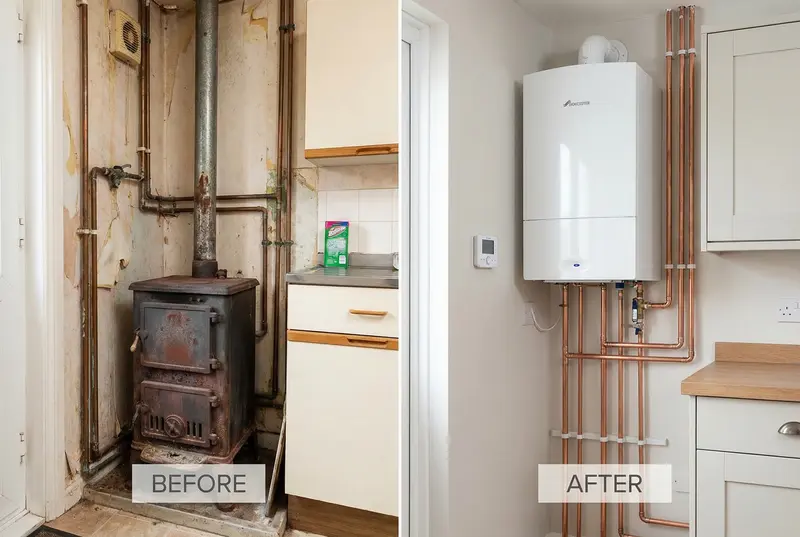
Boiler Installation in Exeter
That's a meaningful investment, but it's also one of the most impactful things you can do for your home's heating efficiency and long-term running costs. Exeter homeowners replacing an ageing system — particularly those with a boiler that's over 12 years old — can expect noticeable savings on energy bills alongside a much more reliable system. Get the right boiler matched to your property and you'll be warm, efficient, and largely worry-free for the next decade or more.
Plumbing Conditions in Exeter
Moderately Hard water
Mixed housing stock across different eras. With 22% of properties built before 1919, older pipework and drainage systems are common — specialist knowledge of period properties matters.
Boiler Installation in Exeter — Local Expertise
Exeter's housing stock is genuinely varied, and that variety matters when it comes to choosing the right boiler. Edwardian semis — common across areas like St Thomas and Heavitree — tend to have larger radiator systems with older pipework that may need flushing or partial replacement before a new boiler is commissioned. Post-war estates, particularly around Whipton and Pinhoe, were often built with economy in mind, and the original heating systems in these homes can be undersized for modern expectations of comfort. Newer developments on the outskirts of Exeter generally present fewer complications, with modern pipework and better insulation already in place. Exeter sits in a moderately hard water area, which means limescale build-up inside heat exchangers and pipework is a genuine concern over time. A good installer will factor this in — recommending scale inhibitors or system filters as part of the installation to protect your new boiler and extend its service life.
How We Work
A professional boiler installation in Exeter follows a clear process, and knowing what to expect helps you plan properly. It starts with a proper assessment of your home — the installer will look at your current system, the size of your property, your hot water demand, and the condition of existing pipework. This isn't just a formality; it directly shapes which boiler is recommended and whether any additional work is needed upfront. Most standard installations in Exeter take one to two days. On the first day, the old boiler is safely decommissioned and removed, pipework connections are checked and modified where necessary, and the new unit is fitted and connected. Any system flushing — using a process called power flushing — is usually done at this stage if sludge or debris is present in the heating circuit, which is common in older Exeter properties. On the second day, if needed, the system is fully commissioned, pressure-tested, and balanced. You'll also receive a full demonstration of the new controls, your warranty documentation, and a Building Regulations compliance certificate (also known as a BENCHMARK certificate), which you'll need for warranty purposes and when you eventually sell the property. All gas work must be carried out by a Gas Safe registered engineer — this is a legal requirement, not optional.
Why Choose a Local Exeter Specialist
Choosing a locally based installer in Exeter genuinely makes a difference. Someone who works in the city regularly will know the quirks of the local housing stock — the common pipework configurations in Edwardian semis, the challenges of older post-war estates, and the system types typically found across different parts of Exeter. They're also accountable in a way that a national call centre simply isn't. If something needs attention after installation, a local engineer can be with you quickly. They'll also have established relationships with local merchants, which sometimes means better access to parts and faster turnaround if anything needs attention under warranty.
Frequently Asked Questions
How long does a boiler installation take in Exeter?
Most standard installations in Exeter are completed in one day, though more complex jobs — particularly in older Edwardian properties or where the system type is changing — can take two days. Your installer should give you a clear timeline before work starts. Disruption is generally minimal, and your heating will be up and running before the engineer leaves.
Does hard water in Exeter affect my new boiler?
Yes, it can over time. Exeter's moderately hard water means limescale can gradually build up inside the heat exchanger, reducing efficiency and shortening boiler life. A good installer will recommend fitting a scale inhibitor or magnetic system filter at the time of installation. This is a relatively small addition that can make a meaningful difference to long-term reliability and running costs.
Do I need a power flush before my new boiler is installed?
Not always, but it's worth having your system assessed. In older Exeter properties — particularly Edwardian semis and post-war homes where the system hasn't been serviced regularly — sludge and debris in the pipework can damage a new boiler quickly. A power flush clears this out before installation. If your radiators have cold spots or the water in the system looks dark, it's usually worth doing.
What warranty should I expect on a new boiler in Exeter?
Most manufacturers offer between five and twelve years warranty, depending on the brand and model. To activate the full warranty period, the boiler typically needs to be installed by a Gas Safe registered engineer and registered with the manufacturer within 30 days. Annual servicing is also usually required to keep the warranty valid — something worth factoring into your ongoing costs when budgeting.
Other Plumbing Services in Exeter
What do you need?
Select your service and urgency level