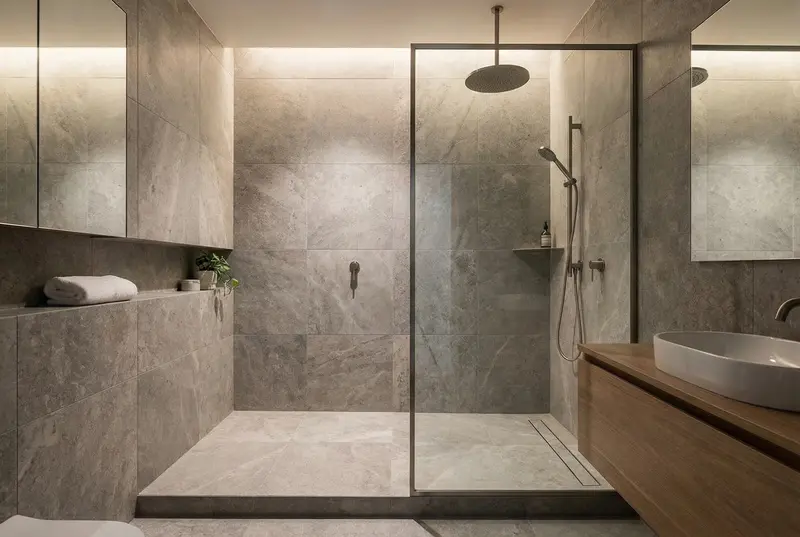
Wet Room Installation in Hammersmith and Fulham
Wet rooms have become one of the most sought-after bathroom upgrades in Hammersmith and Fulham, and it's easy to see why. Whether you're opening up a cramped ensuite, creating an accessible bathroom for a family member, or simply adding genuine value to a property before sale, a professionally installed wet room transforms how a space looks and functions. The challenge is getting the installation right from the start. Unlike a standard shower enclosure, a wet room relies entirely on precise waterproofing and drainage engineering — cut corners here and you're looking at costly structural damage within a few years. Done properly, it's a long-lasting, low-maintenance upgrade that suits the borough's mix of older character homes and contemporary apartments.
Plumbing Conditions in Hammersmith and Fulham
Very Hard water — significant limescale buildup, annual boiler servicing essential
Mixed housing stock across different eras. With 22% of properties built before 1919, older pipework and drainage systems are common — specialist knowledge of period properties matters.
Wet Room Installation in Hammersmith and Fulham — Local Expertise
Hammersmith and Fulham's housing stock throws up some interesting challenges when it comes to wet room installation. Edwardian semis — common throughout Fulham and parts of Hammersmith — tend to have older timber floor joists that require careful assessment before any wet room work begins. These floors need to be checked for strength and levelness, and sometimes reinforced or rebuilt before a tanking system and drain can be properly installed. Post-war estate properties, found across much of the borough, often have solid concrete floors which are actually well-suited to wet room conversion, but pipework routing can be more complex. Newer developments in the riverside areas around Fulham and Hammersmith typically have modern plumbing layouts that are more straightforward to adapt. One factor worth knowing: Hammersmith and Fulham sits in a moderately hard water area, which means limescale build-up on glass screens, tiled surfaces, and shower fittings is a real consideration. Specifying the right fixtures and using a good sealant regime during installation will save you significant maintenance headaches later.
How We Work
A wet room installation in Hammersmith and Fulham typically follows a clear sequence of work, and understanding each stage helps you know what you're paying for. It starts with a proper survey — a good installer will assess your floor construction, existing drainage position, water pressure, and the condition of surrounding walls before quoting. This stage matters enormously in older properties especially. Once the scope is agreed, the existing bathroom fittings are stripped out and the floor and walls are prepared. For timber-joist floors, this often means laying a cement particle board or similar substrate to create a solid, stable base before any waterproofing is applied. The tanking process — applying a waterproof membrane across the floor and up the walls — is the most critical part of the job. This is not something to rush or skimp on. A properly tanked wet room uses specialist tanking compound applied in multiple coats, with reinforcing tape at all joints and upstands. The linear or centre drain is then set into the floor at the correct fall gradient, usually around 1-2%, so water flows away efficiently. Tiling comes next, followed by installation of your chosen shower valve, screen (if applicable), and any heated towel rails or underfloor heating. Finally, all silicone joints are carefully finished and the space is tested before handover. From strip-out to completion, most wet room projects in Hammersmith and Fulham take between five and ten working days depending on complexity.
Why Choose a Local Hammersmith and Fulham Specialist
Choosing a tradesperson who regularly works across Hammersmith and Fulham makes a genuine practical difference. They'll already understand the quirks of the borough's property types — knowing, for example, that a Victorian or Edwardian terraced house in Fulham is likely to have older joinery and drainage that needs careful handling, or that a riverside development near Hammersmith will have very different access and building management constraints. Local tradespeople also tend to have established relationships with nearby tile suppliers and bathroom showrooms, which can be useful when sourcing materials or dealing with an unexpected specification change mid-project. And if something needs addressing after completion, they're not travelling from the other side of the city.
Frequently Asked Questions
Can I convert an Edwardian terraced bathroom in Fulham into a wet room?
Yes, but it requires more preparation than a modern property. The timber floor joists typical in Edwardian semis need to be assessed and usually reinforced or overlaid with a rigid substrate before tanking can begin. A good installer will survey this properly before quoting. It adds cost but is entirely achievable and very commonly done in Hammersmith and Fulham.
How do I stop limescale ruining my new wet room?
Hammersmith and Fulham has moderately hard water, so limescale is a genuine concern. Specifying a thermostatic shower valve with easy-clean nozzles helps, as does choosing larger-format tiles with minimal grout lines. Some homeowners fit an inline water softener or scale inhibitor at the point of installation. Regular wiping down after use and a good pH-neutral cleaner will keep surfaces looking fresh.
Do I need planning permission for a wet room in Hammersmith and Fulham?
In most cases, no — wet room installation is classed as permitted development for internal bathroom alterations. However, if you live in a listed building, a conservation area property, or a leasehold flat where your lease requires freeholder consent for structural changes, you should check before work starts. Your installer should flag this at the survey stage if it's relevant.
How long does a wet room installation take from start to finish?
For most properties in Hammersmith and Fulham, you're looking at five to ten working days on site. A straightforward modern apartment might be closer to five; an Edwardian semi needing floor preparation, re-routing of pipework, and full tiling from scratch is more likely to be eight to ten days. Your installer should give you a clear programme before work begins.
Other Plumbing Services in Hammersmith and Fulham
What do you need?
Select your service and urgency level