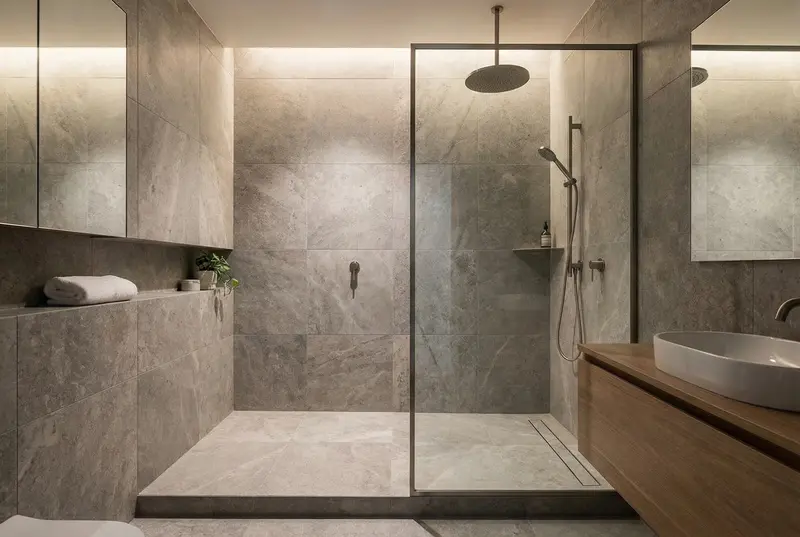
Wet Room Installation in Chichester
Wet rooms have become one of the most sought-after bathroom upgrades across Chichester, and it's easy to see why. Whether you're looking to future-proof your home, add genuine value to a period property, or simply create a more luxurious daily experience, a properly installed wet room delivers on all fronts. Chichester's housing stock is wonderfully varied — from Georgian townhouses near the cathedral to post-war semis and newer builds on the outskirts — and each property type brings its own installation considerations. Get it right, and a wet room is a stunning, low-maintenance space that lasts decades. Get it wrong, and you're facing costly water damage. This guide covers everything you need to know.
Plumbing Conditions in Chichester
Hard water — South Downs geology
Mixed housing stock across different eras. With 22% of properties built before 1919, older pipework and drainage systems are common — specialist knowledge of period properties matters.
Wet Room Installation in Chichester — Local Expertise
Chichester sits in a moderately hard water area, which has real implications for your wet room over time. Hard water accelerates limescale build-up on screens, drains, and fixtures, so material choice matters more here than in softer water regions. Specifying a quality shower valve with ceramic disc internals and opting for easy-clean surfaces will save you considerable maintenance effort down the line. Beyond water quality, the property mix in Chichester creates genuinely varied challenges for installers. Older stone-built properties and period cottages — particularly those found in and around the city centre and villages like Bosham and Fishbourne — often have solid floors, uneven subfloors, and limited structural depth, all of which affect how a tanked wet room is formed. Conversely, modern estates on the edges of Chichester typically have timber-joisted upper floors, which require a different waterproofing and drainage approach entirely. An experienced local installer will assess these factors before anything else.
How We Work
A wet room installation is a multi-trade project, and understanding the sequence of work helps you manage expectations and plan around it. The process typically runs over five to eight working days depending on the complexity of your Chichester property. It begins with a thorough survey — a good installer will check floor construction, existing waste runs, joist direction if upstairs, and the condition of any existing plumbing before quoting. Once work begins, the first stage is stripping the existing bathroom and assessing the subfloor. For solid concrete floors common in older Chichester homes, the drain position is marked out and the floor is prepared to create a gradient towards it. For timber floors, a reinforced deck board is usually laid first to provide a stable, waterproof base. Tanking is then applied — this is the critical waterproofing stage, typically a liquid membrane or sheet system bonded to walls and floor with no breaks or gaps. It's not glamorous work, but it's everything. Once cured, tiling or a resin floor finish is applied, followed by the shower valve, drain, screen if required, and any additional fixtures. Final connections to water and waste are made, the system is pressure-tested, and a full inspection is carried out before sign-off. Expect some disruption to water supply during the connection stages, which your installer should plan around your household routine.
Why Choose a Local Chichester Specialist
Choosing a tradesperson who regularly works in Chichester makes a practical difference, not just a sentimental one. Local installers know the age and construction quirks of the city's housing stock, understand which suppliers nearby stock materials quickly if something needs replacing mid-job, and have an established reputation to protect in a relatively small, close-knit community. They're also more likely to have seen the specific challenges that come with Chichester's period properties and can give you an accurate quote rather than a ballpark figure that expands once work begins. Word of mouth still drives most plumbing work in a market town like Chichester — that accountability counts for a lot.
Frequently Asked Questions
Can a wet room be installed in an upstairs bathroom in a Chichester period property?
Yes, but it requires careful planning. Timber-joisted floors need reinforcing and a specialist tanking system to prevent any water tracking down to the ceiling below. In older Chichester properties, a surveyor or experienced installer should check joist depth and condition first. It's very achievable, but cutting corners on waterproofing upstairs causes serious damage — this isn't a job for a generalist.
How does Chichester's hard water affect a wet room long-term?
Moderately hard water means limescale will build up on your drain, screen, and showerhead more quickly than in soft water areas. Specifying a thermostatic valve with descalable internals, using a squeegee after each use, and running a monthly cleaning routine with a quality limescale remover will keep your wet room looking sharp. Some homeowners in Chichester also install an inline water softener at the point of supply.
How long does a wet room installation take in Chichester?
Most wet room projects in Chichester take between five and eight working days from strip-out to final sign-off. Stone-built or older properties sometimes run to ten days due to subfloor preparation or additional plastering work. Your installer should give you a clear programme before starting, including which days water supply will be temporarily interrupted, so you can plan accordingly.
Do I need planning permission or building regulations approval for a wet room in Chichester?
Planning permission is not normally required for a wet room conversion. However, building regulations do apply — specifically around ventilation, electrical safety (Part P), and waterproofing in wet zones. A competent installer will self-certify or notify the relevant authority as part of the job. If your home is listed or within a conservation area — common in central Chichester — check with the local authority before any structural changes.
Other Plumbing Services in Chichester
What do you need?
Select your service and urgency level