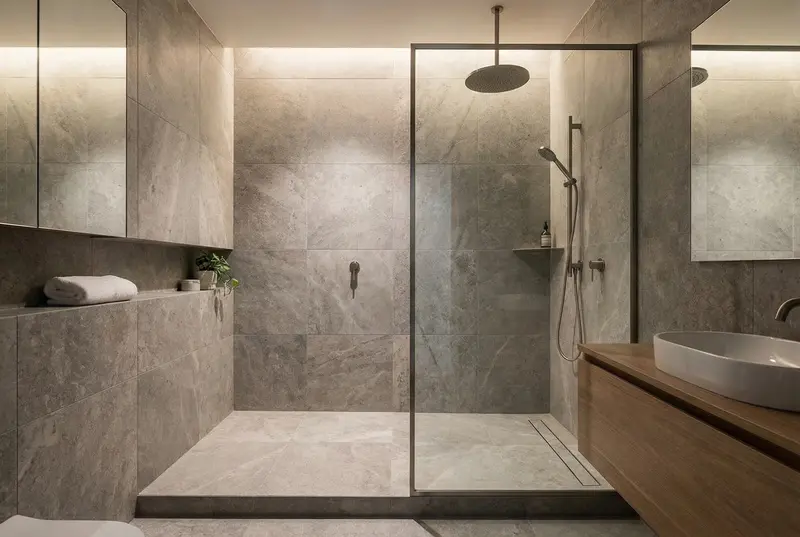
Wet Room Installation in Bexley
The most common reason homeowners in Bexley call about wet room installation is a straightforward one: an existing bathroom that no longer works for them. Whether it's a family member with mobility needs, a cramped en-suite that feels dated, or simply the desire for a genuinely luxurious bathroom, a properly installed wet room transforms how you use that space every day. Bexley has seen strong demand for wet rooms over the past few years, and it's easy to understand why — when done properly, they add real value to a home, look stunning, and are far easier to keep clean than a traditional shower enclosure.
Plumbing Conditions in Bexley
Very Hard water — significant limescale buildup, annual boiler servicing essential
Mixed housing stock across different eras. With 22% of properties built before 1919, older pipework and drainage systems are common — specialist knowledge of period properties matters.
Wet Room Installation in Bexley — Local Expertise
Bexley's housing stock is genuinely varied, and that variety matters when it comes to wet room installation. Victorian terraces — particularly around areas like Bexleyheath and Welling — often have solid timber joists that require careful waterproofing assessment before a wet room can be safely built. The floor needs to be strong enough to carry the tanking membrane, the screed, and the tile weight without any flex, which is a real consideration in older properties. Post-war semis and 1960s builds, common across much of Bexley, sometimes have shallower floor voids that make drainage installation trickier. Modern new-build homes are generally more straightforward, with concrete floors that are ideal for wet room drainage systems. It's also worth noting that Bexley sits in a moderately hard water area, so specifying the right grout and sealants — and potentially discussing a water softener or inline filter — will help your wet room look its best for longer and reduce limescale buildup on screens and tiles.
How We Work
A wet room installation in Bexley typically follows a clear sequence of stages, and understanding what's involved helps you ask the right questions before work begins. The first step is a survey, where an experienced installer assesses the existing bathroom structure, checks the joist condition (critical in Victorian and post-war properties), and confirms where the waste pipe can exit. From there, any existing fittings are stripped out and the floor is prepared — this often means strengthening or replacing sections of the subfloor before anything else happens. Tanking is the heart of a wet room: a fully waterproof membrane is applied to the floor and walls, typically 200mm up from floor level as a minimum, though many installers will tank the entire shower wall area. A pre-formed wet room tray or a screeded-to-fall floor is then installed to direct water toward the drain. Once the structure is properly waterproofed and the gradient confirmed, tiling can begin. Your installer should use the correct adhesive and grout for a wet environment, and in Bexley's moderately hard water conditions, an epoxy or anti-mould grout is worth considering. Finally, the shower valve, screen if required, and all fixtures are fitted and sealed. A thorough water test is carried out before the room is signed off.
Why Choose a Local Bexley Specialist
Choosing a tradesperson who knows Bexley makes a genuine difference on a job like this. A local installer will have worked in the area's Victorian terraces, post-war semis, and newer builds, and they'll know the kind of subfloor surprises that come up once a bathroom is stripped. They'll also be familiar with local building regulations and planning nuances. Practically speaking, a local contractor is easier to reach if any snagging issues arise after completion, and their reputation within the Bexley area gives you a meaningful lever if anything isn't right.
Frequently Asked Questions
Do I need planning permission for a wet room in my Bexley home?
In most cases, no. Wet room installations are considered permitted development and don't require planning permission in Bexley. However, if your property is listed or in a conservation area — which applies to some older properties in the borough — it's worth checking with Bexley Council before work begins. Your installer should flag this at the survey stage.
How long does a wet room installation take in a typical Bexley property?
Most wet room conversions in Bexley take between five and ten working days, depending on the size of the room and whether subfloor work is needed. Victorian properties sometimes add a day or two if joist reinforcement is required. Your installer should give you a clear timeline after the initial survey, so you can plan around the disruption.
Will a wet room cause damp problems in an older Bexley terrace?
Not if it's installed correctly. The tanking membrane is specifically designed to contain all moisture within the wet area. Where problems do occur in older properties, it's almost always because tanking was cut short or joints weren't sealed properly. Always ask a potential installer how they handle the junction between the floor membrane and wall membrane — that's where most failures happen.
Does hard water in Bexley affect how I should maintain my wet room?
Yes, to some extent. Bexley's moderately hard water means limescale will build up on any shower screen, chrome fittings, and unglazed tile surfaces faster than in softer water areas. Using a daily spray-on limescale preventer helps significantly. Some homeowners in Bexley also install an inline shower filter or a whole-house water softener, which extends the life of both the fittings and the grout.
Other Plumbing Services in Bexley
What do you need?
Select your service and urgency level