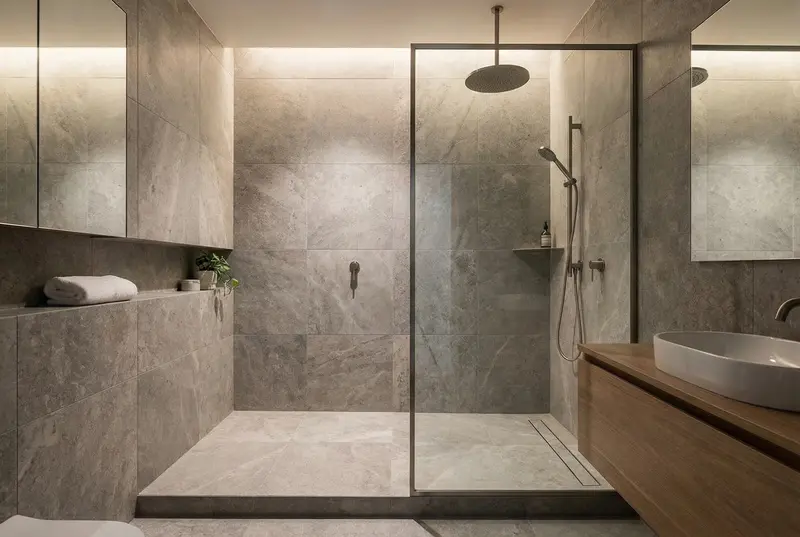
Wet Room Installation in Aberdeen
Wet rooms have become one of the most sought-after bathroom upgrades in Aberdeen, and it's easy to see why. Whether you're looking to modernise a tired family bathroom, create a genuinely accessible shower space, or simply add value to your home before selling, a well-installed wet room delivers on all fronts. The challenge is getting the installation right — because unlike a standard shower enclosure, a wet room relies entirely on flawless waterproofing and drainage to function properly. Get that wrong and you're looking at expensive structural damage down the line. This guide covers everything Aberdeen homeowners need to know before committing to the work.
Plumbing Conditions in Aberdeen
Soft water — Grampian supply
Victorian stone tenements in cities, traditional stone cottages in rural areas. With 35% of properties built before 1919, older pipework and drainage systems are common — specialist knowledge of period properties matters.
Wet Room Installation in Aberdeen — Local Expertise
Aberdeen's housing stock presents a genuinely varied picture for wet room installers. Victorian granite terraces in areas like Rosemount and the West End have thick, solid walls that are actually well-suited to wet rooms — but original timber floor joists need careful assessment before any tanking work begins, as moisture penetration into old subfloors is a real risk. Post-war council-built properties across Mastrick, Northfield, and Middlefield often have concrete floors, which are ideal for wet room installation and can simplify the drainage fall considerably. Newer builds in areas like Westhill and Bridge of Don tend to have more standardised bathroom layouts but may have tighter floor voids for waste routing. Aberdeen sits in a moderately hard water area, which means limescale buildup on linear drains and shower screens is something worth planning for — opting for quality brushed steel or matte finishes rather than chrome can save considerable maintenance effort over the years.
How We Work
A proper wet room installation in Aberdeen is a multi-stage process that typically takes between three and seven days depending on the complexity of the room and the property type. The work begins with a full strip-out of the existing bathroom fixtures, followed by a structural assessment of the floor — particularly important in older Aberdeen properties where timber joists may need reinforcing or a new cement board overlay before tanking can begin. Once the substrate is prepared, a full tanking system is applied across the floor and walls to a height of at least 1.8 metres. This waterproof membrane is the single most critical element of any wet room, and reputable installers will use a two-coat system with reinforced corners and upstands around any penetrations. The drainage fall is then carefully screeded to direct water efficiently towards the linear or centre drain — this is where experience really matters, as an incorrect gradient leads to pooling water and eventual damp issues. Tiling follows once the screed has fully cured, with anti-slip tiles strongly recommended for the floor. Finally, the shower system, thermostatic valve, and any additional features like heated towel rails or underfloor heating are fitted and commissioned. A thorough water test is carried out before handover to confirm the tanking is fully effective.
Why Choose a Local Aberdeen Specialist
Choosing a tradesperson who works regularly in Aberdeen makes a genuine practical difference. They'll have direct experience with the city's mix of granite-built Victorians, post-war concrete properties, and modern new-builds — and they'll know what surprises tend to lurk behind the walls in each type. They'll also have established relationships with local suppliers, which can keep material costs competitive and lead times short. A local installer is also far easier to hold accountable if any snagging issues arise after completion, and many will offer ongoing support that a travelling contractor simply can't match. Word-of-mouth reputation matters in a city the size of Aberdeen, and good tradespeople protect it.
Frequently Asked Questions
Do I need planning permission for a wet room installation in Aberdeen?
In most cases, no — wet room conversions are considered permitted development for standard residential properties. However, if your home is a listed building, which applies to some of Aberdeen's older granite properties in conservation areas, you'll need to consult with Aberdeen City Council before carrying out any structural alterations or changes to the building fabric.
How long does a wet room installation take in Aberdeen?
Most installations take between three and seven working days. Simpler conversions in properties with concrete floors can be completed toward the lower end, while Victorian Aberdeen properties requiring floor reinforcement, extra tanking prep, or bespoke tiling work will take longer. Your installer should give you a clear programme before work starts, including a drying time allowance for the screed.
Will limescale be a problem with my wet room in Aberdeen?
Aberdeen's moderately hard water supply means some limescale buildup on drains and shower fittings is inevitable over time. Choosing brushed nickel or matte black finishes rather than polished chrome makes cleaning easier, and a squeegee wipe-down after each shower goes a long way. A water softener isn't essential here, but a quality inline filter on your shower feed is a worthwhile addition.
Can a wet room be installed on an upper floor of an Aberdeen Victorian terraced house?
Yes, but it requires more preparation than a ground-floor conversion. The timber joists typical in Aberdeen's older tenements and terraces need to be assessed for strength and treated against moisture before a cement board overlay and full tanking system is applied. A competent installer will carry this out as standard — it's not a reason to avoid the project, just a reason to choose someone with solid experience in older Aberdeen properties.
Other Plumbing Services in Aberdeen
What do you need?
Select your service and urgency level