Underfloor Heating in Tower Hamlets
Underfloor heating has become one of the most sought-after home improvements across Tower Hamlets, and it's not hard to see why. With dense housing, limited wall space for radiators, and a growing appetite for energy-efficient living, more residents here are making the switch. Whether you're in a converted warehouse apartment in Wapping, a new-build flat near Canary Wharf, or a Victorian terrace in Bethnal Green, underfloor heating can work beautifully — but only when it's installed by someone who understands the specific challenges these properties present. Done properly, it adds comfort, cuts energy bills, and can genuinely increase the value of your home.
Plumbing Conditions in Tower Hamlets
Very Hard water — significant limescale buildup, annual boiler servicing essential
Mixed housing stock across different eras. With 22% of properties built before 1919, older pipework and drainage systems are common — specialist knowledge of period properties matters.
Underfloor Heating in Tower Hamlets — Local Expertise
Tower Hamlets has one of London's most varied housing stocks, and that diversity directly affects how underfloor heating is planned and installed. Victorian terraces in areas like Mile End and Bow often have solid concrete or suspended timber floors, each requiring a completely different approach — wet systems in screed suit concrete bases well, while electric mat systems are frequently the smarter choice for timber floors where adding significant depth isn't practical. Post-war council-built properties, common throughout Tower Hamlets, sometimes have pre-existing concrete slabs that can be ideal for wet underfloor heating, though insulation levels need careful assessment first. Modern new-builds around Poplar and the Isle of Dogs are often already designed with underfloor heating compatibility in mind, making retrofitting far more straightforward. It's also worth noting that Tower Hamlets sits in a moderately hard water area, which means if you're installing a wet hydronic system, fitting an appropriate scale inhibitor or magnetic filter is genuinely important to protect the pipework and manifold from limescale build-up over time.
How We Work
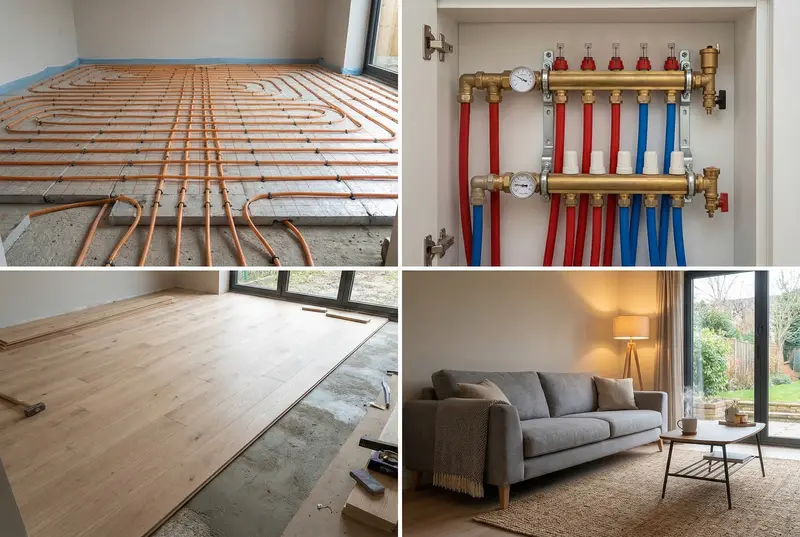
A proper underfloor heating installation in Tower Hamlets begins well before anyone lifts a floorboard. The first step is a site survey, where a qualified installer assesses your floor construction, room dimensions, existing heating system (if you're connecting to a boiler), and insulation levels. Getting this assessment right is critical — under-specified insulation beneath the pipes is one of the most common reasons underfloor heating underperforms. Once the design is signed off, installation for a wet system involves laying insulation boards, routing flexible pipework in loops across the floor area, connecting everything to a central manifold, pressure testing the system, and then pouring a self-levelling screed to cover the pipes. The screed typically needs four to six weeks to fully cure before the system is gradually commissioned — rushing this stage causes cracking. For electric systems, which are popular in Tower Hamlets flats where connecting to a boiler isn't feasible, heating mats or cables are laid directly onto the subfloor and connected to a dedicated thermostat. These can often be tiled over within 24 hours. Thermostats are fitted room by room, and modern smart controls compatible with systems like Hive or Nest are increasingly standard on installations here. Throughout the process you should expect the installer to keep disruption contained, particularly important in the terraced and flat-conversion properties that dominate Tower Hamlets.
Why Choose a Local Tower Hamlets Specialist
Choosing a tradesperson who regularly works in Tower Hamlets makes a genuine difference on a job like this. Local installers know the quirks of the borough's housing — the low ceiling heights in some post-war flats, the awkward floor voids in Victorian terraces, the building regulations that apply to work in converted commercial properties near the docks. They'll also have working relationships with local building control, which matters if your project requires a notification or inspection. An installer who's done dozens of jobs in Stepney Green or Limehouse is simply better placed to anticipate problems before they become expensive surprises.
Frequently Asked Questions
Is underfloor heating suitable for my Victorian terrace in Tower Hamlets?
Yes, but it depends on your floor type. Solid concrete floors suit wet systems well, while suspended timber floors are usually better served by electric mat systems or low-profile wet systems designed for retrofit. A proper survey will tell you which approach makes sense. Many Victorian terraces in Tower Hamlets have been successfully fitted with underfloor heating with minimal disruption to floor heights.
Can I install underfloor heating in a flat or apartment?
Absolutely — in fact, electric underfloor heating is one of the most popular choices for Tower Hamlets flats precisely because it doesn't require connecting to a communal boiler system. Heating mats can be installed under tiles or LVT flooring quickly and efficiently. For larger apartments with their own boiler, a wet system may be viable, but you'll need to check with building management regarding any structural considerations.
Does the hard water in Tower Hamlets cause problems for underfloor heating?
It can, over time. Tower Hamlets sits in a moderately hard water area, and limescale can gradually accumulate in the pipework and manifold of a wet hydronic system if it's not addressed. A reputable installer will fit a scale inhibitor or magnetic filter as standard. Having the system flushed and inhibited properly at installation protects it for years and is well worth the small additional cost.
How long does a full underfloor heating installation take in a Tower Hamlets home?
For a wet system across a whole house, allow two to four days for the physical installation, then four to six weeks for the screed to cure before the system is fully commissioned. Electric systems are much faster — a single room can typically be completed in a day. Your installer should give you a clear programme upfront, including the curing period, so you can plan around it.
Other Plumbing Services in Tower Hamlets
What do you need?
Select your service and urgency level