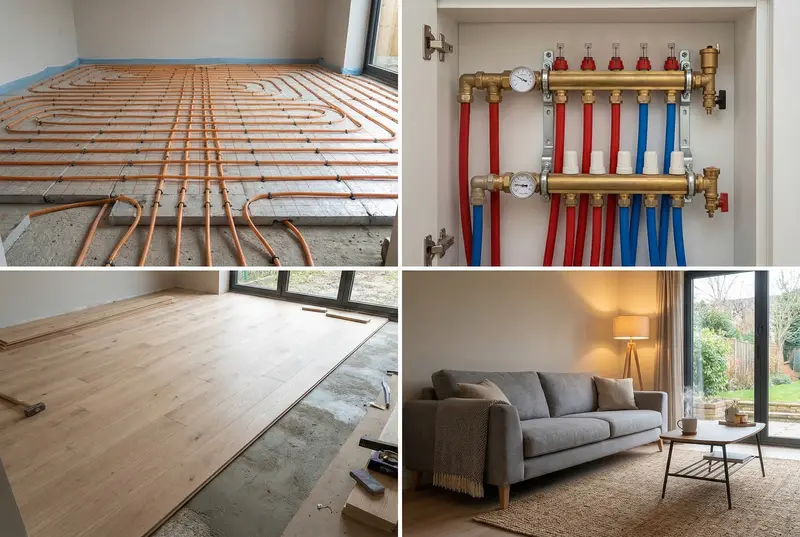
Underfloor Heating in Swindon
Underfloor heating is one of the most popular home upgrades in Swindon right now, and it's easy to see why. Done properly, it transforms how a home feels — no more cold tiles in the bathroom, no radiators eating up wall space, and a warmth that rises evenly from the ground up rather than blasting from a single point on the wall. That's a meaningful investment, but one that typically adds comfort, efficiency, and genuine appeal to the home.
Plumbing Conditions in Swindon
Moderately Hard water — mixed geology
Mixed housing stock across different eras. With 22% of properties built before 1919, older pipework and drainage systems are common — specialist knowledge of period properties matters.
Underfloor Heating in Swindon — Local Expertise
Swindon's housing stock creates a really varied picture for underfloor heating installers. The town's Edwardian semis — particularly in areas like Old Town and Rodbourne — often have suspended timber floors, which means a screed-based wet system isn't always the first choice. Installers typically use low-profile overlay systems or look at electric mat options in these older properties, keeping floor height rises minimal and avoiding structural complications. Post-war estates across much of central and north Swindon usually have solid concrete ground floors, which are genuinely ideal for wet underfloor heating — the screed holds heat well and releases it slowly, which is exactly what the system needs to perform efficiently. Newer developments on the town's expanding fringes, such as those around Wichelstowe and Tadpole Garden Village, often come pre-fitted with underfloor heating already, but homeowners extending or renovating these properties frequently want to extend the system into new rooms. Swindon sits in a moderately hard water area, so any wet UFH system should be installed with an appropriate inhibitor and ideally a filter to protect the manifold and pipework from scale build-up over time.
How We Work
A wet underfloor heating installation in Swindon typically begins with a proper survey of the property. An experienced installer will assess the floor construction, the existing boiler capacity, insulation levels, and the room dimensions before specifying the system. Getting this stage right is what separates a system that runs efficiently from one that never quite heats up properly. Once the design is agreed, the installation process for a solid floor involves lifting any existing floor covering, laying rigid insulation board to prevent heat loss downwards, then fixing the pipework in loops across the floor before the whole thing is covered in a liquid screed or sand and cement screed. The screed needs to cure fully — usually two to four weeks — before floor coverings go back down. For suspended timber floors, the pipework is fitted between or beneath the joists, with reflective insulation to direct heat upwards. The pipework from all zones connects back to a manifold, which is typically located in a cupboard or utility space. The manifold connects to the boiler and controls the flow of water to each individual zone. Most installers will commission the system slowly, running it at low temperatures initially to allow the screed to dry properly and avoid cracking. You should receive full handover documentation, including a pressure test certificate and operating instructions for the thermostats.
Why Choose a Local Swindon Specialist
Choosing a Swindon-based installer matters more than people often realise with underfloor heating. A local engineer will know the quirks of the town's housing stock — the way Edwardian properties in Old Town differ from the post-war builds in Park North, or the specific requirements of newer estates near the A419 corridor. They're also easier to get back if something needs adjusting during the first heating season, which is when most teething issues appear. Local tradespeople also tend to have established relationships with suppliers in the area, which can speed up sourcing parts and keep costs competitive.
Frequently Asked Questions
Is my Swindon home's boiler likely to need replacing for underfloor heating?
Not always, but it depends on the boiler's age and output. Underfloor heating runs at lower flow temperatures than radiators, which actually suits modern condensing boilers well. A qualified engineer will assess your current setup during the survey. Many homes in Swindon — particularly those with a combi boiler installed in the last decade — won't need a boiler change at all.
How long does a full underfloor heating installation take in a typical Swindon semi?
For a solid ground floor in a three-bedroom semi, the physical installation usually takes three to five days. However, you then need to wait for the screed to cure — typically two to four weeks — before floor coverings can go back down. Planning around this curing time is important, especially if you're relying on the kitchen or main living areas during that period.
Does hard water in Swindon affect underfloor heating systems?
Swindon's moderately hard water supply can cause limescale build-up inside UFH pipework and manifolds over time if the system isn't properly treated. A good installer will add a corrosion inhibitor to the system fluid and often recommend fitting a magnetic filter at the manifold. These are small costs that significantly extend the life of the installation and keep it running efficiently.
Can I add underfloor heating to just one room, like a bathroom or kitchen extension?
Absolutely — single-room installations are very common in Swindon, particularly for bathroom renovations and rear extensions. A standalone electric mat system can work well in a bathroom if pipework isn't practical, while a new extension with a concrete floor is an ideal candidate for a wet system connected back to your existing boiler via a new manifold.
Other Plumbing Services in Swindon
What do you need?
Select your service and urgency level