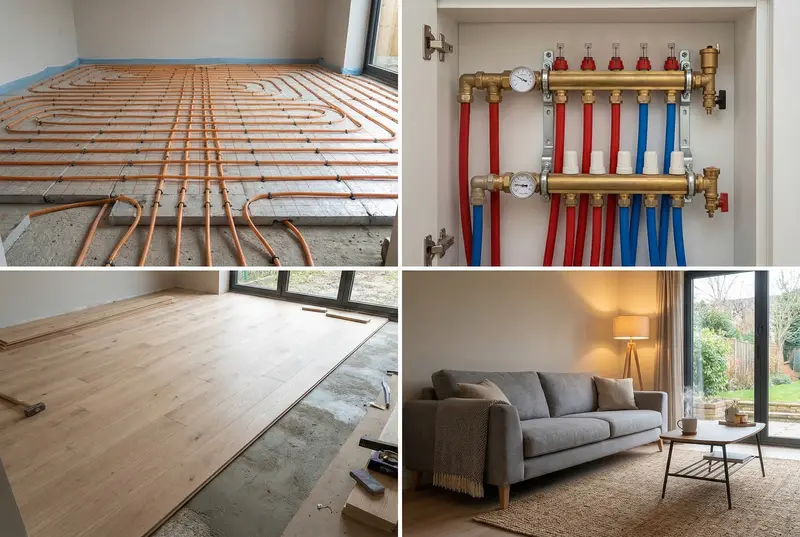
Underfloor Heating in Pontefract
It's one of the more involved home improvement projects you can take on, but for Pontefract homeowners it often pays back handsomely — lower running costs, no radiators taking up wall space, and a genuinely comfortable heat that works brilliantly with modern insulation. Whether you're renovating a Victorian terrace near the town centre or building an extension on one of Pontefract's newer estates, underfloor heating is worth serious consideration if you're already planning significant groundworks or floor replacement.
Plumbing Conditions in Pontefract
Soft water — Pennine reservoir water
Mixed housing stock across different eras. With 22% of properties built before 1919, older pipework and drainage systems are common — specialist knowledge of period properties matters.
Underfloor Heating in Pontefract — Local Expertise
Pontefract's housing stock is unusually varied, and that variety matters when it comes to underfloor heating. The older stone-built properties and period cottages — particularly those found in and around the historic core of the town — often have solid ground floors, limited ceiling height, and original character features that complicate installation. Fitting a wet underfloor heating system in these homes usually requires careful assessment of floor build-up depth, as losing even 80–100mm of headroom can be a real problem in older rooms with lower ceilings. Modern estates on the outskirts of Pontefract are a different story: newer builds tend to have better insulation, more flexible floor structures, and sometimes even provision for underfloor heating already built in. Pontefract sits in a moderately hard water area, which is worth flagging — hard water can cause limescale build-up inside pipework over time, so fitting a magnetic filter or inhibitor to your underfloor system from day one is sensible practice here, not an optional extra.
How We Work
A typical underfloor heating installation in Pontefract follows a clear sequence, though the specifics vary considerably between a wet (hydronic) system connected to your boiler and a dry electric mat system more suited to smaller areas or retrofits. For a wet system, the process begins with a heat loss calculation for each room — this determines pipe spacing and flow temperatures, and skipping this step is a common cause of systems that never feel quite warm enough. Next comes floor preparation: in older Pontefract properties this might mean breaking out an existing solid floor, laying insulation board, and screeding over the pipe loops once they're pressure-tested. In timber floor constructions, low-profile systems that sit between joists are often used instead, avoiding the need for a full screed. For electric systems, the installation is less disruptive — heating mats are laid directly onto the subfloor under tiles or engineered wood, with a thermostat wired in. Once the system is in, commissioning matters enormously: wet systems need slow, staged heat-up to cure screed properly over two to three weeks, and the system balanced to ensure even heat across every room. You should expect a competent installer to walk you through thermostat programming and maintenance requirements before they leave.
Why Choose a Local Pontefract Specialist
Choosing a Pontefract-based installer rather than a national firm matters more than people realise with underfloor heating. A local tradesperson will have direct experience of the property types common to the area — they'll know what to expect when they lift floors in older stone-built homes near the town centre, and they'll be familiar with the quirks of working in period cottages where nothing is ever quite standard. They're also easier to reach if something needs attention after installation, and reputation in a market town like Pontefract travels fast — local tradespeople tend to take that seriously.
Frequently Asked Questions
Is underfloor heating suitable for my older stone-built Pontefract home?
Yes, but it requires more planning than a modern new-build. The key issues are floor build-up depth — particularly if you have low ceilings — and insulation, which is often poor in older properties. A proper heat loss survey before any work starts will tell you what's genuinely achievable and whether a wet or electric system is the more practical choice for your home.
How long does underfloor heating installation take in a typical Pontefract property?
A single room electric system can be completed in a day. A whole-house wet system is a more involved project — typically five to ten days for installation, followed by a two to three week screed curing period before you can run the system at full temperature. Older properties in Pontefract may take longer if additional floor preparation or remedial insulation work is needed.
Will underfloor heating work with my existing boiler?
In most cases, yes — but it's worth having your boiler assessed first. Underfloor heating runs at lower flow temperatures than traditional radiators, which actually suits modern condensing boilers well and can improve their efficiency. If your boiler is older or undersized, your installer may recommend an upgrade or the addition of a buffer tank to make the system work properly.
Does the hard water in Pontefract cause problems for underfloor heating systems?
It can do over time. Moderately hard water carries dissolved minerals that can deposit as limescale inside pipework and heat exchangers, gradually reducing efficiency. The practical solution is straightforward: make sure your installer adds a quality inhibitor to the system water and fits a magnetic filter. These are inexpensive additions that protect the whole system and should be standard practice in this area.
Other Plumbing Services in Pontefract
What do you need?
Select your service and urgency level