Underfloor Heating in Northampton
If you've been living with cold tiled floors in a Northampton kitchen extension, or you're renovating a Victorian terrace and want a heating solution that doesn't eat up wall space with radiators, underfloor heating is probably already on your radar. It's one of those upgrades that genuinely transforms how a home feels — not just warmer underfoot, but a more even, comfortable heat throughout the room. Northampton homeowners are increasingly choosing UFH as part of larger renovation projects, and it makes a lot of sense when you understand what's involved, what it costs, and which system suits your property.
Plumbing Conditions in Northampton
Moderately Hard water — Jurassic limestone
Mixed housing stock across different eras. With 22% of properties built before 1919, older pipework and drainage systems are common — specialist knowledge of period properties matters.
Underfloor Heating in Northampton — Local Expertise
Northampton has a genuinely mixed housing stock, and that matters more than most people realise when it comes to underfloor heating. The Victorian terraces you'll find in areas like Semilong, Kingsthorpe, and the Boroughs typically have solid floors or older suspended timber ground floors — both of which require different approaches. A solid floor can usually take a wet (hydronic) system with a screed overlay, but suspended timber floors tend to suit electric UFH mats or low-profile wet systems that sit between the joists without adding significant floor height. Post-war semis and bungalows across Northampton's outer suburbs often have concrete slab floors that are excellent candidates for wet underfloor heating, especially during a full kitchen or bathroom remodel. Newer builds on the town's many modern developments will sometimes have UFH already installed, but older systems may need upgrading or extending. It's also worth noting that Northampton sits in a moderately hard water area, which means the water running through a wet UFH system carries a degree of mineral content — a good installer will factor in corrosion inhibitor and may recommend a system filter to protect your manifold and pipework over time.
How We Work
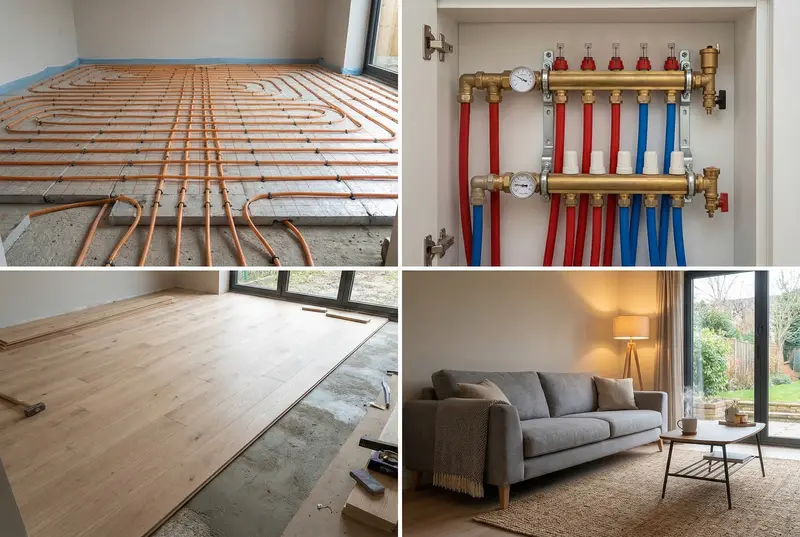
A wet underfloor heating installation in Northampton typically begins with a site survey, where an installer assesses your floor construction, the heat load requirements of each room, and how the system will connect to your existing boiler or a new heat pump. Heat pumps pair particularly well with UFH because the system runs at lower flow temperatures, improving efficiency significantly. Once the design is agreed, the physical installation involves laying a series of cross-linked polyethylene (PEX or PEX-Al-PEX) pipes in a continuous loop pattern across the floor area, connected back to a central manifold — usually mounted in a cupboard or utility space. In a screed installation, the pipes are clipped to insulation boards and the screed is poured over the top, typically at a depth of 65–75mm for liquid screed or around 75mm for sand and cement. The floor then needs to cure and dry before the system is commissioned — liquid screed floors generally need 4–6 weeks before they're fully ready for use. For timber floor installations, pipes are fed into pre-routed channels between or beneath the joists, or aluminium spreader plates are used to help distribute heat evenly. Once laid, the system is pressure tested, connected to the manifold, and balanced so that each zone heats evenly. Controls — usually a thermostat per room or zone — are then fitted and programmed. The whole installation for a kitchen and living room can typically be completed in 2–4 days, depending on the size and complexity of the job.
Why Choose a Local Northampton Specialist
Choosing a local Northampton installer rather than a national firm makes a practical difference. Someone who regularly works across the town's housing stock — from Victorian terraces in the Boroughs to newer builds on the outskirts — will already understand the floor construction quirks, local building control expectations, and the kinds of challenges that come up mid-job. They're also easier to get back if anything needs adjusting after commissioning. Local tradespeople tend to rely heavily on reputation within the community, which generally means a higher standard of finish and a more straightforward experience when things need sorting quickly.
Frequently Asked Questions
Can underfloor heating be installed in an older Victorian property in Northampton?
Yes, though it requires more planning than a modern home. Many Victorian properties in Northampton have solid floors that can take a wet screed system, while suspended timber floors are better suited to electric mats or low-profile wet systems. An experienced installer will assess your specific floor construction and recommend the right approach.
Will Northampton's hard water affect my underfloor heating system?
Moderately hard water can gradually cause limescale or corrosion buildup in wet UFH pipework and manifolds over time. A good installer will add a corrosion inhibitor to the system fluid and may fit a magnetic filter to capture debris. Annual checks help keep the system running efficiently and protect your investment long-term.
How long does underfloor heating take to heat up in a Northampton home?
Wet systems typically take 30–60 minutes to reach a comfortable temperature from cold, though modern thermostats with scheduling make this largely irrelevant — most people set the system to warm up before they're out of bed. Screed floors have more thermal mass and hold heat longer, so they're actually very efficient once up to temperature.
Is planning permission needed for underfloor heating installation in Northampton?
Generally no — underfloor heating is considered a permitted development. However, if your Northampton property is listed or sits within a conservation area, you may need to check with the local authority before starting work. Any work connecting to a gas boiler will also need to be carried out by a Gas Safe registered engineer and notified accordingly.
Other Plumbing Services in Northampton
What do you need?
Select your service and urgency level