Underfloor Heating in Elmbury
The most common reason homeowners in Elmbury look into underfloor heating is simple: cold floors in winter, particularly in kitchens and bathrooms that haven't been updated in decades. Whether you're extending into a rear garden, renovating a tired bathroom, or finally overhauling the ground floor of your home, underfloor heating is increasingly the preferred choice over traditional radiators. It frees up wall space, heats rooms more evenly, and when paired with a modern heat pump or condensing boiler, can genuinely reduce running costs over time. In Elmbury, demand for this kind of planned installation has grown steadily as homeowners invest in longer-term comfort rather than quick fixes.
Plumbing Conditions in Elmbury
Hard water — Cotswold limestone
Mixed housing stock across different eras. With 22% of properties built before 1919, older pipework and drainage systems are common — specialist knowledge of period properties matters.
Underfloor Heating in Elmbury — Local Expertise
Elmbury's housing stock is genuinely varied, and that matters a lot when it comes to underfloor heating. The Edwardian semis that make up a large proportion of the older neighbourhoods present the biggest challenge — solid or suspended timber floors, higher ceilings, and original layouts that weren't designed with modern heating in mind. Retrofitting wet underfloor heating into these properties usually requires lifting floorboards, insulating below the pipework, and sometimes raising floor levels slightly, all of which adds cost and planning time. Post-war estates across Elmbury tend to have solid concrete ground floors, which are actually well suited to embedded wet systems. Newer developments often come with underfloor heating already roughed in or with a screed floor that makes installation more straightforward. Elmbury sits in a moderately hard water area, which is worth bearing in mind — a quality inhibitor and possibly a scale reducer should be factored into any wet system installation to protect the pipework and manifold from limescale build-up over time.
How We Work
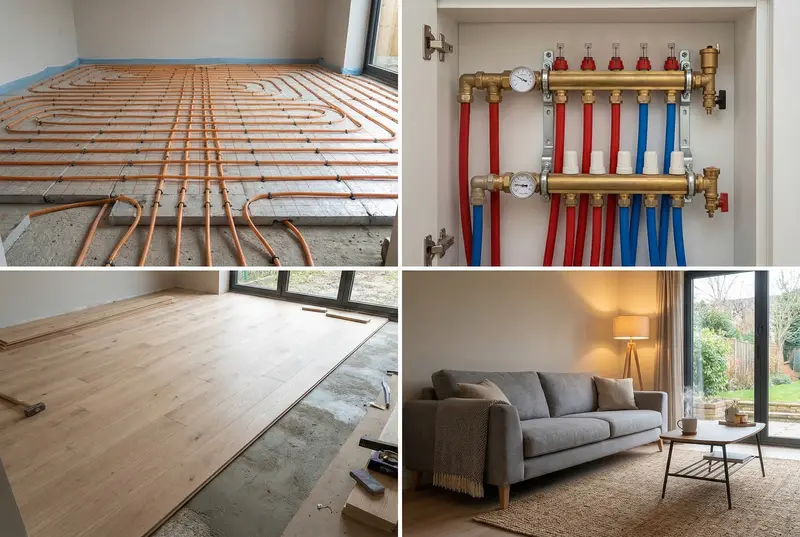
Underfloor heating comes in two main forms: wet systems, which circulate warm water through pipes laid beneath the floor, and electric mat systems, which use resistance cables or mats. Wet systems are the more common choice for whole-floor or whole-home installations in Elmbury because they're cheaper to run long-term, though they involve more work upfront. Electric systems suit smaller areas like a single bathroom where you don't want the disruption of a full wet installation. For a wet system installation, the process typically begins with a site survey where an engineer assesses your floor construction, existing heating system, and insulation. Insulation boards are laid first — this is critical and something that's sometimes skimped on, but without adequate insulation beneath the pipes, you're essentially heating the ground rather than the room. Pipes are then laid in a serpentine or spiral pattern and connected to a manifold, which controls flow to each zone. The floor is then screeded or the boards are relaid. Once cured — which takes several weeks for a liquid screed — the system is commissioned, pressure tested, and balanced. Your installer should walk you through the zoning controls and thermostat setup before they leave. Throughout this process in Elmbury, a good installer will flag any issues with floor build-up height, door clearances, or compatibility with existing flooring materials like hardwood, which has its own expansion tolerances.
Why Choose a Local Elmbury Specialist
Choosing a tradesperson who works regularly in Elmbury genuinely makes a difference with a job like this. They'll have hands-on experience with the specific floor constructions common in the area — the quirks of Edwardian suspended floors, the varying screed depths in post-war estates, and the tight tolerances in newer developments. A local installer is also more likely to have relationships with local building control and can advise on whether your project requires notification under Part L of the Building Regulations. When something needs a follow-up visit — and with a system this involved, that's not uncommon — you're not waiting on someone travelling from outside the area.
Frequently Asked Questions
Can underfloor heating be installed in an Edwardian semi in Elmbury without major disruption?
It's definitely possible, but it requires careful planning. Suspended timber floors need the boards lifted, insulation fitted between the joists, and either a wet pipe system or electric mats laid before the boards go back down. It's more involved than a concrete floor retrofit, but experienced installers work with these properties regularly across Elmbury and can manage it cleanly.
How does the hard water in Elmbury affect an underfloor heating system?
Elmbury's moderately hard water means limescale can gradually build up inside the pipework and manifold of a wet system if it's not treated. A good installer will add a corrosion inhibitor at commissioning and may recommend a scale reducer depending on your water hardness. Annual system checks should include testing inhibitor levels to keep everything running efficiently.
How long does a full ground floor underfloor heating installation take in a typical Elmbury home?
The physical installation usually takes three to five days for a ground floor wet system, but you then need to allow three to six weeks for a liquid screed to cure fully before laying final floor coverings. Electric systems are quicker — often completed in a day or two for a single room — with no lengthy curing period required.
Is underfloor heating compatible with the heat pumps being fitted in newer Elmbury properties?
Yes, and it's actually an ideal pairing. Air source heat pumps work most efficiently when heating water to lower temperatures — around 35 to 45°C — which is precisely the range underfloor heating requires. Radiators often need higher flow temperatures to be effective, so if you're considering a heat pump for your Elmbury home, underfloor heating makes excellent sense.
Other Plumbing Services in Elmbury
What do you need?
Select your service and urgency level