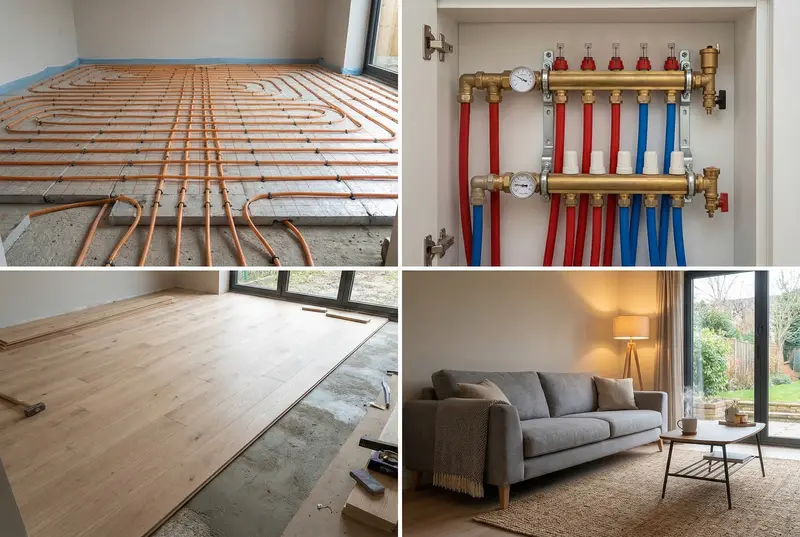
Underfloor Heating in Chichester
Underfloor heating is one of those upgrades that genuinely transforms how a home feels, and in Chichester it's becoming an increasingly popular choice for homeowners looking to modernise without sacrificing comfort. Whether you're renovating a Victorian terrace near the city centre, extending a period cottage in one of the surrounding villages, or building out a new room on a modern estate, underfloor heating offers a far more efficient and discreet alternative to traditional radiators. With Chichester's mix of older and newer properties, there's real variety in how these systems get installed — and getting the right advice from the start makes a significant difference to how well the system performs long-term.
Plumbing Conditions in Chichester
Hard water — South Downs geology
Mixed housing stock across different eras. With 22% of properties built before 1919, older pipework and drainage systems are common — specialist knowledge of period properties matters.
Underfloor Heating in Chichester — Local Expertise
Chichester presents some genuinely interesting challenges for underfloor heating installers. The city has a substantial stock of older stone-built properties and period cottages, many of which have solid floors, limited ceiling height, or floors that simply can't take significant weight loading. In these homes, electric underfloor heating mats are often the more practical choice, particularly for bathrooms and kitchens where the area is smaller and the cost of electric systems remains manageable. For newer builds and modern estates on the outskirts of Chichester, wet water-fed systems integrated with a heat pump or gas boiler tend to be the better long-term investment. It's also worth noting that Chichester sits in a moderately hard water area, which matters for wet underfloor heating systems — scale build-up in pipework is a genuine concern over time, and fitting an inline filter or inhibitor is something a good local installer should discuss with you as standard practice.
How We Work
The installation process varies depending on which type of system suits your property, but here's what you can generally expect when having underfloor heating fitted in a Chichester home. The first stage is a proper survey of the space — a good installer will assess your floor construction, existing boiler or heat source, insulation levels, and room layout before recommending anything. Skipping this step is where projects go wrong. For a wet system, the next stage involves laying insulation boards to reflect heat upward, then running flexible pipe in a looped pattern across the floor before it's covered with a screed or specialist board. The system is then connected back to a manifold, which controls flow to different zones. Commissioning involves pressure testing the pipework and then a slow warm-up process to cure the screed properly — rushing this causes cracking. Electric mat systems are less involved; the mat is laid on a tile adhesive bed beneath floor tiles or a thin overlay, with a thermostat wired in separately. Either way, you should expect the installer to walk you through the thermostat controls and give you a clear guide on how to run the system efficiently. In Chichester's older properties particularly, adequate insulation beneath the system is crucial — without it, you're effectively heating the ground rather than the room.
Why Choose a Local Chichester Specialist
Choosing a local installer who knows Chichester well genuinely matters here. Someone familiar with the city's older stone properties will understand the quirks of solid floor construction and know when a proposed layout needs adapting. They'll also be aware of local planning sensitivities in the conservation areas around the cathedral quarter, where any work affecting period floors needs careful consideration. A local tradesperson is also far easier to get back if something needs adjusting after installation — and with underfloor heating, having someone on hand who knows your specific setup is worth more than saving a small amount by going with someone from further afield.
Frequently Asked Questions
Can underfloor heating be installed under existing floors in a Chichester period property?
It depends on the floor type. In older stone-built Chichester homes with solid concrete or flagstone floors, it's often feasible but requires careful planning — you may need to lower the floor level slightly to accommodate insulation and pipework without affecting door heights. Electric systems are a popular solution here as they add very little height. A proper survey is essential before committing.
Will underfloor heating work with my existing boiler?
In most cases, yes — wet underfloor heating can be connected to a standard combi or system boiler, though your boiler may need to be able to operate at lower flow temperatures for the system to run efficiently. An installer should assess your boiler's output and age as part of the survey. Underfloor heating pairs particularly well with heat pumps, which are growing in popularity across Chichester.
How do I protect the pipework in a wet system given Chichester's hard water?
Chichester's moderately hard water supply means limescale can gradually build up in the pipework of a wet underfloor heating system. A good installer should fit an inline filter on the manifold and dose the system with a corrosion inhibitor at commissioning. Getting the water tested and treated properly from the start significantly extends the life of the system and protects your investment.
How long does a full underfloor heating installation take in a typical Chichester home?
A single-room electric mat system can usually be completed in one day. A wet system covering multiple rooms or an entire ground floor is more involved — expect two to five days for the installation itself, followed by a curing period of several weeks if new screed is laid before the heating is fully commissioned. Timelines vary with property complexity, particularly in older Chichester homes.
Other Plumbing Services in Chichester
What do you need?
Select your service and urgency level