Leak Detection & Repair in Southampton
The most common reason Southampton homeowners call a plumber about leaks isn't a burst pipe — it's a slow, hidden one. A damp patch on a ceiling, a water bill that's crept up for no obvious reason, or the faint sound of running water when everything's turned off. These are the signs that something is wrong somewhere in your pipework, and in a city as large and varied as Southampton, the cause can be anything from corroded Victorian pipework under a terrace in Shirley to a failed joint on a modern combi boiler in a Hedge End new-build. Getting it found and fixed quickly saves water, money, and serious structural damage down the line.
Plumbing Conditions in Southampton
Hard water — Hampshire chalk
Mixed housing stock across different eras. With 22% of properties built before 1919, older pipework and drainage systems are common — specialist knowledge of period properties matters.
Leak Detection & Repair in Southampton — Local Expertise
Southampton's housing stock is genuinely mixed, and that matters a lot when it comes to leaks. Older Victorian and Edwardian terraces — common across areas like Freemantle, St Denys, and Portswood — often have original lead or iron pipework that has corroded or shifted over decades. Post-war properties, particularly the council and semi-detached homes across Millbrook and Lordshill, may have had pipework updated at various points, meaning you can end up with a patchwork of materials that don't always play nicely together. Newer developments in areas like Hedge End or the city's waterfront regeneration zones tend to have more modern plastic push-fit systems, which are generally more reliable but not immune to joint failures or installation errors. Southampton also sits in a hard water area, supplied by Thames Water and Affinity Water, which means limescale build-up in pipes and on fittings is a genuine issue over time. Scale can mask early corrosion, restrict flow, and put stress on joints — all of which increases the likelihood of a slow leak developing undetected.
How We Work
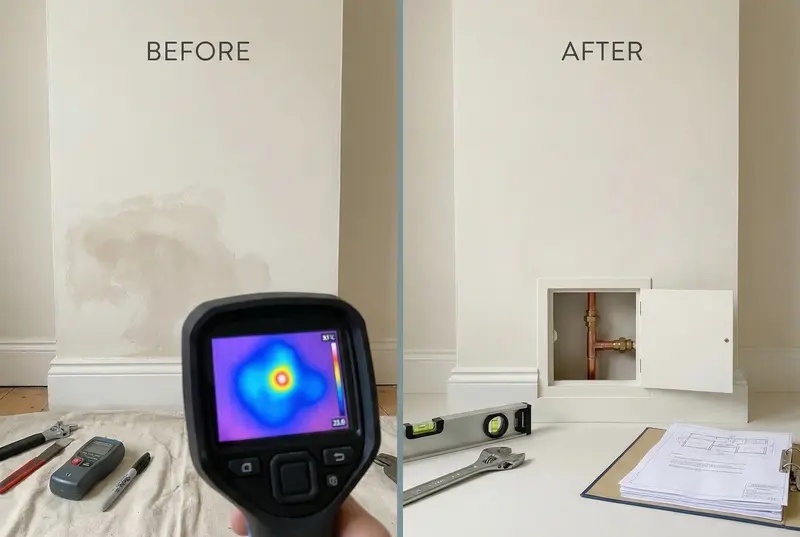
Leak detection and repair is a two-stage job: first, finding the leak; second, fixing it properly. When a plumber arrives, they'll start with a visual inspection — checking obvious places like under sinks, around the toilet cistern, behind the bath panel, and near the boiler. If nothing visible explains the problem, they'll move to more systematic methods. This might involve pressure testing the system, where sections of pipework are isolated and pressurised to identify where the drop is occurring. For leaks suspected under floors or behind walls, many Southampton plumbers use thermal imaging cameras or acoustic listening equipment to locate the source without unnecessary destruction. Once found, the repair approach depends on the cause. A leaking compression joint on copper pipe might just need tightening or a new olive. A corroded section will need cutting out and replacing. Lead pipework — still present in some older Southampton properties — should ideally be replaced rather than patched. After any repair, the plumber should re-pressure test the system and check for any secondary issues. A good tradesperson will also advise you on whether nearby pipework looks like it might cause trouble soon, saving you a repeat call-out.
Why Choose a Local Southampton Specialist
Choosing a plumber based in Southampton rather than a national call centre genuinely makes a difference here. A local tradesperson will know which areas have older lead supply pipes still running from the street, they'll understand the types of systems common in post-war housing estates, and they'll likely have worked on properties similar to yours before. They can also get to you faster — useful when a slow leak becomes an urgent one. Word of mouth matters in a city this size, so local plumbers tend to be more accountable for the quality of their work. Look for someone registered with Gas Safe (if the leak is near a boiler), WaterSafe-approved, or a member of the Chartered Institute of Plumbing and Heating Engineering.
Frequently Asked Questions
How do I know if I have a hidden leak in my Southampton home?
The most reliable indicator is an unexplained rise in your water bill. You can also do a simple check: turn off all taps and appliances, then read your water meter. If it's still moving, water is escaping somewhere. Damp patches on walls or ceilings, a musty smell, or soft spots on floorboards are all signs worth investigating promptly before structural damage sets in.
Is limescale likely to be contributing to my leak?
In Southampton's hard water area, limescale builds up inside pipes and around fittings over time. While it doesn't directly cause leaks, it can mask early corrosion, put pressure on joints, and cause valves to fail. If you have an older property with original pipework, it's worth asking your plumber to check for scale-related deterioration at the same time as addressing any active leak.
My Southampton terrace has older pipework — should I replace it all at once?
Not necessarily, but it's worth getting a professional assessment. Victorian and Edwardian terraces often have a mix of original and updated pipework. If lead pipes are still present on your supply line, replacement is strongly recommended for both safety and performance reasons. For copper or iron pipes, your plumber can advise which sections are showing signs of wear and prioritise accordingly, rather than committing to a full repipe straight away.
Will the plumber need to dig up my floor to find the leak?
Not always. Many Southampton plumbers now use thermal imaging cameras and acoustic detection equipment to locate leaks under floors or behind walls without immediate access. This non-invasive approach can pinpoint the source before any cutting begins, reducing disruption and cost. If access is unavoidable, a good tradesperson will keep the opening as small as possible and discuss reinstatement with you before starting.
Other Plumbing Services in Southampton
What do you need?
Select your service and urgency level