Leak Detection & Repair in Preston
You notice a damp patch spreading across the ceiling beneath the bathroom, or the water meter keeps ticking even when every tap in the house is shut off. In Preston, these small warning signs can quickly turn into expensive damage if they're left unchecked. Leaks aren't always dramatic — sometimes they're a slow drip behind a wall or a weeping joint under the kitchen sink that's been quietly rotting the cabinet floor for months. Getting a qualified plumber in to find the source and fix it properly, the first time, is nearly always cheaper than leaving it and dealing with the fallout later. This page explains what leak detection and repair in Preston involves, what it costs, and what to expect from start to finish.
Plumbing Conditions in Preston
Soft water — Pennine catchments
Mixed housing stock across different eras. With 22% of properties built before 1919, older pipework and drainage systems are common — specialist knowledge of period properties matters.
Leak Detection & Repair in Preston — Local Expertise
Preston's housing stock is genuinely varied, and the type of property you live in has a real bearing on where leaks tend to occur and how tricky they are to track down. In older Edwardian semis — particularly in areas like Fulwood, Ashton, and Ribbleton — original lead or iron pipework is still sometimes present, and the age of the plumbing means joints can fail over time, often concealed behind lathe and plaster walls. Post-war estates across Preston, built quickly and in large numbers, commonly feature copper runs that are now 50 to 70 years old, making them prone to pinhole leaks, especially where the pipe passes through concrete floors or is subject to movement. Newer developments in and around the town centre tend to use plastic push-fit systems, which are generally more forgiving but can still fail at fittings if they were installed under pressure or have shifted over time. Preston is supplied by soft water drawn from Pennine reservoirs, and while soft water is generally less aggressive to pipework than hard water, it can still cause long-term issues with certain metals and older solder joints if the chemistry isn't quite right.
How We Work
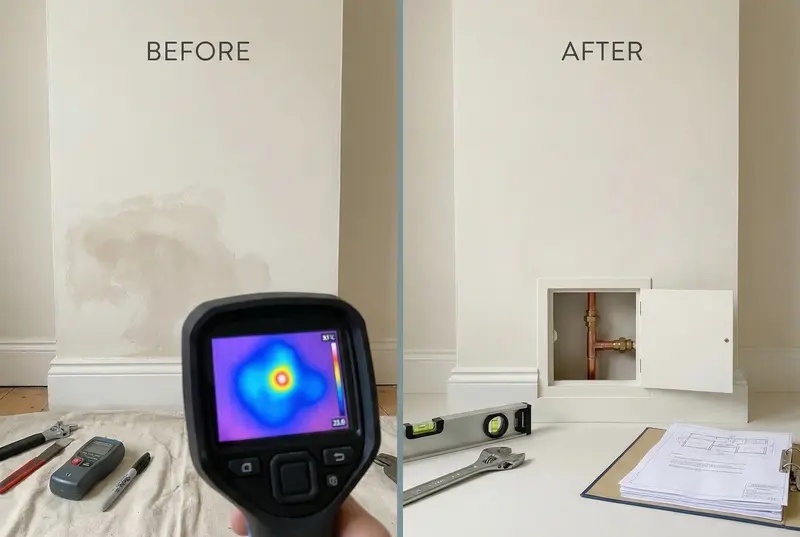
Leak detection starts with a proper assessment rather than guesswork. A qualified plumber will begin by asking you about symptoms — where you've spotted damp, whether your water bills have crept up unexplained, or whether you've heard dripping you can't locate. From there, they'll carry out a visual inspection of all accessible pipework, checking joints, valves, radiator connections, and appliance feeds. If the source isn't immediately obvious, they'll use one or more detection methods depending on the situation. Pressure testing involves isolating sections of the system to identify which zone is losing water. Acoustic listening devices can pick up the sound of water escaping inside a wall or floor. In some cases, thermal imaging cameras are used to spot temperature differences caused by leaking water behind plasterboard or beneath screed. Once the leak is pinpointed, you'll be given a clear explanation of what's been found and what the repair involves before any work begins. The repair itself might be as simple as tightening a compression fitting or replacing a faulty valve. More involved jobs — like cutting out a section of corroded copper pipe in a post-war Preston semi or accessing a joint under a tiled bathroom floor — will naturally take longer. After the repair, the plumber should re-pressurise the system and confirm the leak has been resolved before leaving.
Why Choose a Local Preston Specialist
A plumber who works regularly in Preston will know the area's housing stock inside out. They'll have seen the same corroded lead tails in Edwardian semis off Garstang Road, the same pinhole leaks in post-war copper systems out in Ingol, and the same push-fit fitting failures in newer builds around the city centre. That familiarity saves time — they're less likely to be caught out by an unusual layout or an older system they haven't encountered before. Local tradespeople also tend to have faster availability, which matters when a slow leak is quietly damaging a floor or ceiling with every passing day.
Frequently Asked Questions
How do I know if I have a hidden leak in my Preston home?
Common signs include unexplained damp patches on ceilings, walls, or floors, a water meter that continues to move when all taps are off, musty smells, or a noticeable increase in your water bill. If your Preston property is an older Edwardian semi or post-war build, hidden leaks in original pipework are not uncommon and worth investigating promptly.
Will the plumber need to damage my walls or floors to find the leak?
Not necessarily. Most Preston plumbers will use non-invasive methods first — pressure testing, acoustic equipment, or thermal imaging — to pinpoint the leak before any access work begins. In many cases, the source can be confirmed without opening up walls. When access is needed, a good plumber will always discuss this with you first and keep any damage to the minimum required.
Does soft water in Preston cause more leaks?
Soft water from the Pennine reservoirs isn't typically more damaging than hard water, but it can be slightly more corrosive to certain metals over a long period. In older Preston properties with original copper or lead pipework and ageing solder joints, soft water chemistry can contribute to gradual deterioration. It's one reason why leaks in older local properties are worth taking seriously rather than patching repeatedly.
How quickly can a plumber reach me in Preston for a leak?
Most local plumbers covering Preston aim to attend urgent leak jobs within a few hours, and many offer same-day appointments for active leaks. If the leak is causing immediate water damage, turn off your stopcock first — usually under the kitchen sink or near the water meter — then call for help. This limits damage while you wait and gives the plumber a controlled situation to work with on arrival.
Other Plumbing Services in Preston
What do you need?
Select your service and urgency level