Leak Detection & Repair in Peterborough
A hidden leak in your home can quietly rack up hundreds of pounds in wasted water and structural damage before you even notice it. The good news is that getting a qualified local plumber in quickly almost always costs far less than the damp, mould, and repair bills that follow if you leave it. Whether you've spotted a damp patch, received an unexpectedly high water bill, or can simply hear something dripping that you can't find, professional leak detection is the fastest route to peace of mind.
Plumbing Conditions in Peterborough
Very Hard water — some of the hardest in England
Mixed housing stock across different eras. With 22% of properties built before 1919, older pipework and drainage systems are common — specialist knowledge of period properties matters.
Leak Detection & Repair in Peterborough — Local Expertise
Peterborough's housing stock is genuinely varied, and that variety has a real impact on how leak detection work plays out. Victorian terraces — particularly in areas like Millfield and New England — often have ageing lead or iron pipework that has been patched over the years rather than fully replaced, making them more prone to pinhole leaks and joint failures. Post-war semis and council-built housing, common across many of Peterborough's outer estates, tend to have copper systems that are now reaching the end of their lifespan. Newer developments, especially those built in the city's expanding southern fringes, use modern plastic push-fit systems that are more resilient but not immune to installation faults or joint failures over time. Peterborough also sits in a moderately hard water area, which means limescale build-up inside pipes and around fittings is a genuine concern — over time, scale deposits can weaken joints and increase the risk of slow leaks developing, particularly on older copper systems.
How We Work
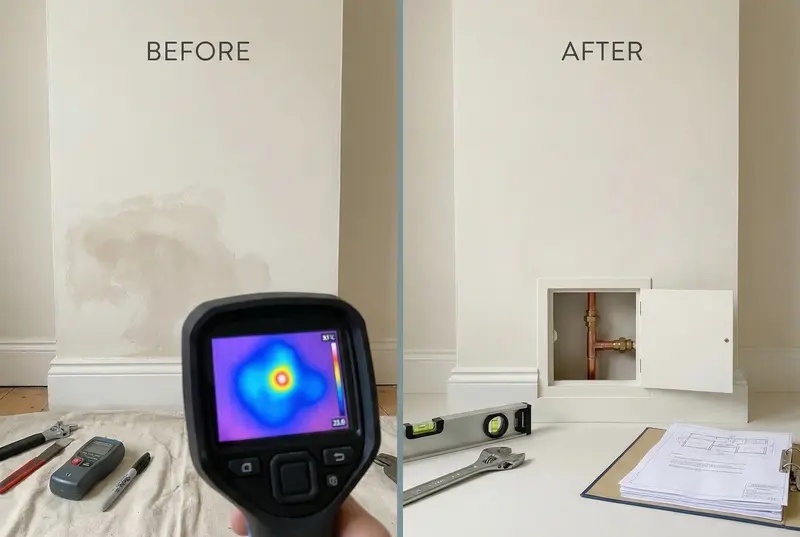
When a plumber arrives to investigate a suspected leak in your Peterborough home, the process usually begins with a thorough visual inspection — checking under sinks, around toilets, behind appliances, and along any exposed pipework. This alone catches a surprising number of leaks. If the source isn't immediately obvious, a good plumber will move on to pressure testing, which involves isolating sections of your plumbing system and monitoring whether pressure holds steady. A drop in pressure confirms there's a leak somewhere in that section, even if it's hidden inside a wall or under a floor. For harder-to-find leaks, acoustic listening devices and thermal imaging cameras can be used. Acoustic tools pick up the sound of water escaping through a pipe, even through concrete or plasterwork. Thermal imaging detects temperature differences caused by moisture, making it especially useful in homes with underfloor heating or thick Victorian walls. Once the leak is located, the repair itself depends entirely on what's been found. A simple joint replacement or pipe patch on accessible pipework can be completed in an hour or two. More involved repairs — like lifting floorboards to access a burst pipe, or cutting into plasterwork — will take longer and may require follow-up work to make good the affected area. In most cases, you can expect the plumber to talk you through what they've found before starting any work, and to give you a clear price before proceeding.
Flood Risk Area
Peterborough has elevated flood risk according to Environment Agency data. Our emergency plumbers are experienced with flood damage, drain clearance, and emergency pump-out services.
Why Choose a Local Peterborough Specialist
Choosing a plumber who genuinely knows Peterborough makes a practical difference. Local tradespeople are familiar with the city's varied property types — they've worked in Millfield terraces, post-war semis in Dogsthorpe, and new-build estates out towards Hampton — and they understand the quirks that come with each. They're also aware of how the local water supply behaves, and what that means for pipe and fitting wear over time. Beyond the technical knowledge, a local plumber can usually get to you faster, and their reputation depends on the work they do in their own community. That accountability matters when you're dealing with something as disruptive as a hidden leak.
Frequently Asked Questions
How do I know if I have a hidden leak in my Peterborough home?
Common signs include an unexplained rise in your water bill, damp patches on walls or ceilings, the sound of running water when everything is turned off, or a water meter that keeps moving when all taps are closed. In Peterborough's older Victorian and post-war properties, musty smells near walls or skirting boards can also be an early indicator worth investigating promptly.
Will the plumber need to dig up my floor or break into my walls?
Not necessarily. Modern detection methods — acoustic devices and thermal imaging — are specifically designed to locate leaks without destructive investigation. In many cases, the source can be pinpointed precisely, meaning only a small, targeted area needs to be opened up. That said, in some older Peterborough properties with buried pipework, some access work is unavoidable. A good plumber will minimise disruption wherever possible.
Does hard water in Peterborough make leaks more likely?
It can contribute over time, yes. Peterborough's moderately hard water leaves limescale deposits inside pipes and around fittings, which can gradually weaken joints — particularly on older copper systems. It's one reason why regular checks on ageing pipework are worth doing, and why any unusual changes in water flow or pressure shouldn't be ignored.
Can my home insurance cover leak detection and repair costs?
Many home insurance policies include trace and access cover, which pays for the cost of finding a leak — including any necessary opening up of walls or floors — even if the repair itself isn't covered. It's worth checking your policy documents before booking, as some insurers require you to use an approved contractor. A local Peterborough plumber can usually provide the documentation your insurer needs.
Other Plumbing Services in Peterborough
What do you need?
Select your service and urgency level