Leak Detection & Repair in Glasgow
You notice a patch of damp on the living room wall, or your water bill has crept up without explanation, or you can hear a faint hissing behind the skirting board late at night. These are the quiet warning signs that Glasgow homeowners often ignore for weeks — until a small leak becomes a serious repair job. Leak detection and repair is one of those services where acting quickly genuinely saves money. Whether it's a pinhole leak in ageing pipework, a slow drip beneath a ground floor slab, or a faulty joint behind a tiled bathroom wall, getting a professional in early can mean the difference between a modest repair bill and a full-scale remediation.
Plumbing Conditions in Glasgow
Very Soft water — Loch Katrine supply
Victorian stone tenements in cities, traditional stone cottages in rural areas. With 35% of properties built before 1919, older pipework and drainage systems are common — specialist knowledge of period properties matters.
Leak Detection & Repair in Glasgow — Local Expertise
Glasgow's housing stock is wonderfully varied, and that variety directly shapes the kinds of leaks that show up most often. In the red sandstone and red brick Victorian tenements that dominate the West End, Govan, and Dennistoun, pipework can be well over a century old — original lead or iron pipes that have spent decades contracting and expanding through Glasgow's cold winters. These older systems are particularly prone to joint failures and hairline fractures. Post-war properties across areas like Castlemilk, Drumchapel, and Easterhouse often have copper pipework from the 1960s and 70s that is now reaching the end of its serviceable life. Modern developments in the city centre and Finnieston tend to use plastic push-fit systems, which can work loose over time if not correctly installed. Glasgow sits in a moderately hard water area, which means a gradual build-up of limescale inside pipework and at joints — this can both mask slow leaks and accelerate corrosion at vulnerable points, making professional detection equipment more valuable than a visual check alone.
How We Work
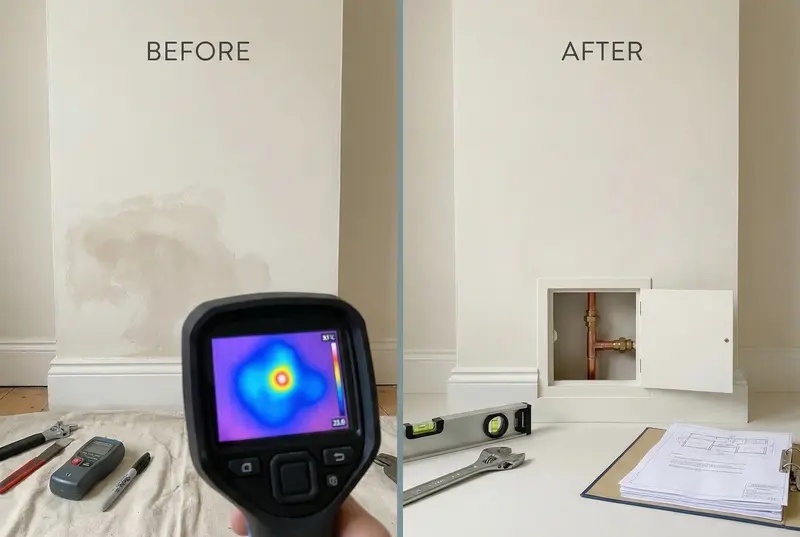
When a leak detection specialist visits your Glasgow property, the first step is a thorough conversation about what you've noticed — damp patches, unexplained drops in water pressure, a running meter when everything is switched off, or visible staining. From there, the tradesperson will carry out a visual survey of accessible pipework, looking at joints, valves, and any areas of previous repair. If the leak can't be pinpointed visually, the next step is non-invasive detection using specialist equipment. Acoustic listening devices are placed against walls and floors to pick up the sound of escaping water, while thermal imaging cameras can reveal temperature differences caused by a concealed leak without the need to open up walls or lift flooring. For underground supply pipes or leaks beneath solid floors, tracer gas testing can be used — a safe, inert gas is introduced into the pipework and detected at the surface with a probe. Once the source is confirmed, your plumber will explain the repair options clearly. For accessible pipes, this might mean cutting out a damaged section and fitting a new joint or length of pipe. For concealed leaks, a small targeted opening in plasterwork or flooring is made, the repair is completed, and you're given guidance on making good the finish. The whole process from detection to repair typically takes two to four hours for a standard domestic property.
Winter Freeze Risk
Cold climate — pipe freezing risk October to April. Burst pipes from frozen water are one of the most common winter emergencies in Glasgow. If you suspect frozen pipes, call immediately — acting fast can prevent significant damage.
Why Choose a Local Glasgow Specialist
Choosing a Glasgow-based plumber for leak detection isn't just about convenience — it's about genuine local knowledge. A tradesperson who regularly works across the city's tenements, post-war estates, and modern flats understands the common failure points in each era of property. They'll know that the Edwardian terrace in Shawlands is likely to have gravity-fed pipework in the roof space, or that a 1960s semi in Bearsden might have underfloor heating pipes that need careful handling. Local plumbers also carry stock suited to the pipework they encounter day to day in Glasgow, which means faster repairs and fewer return visits waiting on specialist parts.
Frequently Asked Questions
How do I know if I have a hidden leak in my Glasgow home?
The most reliable check is to turn off all taps and appliances, then watch your water meter for 30 minutes without using any water. If the dial moves, water is escaping somewhere. Other signs include unexplained damp patches on walls or ceilings, a persistent musty smell, warm or cold spots on floors, or a water bill that's risen without obvious cause. In older Glasgow properties, also look for staining around skirting boards.
Will the plumber need to dig up my floor or break into my walls?
Not necessarily. Modern leak detection equipment like acoustic sensors and thermal imaging cameras can locate most leaks without any invasive work at all. If the leak is confirmed behind a wall or under a floor, a skilled plumber will make the smallest opening necessary to access and repair it. In Glasgow's Victorian properties, this often means carefully removing a section of plaster rather than demolishing a whole wall.
Is a slow drip really worth fixing urgently in Glasgow?
Yes — and in Glasgow's housing stock especially so. Older properties often have less robust damp-proofing, meaning even a slow leak can cause timber rot, plaster damage, and mould growth surprisingly quickly. Glasgow's climate, with significant rainfall and cooler temperatures, means moisture-damaged materials take longer to dry out. What looks like a minor drip today can lead to hundreds of pounds in secondary damage within a few months if left alone.
Does hard water affect how quickly pipes leak in Glasgow?
Glasgow's water is moderately hard, which does cause gradual limescale deposits inside pipework. Over time, this can put pressure on older joints, narrow internal pipe diameter, and accelerate corrosion particularly at connection points. It's one reason leak detection professionals in Glasgow often find multiple weak points in ageing copper systems during a single visit — the scale build-up makes otherwise sound pipes more vulnerable than they might appear from the outside.
Other Plumbing Services in Glasgow
What do you need?
Select your service and urgency level