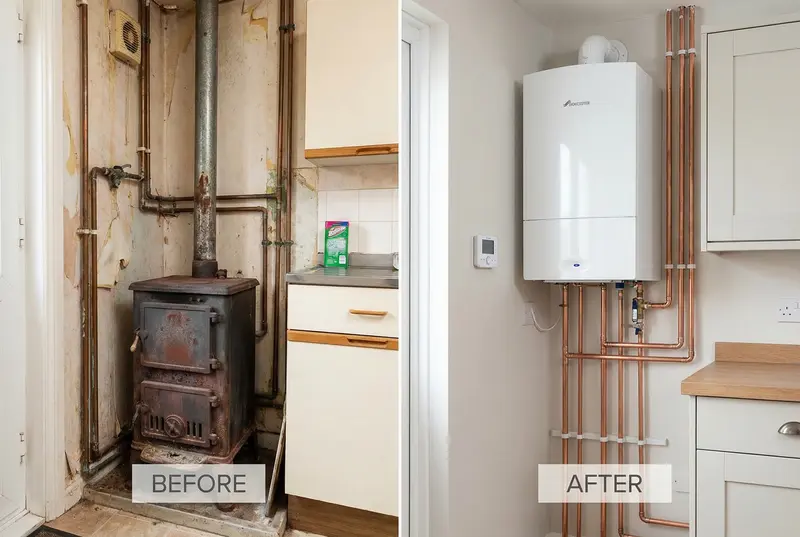
Boiler Installation in Rochester
Replacing a boiler in Rochester isn't a decision most homeowners take lightly, and rightly so. It's one of the largest single investments you'll make in your home, and getting it wrong — whether that's the wrong boiler size, a substandard installation, or a unit poorly suited to your water supply — can cost you dearly over the years that follow. The good news is that Rochester has a broad mix of experienced, Gas Safe registered installers who know the area's housing stock well. Whether your current boiler has finally given up, or you're upgrading ahead of winter, this guide will help you understand exactly what's involved and what you should expect to pay.
Plumbing Conditions in Rochester
Very Hard water — Thames and Medway chalk aquifers Regular descaling and annual servicing is particularly important in Rochester.
Mixed housing stock across different eras. With 22% of properties built before 1919, older pipework and drainage systems are common — specialist knowledge of period properties matters.
Boiler Installation in Rochester — Local Expertise
Rochester's housing mix creates a genuinely varied set of challenges for boiler installers. The town's Edwardian semis — particularly those around the Borstal and Rochester Hill areas — often have older pipework, limited airing cupboard space, and original radiators that weren't designed with modern combi systems in mind. Post-war estates, which make up a large portion of Rochester's residential stock, tend to have more straightforward layouts but frequently still carry 20 or 30-year-old conventional boilers feeding hot water cylinders that homeowners are finally ready to replace. More recently built developments on the outskirts of Rochester typically have modern system infrastructure already in place, making upgrades more straightforward but still requiring careful specification. Rochester also sits in a moderately hard water area, which is worth factoring in when choosing your new boiler. Scale build-up inside heat exchangers and pipework can reduce efficiency and shorten boiler lifespan noticeably, so a magnetic filter and scale reducer fitted as part of the installation is a sensible investment rather than an optional extra.
How We Work
A proper boiler installation in Rochester should follow a clear, structured process — not just swapping one box for another. It starts with a surveyor or experienced installer visiting your home to assess your current system, your hot water demand, and the property's heat loss. This isn't a five-minute job; they should be checking radiator sizes, pipework condition, flue options, and where the new boiler will sit. From this, they'll recommend the right boiler type and output — a common mistake is fitting an oversized combi into a large Edwardian semi that actually needs a system boiler with a cylinder to meet demand during peak morning use. Once you've agreed on the specification and price, the installation itself typically takes one to two days. Your installer will isolate and drain the existing system, remove the old boiler, install the new unit, connect the flue, and recommission the whole system. A responsible installer will also flush the system with a chemical cleanser — known as a power flush — particularly important in older Rochester properties where sludge accumulation in radiators can damage a brand new heat exchanger within months. You'll receive a Building Regulations compliance certificate, and the installer should walk you through the new controls before leaving.
Why Choose a Local Rochester Specialist
Choosing a Rochester-based installer over a national call centre or out-of-town firm makes a practical difference. Local engineers know the quirks of Rochester's housing — they've worked inside enough Edwardian semis and post-war terraces to anticipate the surprises. They're also easier to reach if something needs attention under warranty. A good local installer will have existing relationships with local merchants, which can mean faster parts turnaround if anything needs replacing. And frankly, their reputation depends on word of mouth in a town the size of Rochester — that accountability tends to produce better work than an anonymous national booking platform.
Frequently Asked Questions
How long does a boiler installation take in Rochester?
Most straight swap replacements — where the boiler type isn't changing — take one full day. If you're converting from a conventional system to a combi, or if the property is an older Edwardian semi with more complex pipework, allow one to two days. Your installer should give you a clear timeline before work starts, not a vague estimate on the doorstep.
Do I need a power flush when getting a new boiler in Rochester?
In most older Rochester properties, yes. Sludge and magnetite build up in radiators and pipework over time, and flushing the system before installing a new boiler protects the heat exchanger from early damage. Given Rochester's moderately hard water, scale is an additional concern. Skipping this step to save money upfront often results in warranty issues and a shorter boiler lifespan.
What boiler type suits an Edwardian semi in Rochester?
It depends on the number of bathrooms and peak hot water demand. Many Edwardian semis in Rochester are larger than they look and have more than one bathroom, which can overwhelm a standard combi boiler during morning rush. A system boiler paired with a well-insulated cylinder often performs better and costs less to run in these properties. An experienced local installer should assess this rather than defaulting to whichever combi is easiest to fit.
Is there any financial help available for boiler replacements in Rochester?
Some households in Rochester may qualify for support under the UK Government's Boiler Upgrade Scheme or the ECO4 scheme, depending on property type, energy rating, and household income. Social housing and low-income households are most likely to be eligible. It's worth checking current eligibility before committing to a full-cost installation — a reputable local installer should be able to point you in the right direction.
Other Plumbing Services in Rochester
What do you need?
Select your service and urgency level