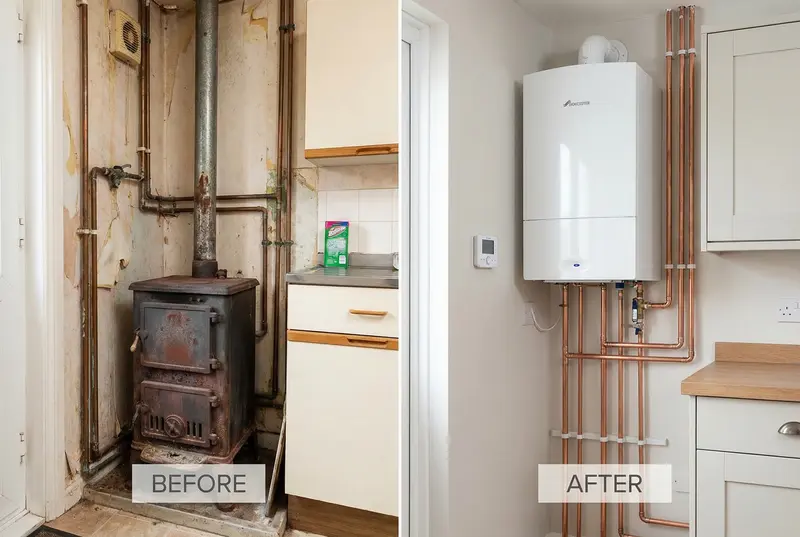
Boiler Installation in Keighley
Most boiler installations in Keighley are triggered by the same thing: a heating engineer telling a homeowner their ageing boiler isn't worth repairing any more. Whether it's a 20-year-old back boiler hiding behind a gas fire in an Edwardian semi on the north side of town, or a tired combi that's limping through its second decade in a post-war terrace, the moment tends to arrive faster than people expect.
Plumbing Conditions in Keighley
Soft water — Pennine reservoir water
Mixed housing stock across different eras. With 22% of properties built before 1919, older pipework and drainage systems are common — specialist knowledge of period properties matters.
Boiler Installation in Keighley — Local Expertise
Keighley's housing stock creates a varied set of challenges for boiler installers. The Edwardian semis found across much of the older residential areas often still have their original pipework layouts, which can mean corroded radiators, poorly designed systems, and occasionally the remnants of a gravity-fed hot water system that needs a full redesign to work with a modern combi boiler. Post-war council-built and privately developed estates from the 1950s through to the 1980s tend to have standard system or heat-only boilers, sometimes with outdated cylinders in airing cupboards that are worth replacing at the same time. Newer developments on the outskirts of Keighley usually have more straightforward installations, though matching flue positions and complying with current building regulations still requires care. Worth knowing too: Keighley sits in a moderately hard water area. That's not as severe as parts of southern England, but it does mean limescale build-up is a genuine consideration. Fitting a scale reducer or magnetic system filter at installation will protect your new boiler and is something any decent engineer should raise with you.
How We Work
A boiler installation in Keighley typically follows a clear sequence once you've agreed on the right boiler for your property. The engineer will start with a proper heat loss assessment — working out the output your home actually needs rather than just guessing based on the old boiler's size. This matters more than people realise, because an oversized boiler short-cycles and wastes money, while an undersized one struggles on cold West Yorkshire winters. From there, they'll agree the boiler position (which may or may not be the same as the old one), flue route, and whether any pipework alterations are needed. Most straightforward like-for-like swaps in Keighley take one to two days. If you're switching from a system boiler with a cylinder to a combi, or moving the boiler to a different location, budget for two to three days of work. The engineer should flush the existing system using a power flush or chemical clean to remove sludge before connecting the new unit — skipping this step voids most manufacturer warranties. Once installed, the boiler will be commissioned, tested across all settings, and registered with the manufacturer. You'll receive a Benchmark commissioning checklist and your Gas Safe certificate, which you'll need for building regulations compliance and future property sales. Before the engineer leaves, they should walk you through the controls properly — not just hand you a manual.
Why Choose a Local Keighley Specialist
Choosing an installer who works regularly in Keighley makes a practical difference. They'll know the types of properties common to the area, the pipework quirks typical of local builds, and how to deal with the access and flue routing challenges you find in older terraced and semi-detached homes here. A local Gas Safe registered engineer is also easier to hold to account if something needs attention under the workmanship guarantee. They're not travelling from Leeds or Bradford and charging you call-out fees accordingly, and they're likely to have an established reputation in the community worth protecting. Check Gas Safe registration, read reviews, and ask how long they've been operating in the Keighley area.
Frequently Asked Questions
How long does a boiler installation take in a typical Keighley home?
A like-for-like combi replacement in a standard semi-detached property usually takes one full day. If you're changing boiler type, moving its location, or dealing with an older system that needs additional pipework work — common in Keighley's Edwardian and post-war homes — allow one to two days extra. The engineer should give you a realistic timeframe at the survey stage.
Do I need a power flush when getting a new boiler in Keighley?
Almost certainly yes, especially in older properties. Sludge and magnetite build up in any heating system over time, and Keighley's moderately hard water can contribute to scale deposits too. Most manufacturers require evidence of a system clean to honour the warranty. A power flush or chemical flush at installation protects your new boiler and improves efficiency from day one.
What happens to my old back boiler — can it just be removed?
Back boilers are still found in a number of older Keighley homes and their removal is more involved than a standard swap. The boiler, gas fire front, and flue all need to come out, the chimney or flue void needs capping correctly, and the new boiler has to be positioned and piped appropriately. It's perfectly doable, but factor in extra time and cost — and make sure your installer has done it before.
What boiler warranty should I expect, and how do I keep it valid?
Most reputable boiler manufacturers offer between five and twelve years warranty when the unit is installed and registered by a Gas Safe engineer. To keep it valid, you'll typically need an annual service from a qualified engineer. Make sure your installer completes and hands over the Benchmark commissioning document — without it, warranty claims can be refused regardless of what you were promised.
Other Plumbing Services in Keighley
What do you need?
Select your service and urgency level