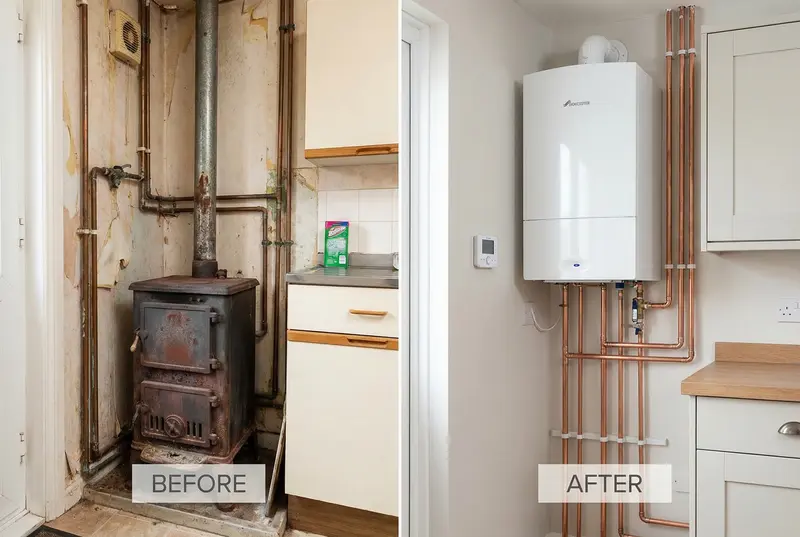
Boiler Installation in Enfield
Most people in Enfield start thinking seriously about a new boiler when their old one breaks down for the third time in a winter, or when an engineer tells them repairs are no longer cost-effective. It's rarely a planned decision — but it should be. A boiler installation is one of the most valuable home improvements you can make, cutting energy bills, improving reliability, and bringing your heating system up to modern efficiency standards. In Enfield, where housing stock ranges from Victorian terraces to 1960s semis to new-build apartments, getting the right boiler matched to your specific property is what separates a good installation from a great one.
Plumbing Conditions in Enfield
Very Hard water — significant limescale buildup, annual boiler servicing essential Regular descaling and annual servicing is particularly important in Enfield.
Mixed housing stock across different eras. With 22% of properties built before 1919, older pipework and drainage systems are common — specialist knowledge of period properties matters.
Boiler Installation in Enfield — Local Expertise
Enfield's housing mix creates some genuinely varied installation challenges. Victorian properties — particularly common in areas like Enfield Town and Bush Hill Park — often have older gravity-fed systems, sometimes with back boilers or ancient floor-standing units that haven't been touched in decades. These conversions tend to be more involved, requiring new pipework, system flushes, and occasionally changes to the flue arrangement. Post-war semis and terraces, which make up a large portion of the borough's housing stock, are more straightforward but can still have ageing systems that benefit from a full system upgrade rather than a like-for-like swap. Enfield is a moderately hard water area, which means limescale build-up inside heat exchangers and on components is a real issue over time. When installing a new boiler here, a decent engineer will always recommend a scale reducer or water softener alongside the installation — not as an upsell, but because it genuinely protects your investment and keeps the new boiler running efficiently for longer.
How We Work
A typical boiler installation in Enfield follows a fairly consistent process, though the finer details vary depending on your property and existing system. It starts with a survey — either in person or increasingly via video call — where the engineer assesses your current setup, checks the flue position, looks at the gas supply, and determines what size boiler you actually need. Oversizing is a common mistake that leads to short-cycling and wasted energy, so proper heat loss calculations matter. On installation day itself, the old boiler is drained down and removed, and the new unit is fitted in the same location where possible, or repositioned if there's a good reason to move it (a loft boiler being brought down to a kitchen cupboard, for example). The system is then power-flushed — this is particularly important in Enfield given the hard water — to remove sludge and debris before the new boiler is connected. Pipework is adapted as needed, the flue is fitted and sealed, and the new controls and thermostat are wired in. After commissioning, the engineer runs the system up to temperature, checks for leaks, and registers the installation with Gas Safe and the manufacturer. A proper handover should include a walkthrough of the controls so you actually know how to use what you've paid for. From start to finish, most installations take one to two days.
Why Choose a Local Enfield Specialist
Choosing an engineer who works regularly in Enfield rather than travelling in from across London makes a practical difference. Local engineers understand the borough's housing stock, know which older properties are likely to have specific system quirks, and are familiar with common installation challenges in the area. They're also easier to get back if something needs attention after the job is done. That said, Gas Safe registration is non-negotiable regardless of where your engineer is based — always verify their registration number on the Gas Safe Register before any work starts. Word-of-mouth recommendations from neighbours in Enfield are one of the most reliable ways to find someone trustworthy.
Frequently Asked Questions
How long does a boiler installation take in Enfield?
Most standard boiler replacements in Enfield take one full day. If your property is a Victorian conversion requiring new pipework, a system change from gravity-fed to combi, or a full power flush, it may extend to two days. A good engineer will give you a realistic timeframe during the survey rather than underquoting to win the job.
Do I need a power flush when getting a new boiler in Enfield?
In most cases, yes — especially in Enfield where moderately hard water leads to limescale and sludge build-up over time. Fitting a new boiler onto a dirty system can damage the heat exchanger within a few years and may void your warranty. A power flush adds to the upfront cost but genuinely protects the installation long-term.
Is a combi boiler the right choice for an Enfield Victorian terrace?
Often yes, but not always. Combis work well in smaller Victorian terraces with one or two bathrooms where demand for hot water isn't simultaneous across multiple outlets. Larger Victorian properties in Enfield with multiple bathrooms may be better served by a system or heat-only boiler with a cylinder. An experienced engineer should assess your household's actual usage before recommending a boiler type.
What warranty should I expect on a new boiler installation in Enfield?
Most reputable boiler manufacturers offer between 5 and 12 years warranty, but only if the boiler is installed by a Gas Safe registered engineer and registered with the manufacturer after installation. Make sure your engineer completes this registration — some offer to do it on your behalf. Labour warranties vary, so ask specifically what's covered if a fault develops within the first year.
Other Plumbing Services in Enfield
What do you need?
Select your service and urgency level