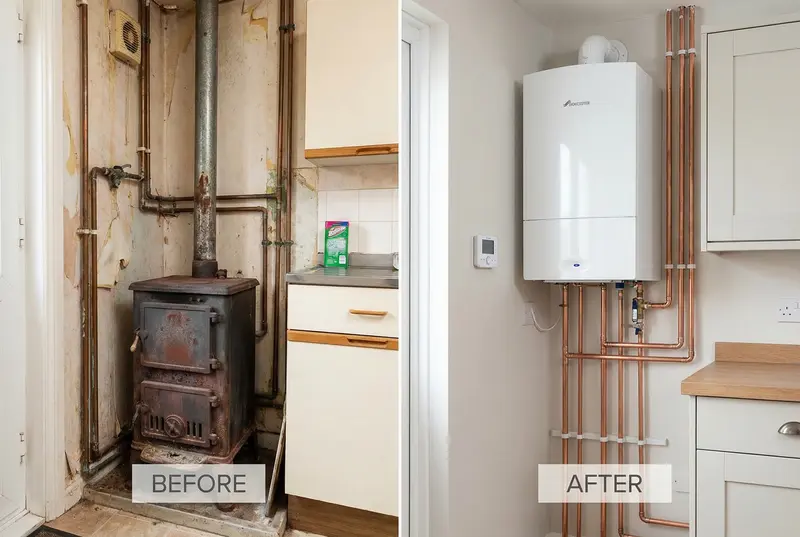
Boiler Installation in Ealing
Most boiler installations in Ealing happen for one of two reasons: the old boiler has finally given up after years of patchy performance, or a homeowner has decided to stop throwing money at repairs and invest in something reliable before winter hits. Either way, it's a significant job that deserves proper planning. A new boiler is one of the most impactful upgrades you can make to a home — cutting energy bills, improving heating consistency, and removing the nagging worry that you'll wake up to a cold house in February. Getting it right means choosing the correct boiler type and size, finding an installer who knows what they're doing, and understanding what you're paying for.
Plumbing Conditions in Ealing
Very Hard water — significant limescale buildup, annual boiler servicing essential Regular descaling and annual servicing is particularly important in Ealing.
Mixed housing stock across different eras. With 22% of properties built before 1919, older pipework and drainage systems are common — specialist knowledge of period properties matters.
Boiler Installation in Ealing — Local Expertise
Ealing's housing stock is genuinely varied, and that variety has a direct effect on boiler installation. Victorian terraces — common throughout areas like Northfields, Hanwell, and South Ealing — often have older pipework, narrow flue routes, and radiators that were never designed with modern combi boilers in mind. These properties sometimes need additional work before a new boiler can be fitted cleanly, such as powerflusing the system or upgrading the pipework. Post-war semis and council-built homes, found across much of the borough, tend to be more straightforward but can have quirks around cupboard space and flue positioning. Newer builds and converted flats in central Ealing are usually the easiest to work with, though they often require compact or system boilers to match the layout. Ealing sits in a moderately hard water area, which matters more than many homeowners realise. Hard water accelerates limescale buildup inside boilers and on heat exchangers, reducing efficiency and shortening the lifespan of the unit if it's not addressed. A reputable installer will recommend fitting a magnetic filter and using a scale reducer or inhibitor — both of which are standard practice for sensible installations in this part of London.
How We Work
A boiler installation in Ealing typically takes one full day for a straightforward like-for-like swap, though more complex jobs — particularly in older Victorian properties with system changes or pipework adjustments — can run into a second day. Here's what to expect from start to finish. The process begins with a survey, either in person or via photos and measurements. A good installer will assess your current system, the size of your property, how many bathrooms you have, and whether a combi, system, or heat-only boiler is the right fit. In Ealing's mix of larger Victorian houses and compact modern flats, that decision varies significantly from property to property. On installation day, the engineer will isolate the water and gas supply, remove the old boiler, and prepare the flue and pipework for the new unit. If you're switching boiler type — say, moving from a conventional system boiler to a combi — additional pipework alterations will be needed. The new boiler is then fitted, the system is flushed to remove debris and old inhibitor, and a magnetic filter is installed to protect the heat exchanger going forward. The engineer will commission the boiler, check all controls and thermostats are working, and walk you through how to use it. You'll receive a Building Regulations certificate (Part P/Gas Safe) and the manufacturer's warranty documentation before they leave.
Why Choose a Local Ealing Specialist
Choosing an installer who works regularly in Ealing makes a genuine difference. They'll be familiar with the property types across the borough — the quirks of Edwardian terraces in Pitshanger, the layout challenges of ex-council blocks in Greenford, the compact flats near Ealing Broadway. They'll also understand local building control requirements and have established relationships with merchants, which can speed up parts sourcing if anything unexpected comes up mid-job. A local engineer is also easier to hold accountable — they're not travelling in from two counties away, and their reputation depends on the work they leave behind in the same community.
Frequently Asked Questions
How long does a boiler installation take in Ealing?
Most standard installations in Ealing take one full working day. If you're in an older Victorian property and the job involves changing boiler type, rerouting the flue, or upgrading pipework, it may extend into a second day. Your installer should give you a clear timeframe after surveying the property — if they quote one day without having seen the job, treat that with caution.
Do I need to do anything to prepare my Ealing home before the installation?
Clear access to the boiler location and the loft or airing cupboard if the engineer needs to reach pipework or the flue. If you have a combi boiler going in and the old system had a cold water tank in the loft, that will be decommissioned and removed — it's worth clearing space around it. The engineer will handle everything else, but good access saves time and keeps costs down.
Is a magnetic filter really necessary in Ealing?
Yes, and particularly so given that Ealing is in a moderately hard water area. Limescale and sludge are the two biggest causes of premature boiler failure and loss of heating efficiency. A magnetic filter catches metallic debris before it reaches the heat exchanger, and most manufacturers now require one to be fitted as a condition of honouring the warranty. It's a small cost that protects a large investment.
What boiler type is best for a large Victorian house in Ealing?
Larger Victorian properties in Ealing — particularly those with multiple bathrooms — often suit a system boiler paired with a hot water cylinder rather than a combi. Combis struggle to deliver adequate flow rates to several outlets simultaneously in bigger homes. A system boiler stores hot water and handles demand more effectively. Your installer should calculate your hot water requirements properly before recommending a unit.
Other Plumbing Services in Ealing
What do you need?
Select your service and urgency level