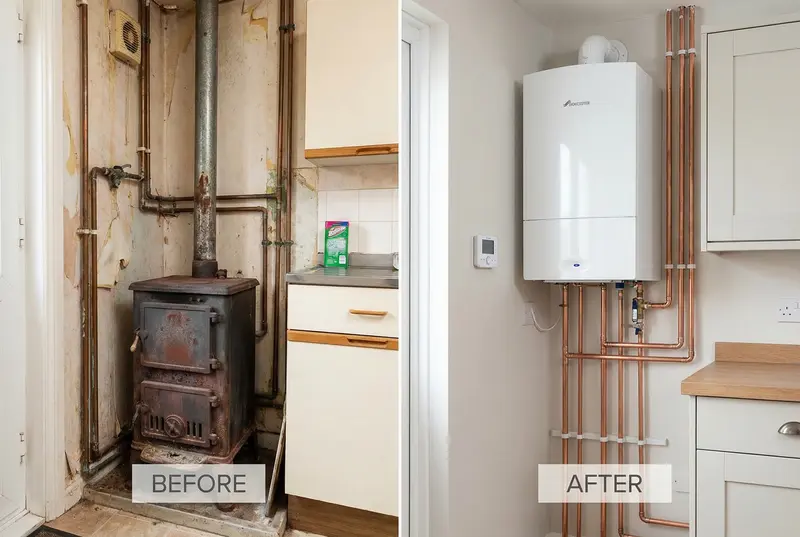
Boiler Installation in Dunfermline
Most people in Dunfermline start thinking seriously about a new boiler when the old one breaks down mid-January and the repair bill comes back close to what a replacement would cost. It's a situation that comes up repeatedly in this part of Fife, particularly in homes with boilers that are ten years old or more. Whether your current system has finally given up, or you're upgrading ahead of a house sale or renovation, a new boiler installation is one of the most impactful improvements you can make to your home's comfort and running costs. Done properly, it should give you reliable heat and hot water for 15 years or more.
Plumbing Conditions in Dunfermline
Moderately Soft water — mixed Fife supply
Victorian stone tenements in cities, traditional stone cottages in rural areas. With 35% of properties built before 1919, older pipework and drainage systems are common — specialist knowledge of period properties matters.
Boiler Installation in Dunfermline — Local Expertise
Dunfermline's housing stock is unusually varied, and that variety has a direct effect on boiler installations. The older stone-built properties and period cottages found across much of the town — particularly in the conservation areas near the Abbey and in streets like Canmore and Golfdrum — often have narrower flue routes, older pipework, and heating systems that haven't been touched in decades. These properties sometimes need additional work to bring them up to current standards before a new boiler can be fitted safely. Modern estates on the outskirts of Dunfermline, such as those around Halbeath and Duloch, tend to be more straightforward installations, though the existing system still needs assessing. Dunfermline sits in a moderately hard water area, which means limescale build-up can affect heat exchangers over time — it's one reason a magnetic filter and inhibitor are particularly important here, and why system flushing before a new installation isn't optional but essential.
How We Work
A proper boiler installation in Dunfermline involves more than just swapping out the old unit for a new one. It starts with a survey of your existing system — the engineer will check the pipework condition, radiator sizes, hot water demand, and whether a combi, system, or heat-only boiler is the right fit for your home. In a larger Dunfermline stone terrace with multiple bathrooms, a combi may not cope; a system boiler with a cylinder could be the better long-term choice. Once the right boiler is specified, the installation day typically takes six to eight hours, though older properties with more complex pipework may run to two days. The engineer will drain down the existing system, remove the old boiler, fit the new unit, connect it to the flue and gas supply, and commission it to manufacturer and Gas Safe standards. A full power flush or chemical flush is usually carried out to clear sludge and debris from the system before the new boiler is connected — skipping this step is one of the most common reasons new boilers develop problems early. Before leaving, the engineer will run through the new controls with you, register the boiler warranty, and issue a Building Regulations Compliance Certificate (formerly known as a CORGI certificate). You should also receive a Gas Safe Record for the work.
Why Choose a Local Dunfermline Specialist
Choosing a Gas Safe registered engineer who works regularly in Dunfermline makes a genuine difference. They'll be familiar with the quirks of local property types — the awkward flue positions in stone-built houses, the older microbore pipework found in some Dunfermline homes from the 1970s and 80s, and the kind of system setups that are common in this part of Fife. A local engineer is also easier to get back if anything needs attention after installation, and many offer ongoing servicing plans so your warranty stays valid. Word of mouth still counts for a lot in a town this size.
Frequently Asked Questions
How long does a boiler installation take in an older Dunfermline property?
In a modern property, most installations complete in one day. In Dunfermline's older stone-built houses or period cottages, it's not unusual for the job to take two days, particularly if the flue route is complicated, pipework needs upgrading, or a power flush is required on a larger system. Your engineer should give you a realistic timeline after surveying the property.
Do I need a combi boiler or a system boiler for my Dunfermline home?
It depends on your hot water demand and property size. A combi works well in smaller homes or flats where demand is low. In larger Dunfermline stone terraces or detached homes with two or more bathrooms, a system boiler paired with a hot water cylinder usually performs better and avoids the issue of pressure dropping when multiple taps run at once. A good engineer will advise based on your actual usage.
Is a power flush necessary when getting a new boiler in Dunfermline?
In most cases, yes. Given Dunfermline's moderately hard water supply and the age of many heating systems in the town, sludge and limescale build-up is common. Connecting a new boiler to a dirty system can damage the heat exchanger within months, potentially voiding your warranty. A proper flush before installation is worth the additional cost and most reputable engineers will insist on it.
What warranties should I expect on a new boiler installation in Dunfermline?
Most leading boiler manufacturers offer between 5 and 12 years warranty when installed by an accredited engineer and registered at the point of installation. To keep the warranty valid, the boiler typically needs to be serviced annually by a Gas Safe registered engineer. Make sure your installer registers the boiler on your behalf — some warranties are void if registration is delayed beyond 30 days of installation.
Other Plumbing Services in Dunfermline
What do you need?
Select your service and urgency level